Reptile food safety
Can Reptiles Have Red Wigglers?
Rotation feeder only
Use red wigglers only in a species-matched plan. Confirm how red wigglers fits the animal's full diet before offering it.
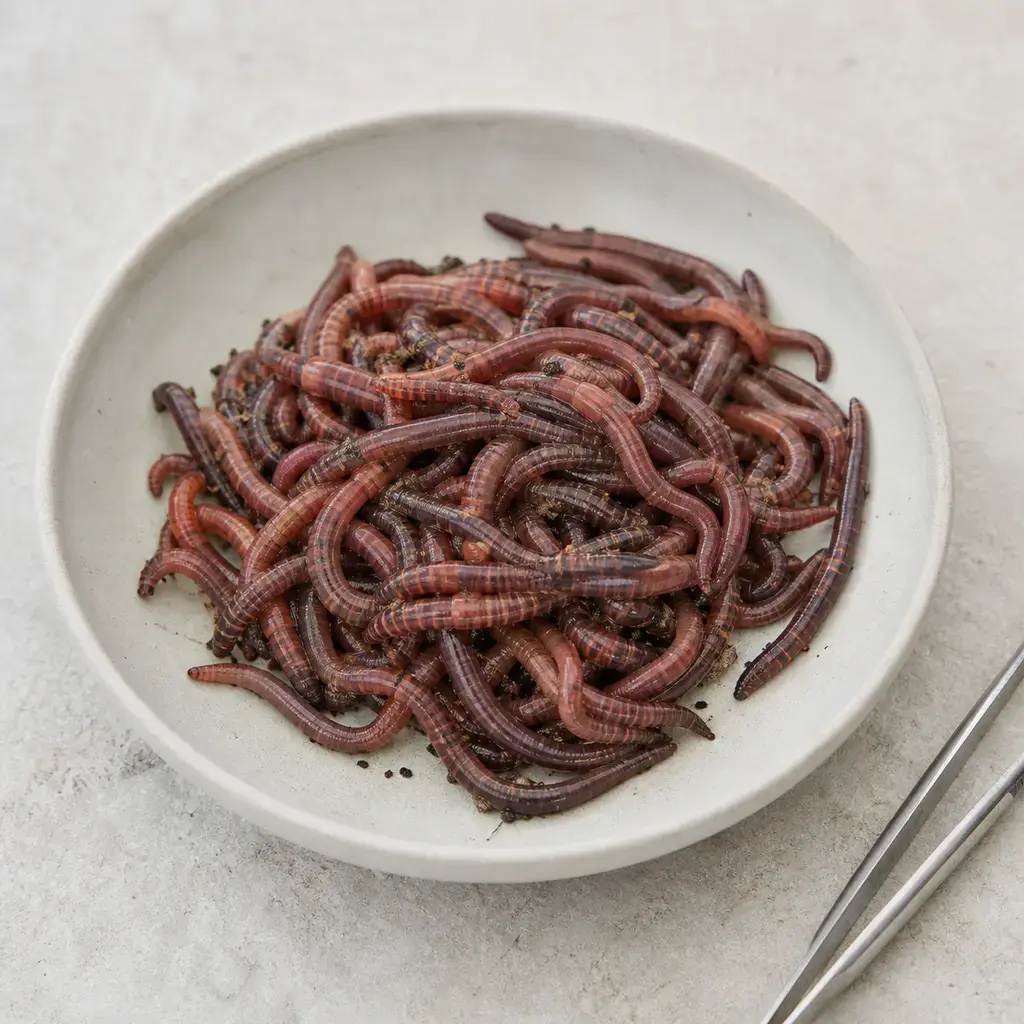 Red Wigglers
The sources support this food category and its husbandry boundaries; the exact species guide still decides whether the item belongs in the diet.
Lizards
Rotation feeder only
For lizards, use red wigglers only when the exact species and life stage use this food type. Some reptiles reject their defensive secretions, so use them only when exact-species guidance accepts them.
Snakes
Usually not a snake food
The question about red wigglers rarely changes a snake plan. Most pet snakes need correctly sized intact whole prey, not produce, loose supplements, or improvised protein.
Turtles and tortoises
Rotation feeder only
For turtles and tortoises, use red wigglers only when the exact aquatic or land species' diet includes it. Some reptiles reject their defensive secretions, so use them only when exact-species guidance accepts them.
Start with the verdict
For red wigglers, the working verdict is “Rotation feeder only.” Some reptiles reject their defensive secretions, so use them only when exact-species guidance accepts them.
Fit it into the whole diet
The relevant diet groups for red wigglers are insectivorous lizards, omnivorous lizards, other reviewed invertebrate-eaters. The exact species, life stage, body condition, and complete ration decide whether that category applies.
Choose the correct form
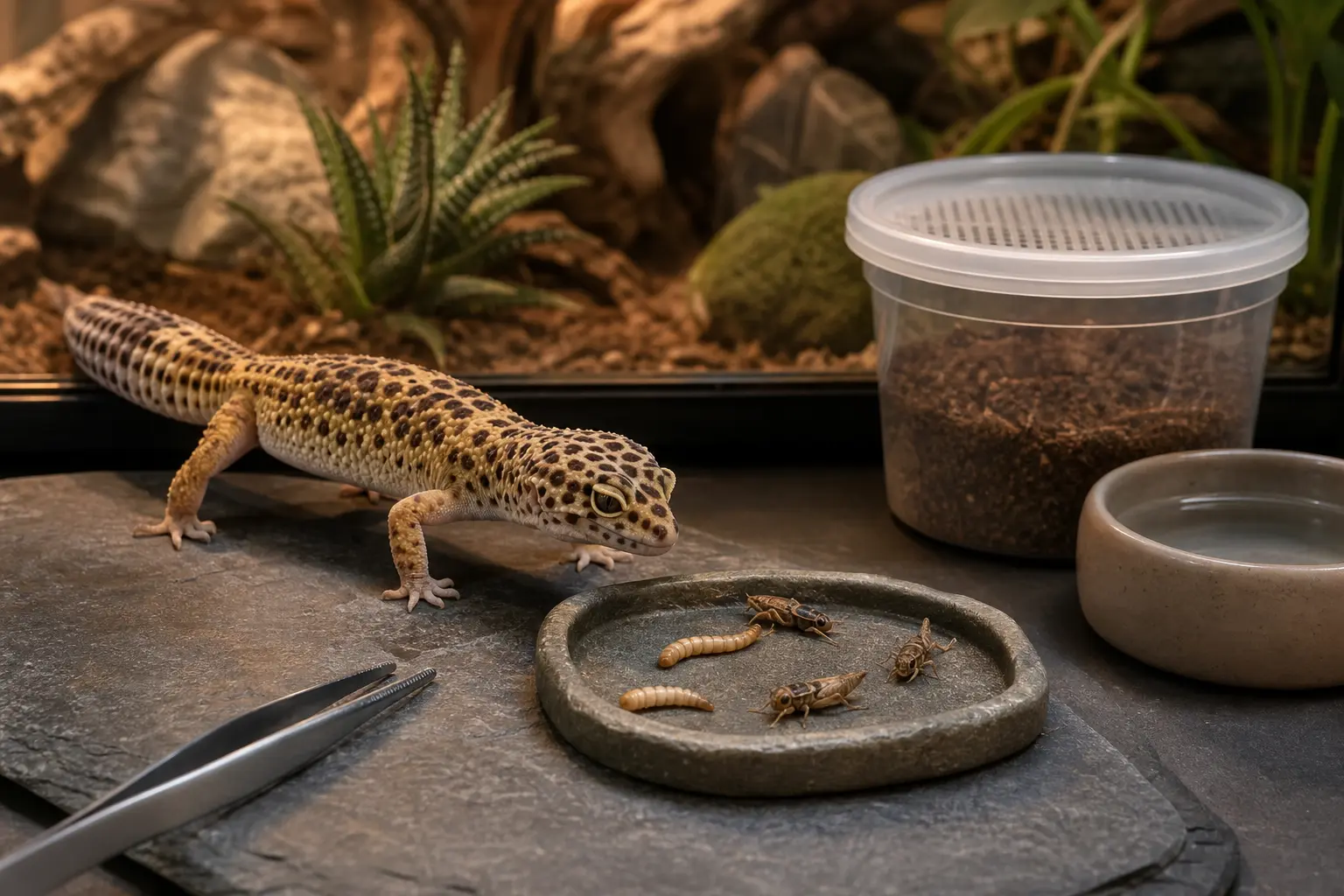
Use captive-bred live feeders. Discard dead, spoiled, oversized, or escaped feeders; remove uneaten live insects promptly.
Know the exception
Gut-loading and dusting depend on the species, life stage, UVB exposure, and complete supplement schedule.
Prepare one controlled serving
Keep red wigglers separate from human food tools. Use a clean reptile dish or feeding tool and remove leftovers promptly.
Notice what gets eaten
Note whether your reptile eats red wigglers and how much is left. A food it eagerly picks out still needs to fit the whole diet.
Before offering it
- Role: One feeder in a varied rotation. Buy red wigglers from a reputable captive feeder supplier. Match size to the reptile, use the reviewed gut-loading and dusting plan, and remove uneaten feeders.
- Form and preparation: Use captive-bred live feeders.
- Remove or discard: Discard dead, spoiled, oversized, or escaped feeders; remove uneaten live insects promptly.
- Introduce red wigglers while the reptile's temperatures, hydration, appetite, waste, and body condition are otherwise stable.
- Record the amount and response to red wigglers, then remove leftovers before they spoil or contaminate substrate or water.
Do not use this way
- Do not make red wigglers the staple unless the reviewed guide for that species gives it that role.
- Do not offer red wigglers when its identity, source, freshness, preparation, or contamination history is uncertain.
- Do not combine a first serving of red wigglers with several other diet or supplement changes.
Watch
- A single refused serving does not establish illness. Persistent appetite loss with weight loss, repeated regurgitation, or a marked change in droppings needs a reptile-veterinary review.
- Remove uneaten live red wigglers promptly; feeders can hide or injure a resting reptile.
- Breathing difficulty, collapse, or severe weakness needs urgent veterinary help regardless of the last meal.
Portion
Choose a safe swallow size and count feeders so leftovers are visible. The exact amount and frequency still depend on species, age, body size, condition, season, and the rest of the ration.