Protecting a reptile household
New Reptiles & Shared Health
Careful introductions, separate equipment, clean habitats, and veterinary testing protect the reptiles already in your care.
Do not treat a suspected parasite or infection by guesswork.
Prevention begins before reptiles meet
A calm, separate start protects both the new arrival and the reptiles already at home.
Give every new reptile a separate beginning
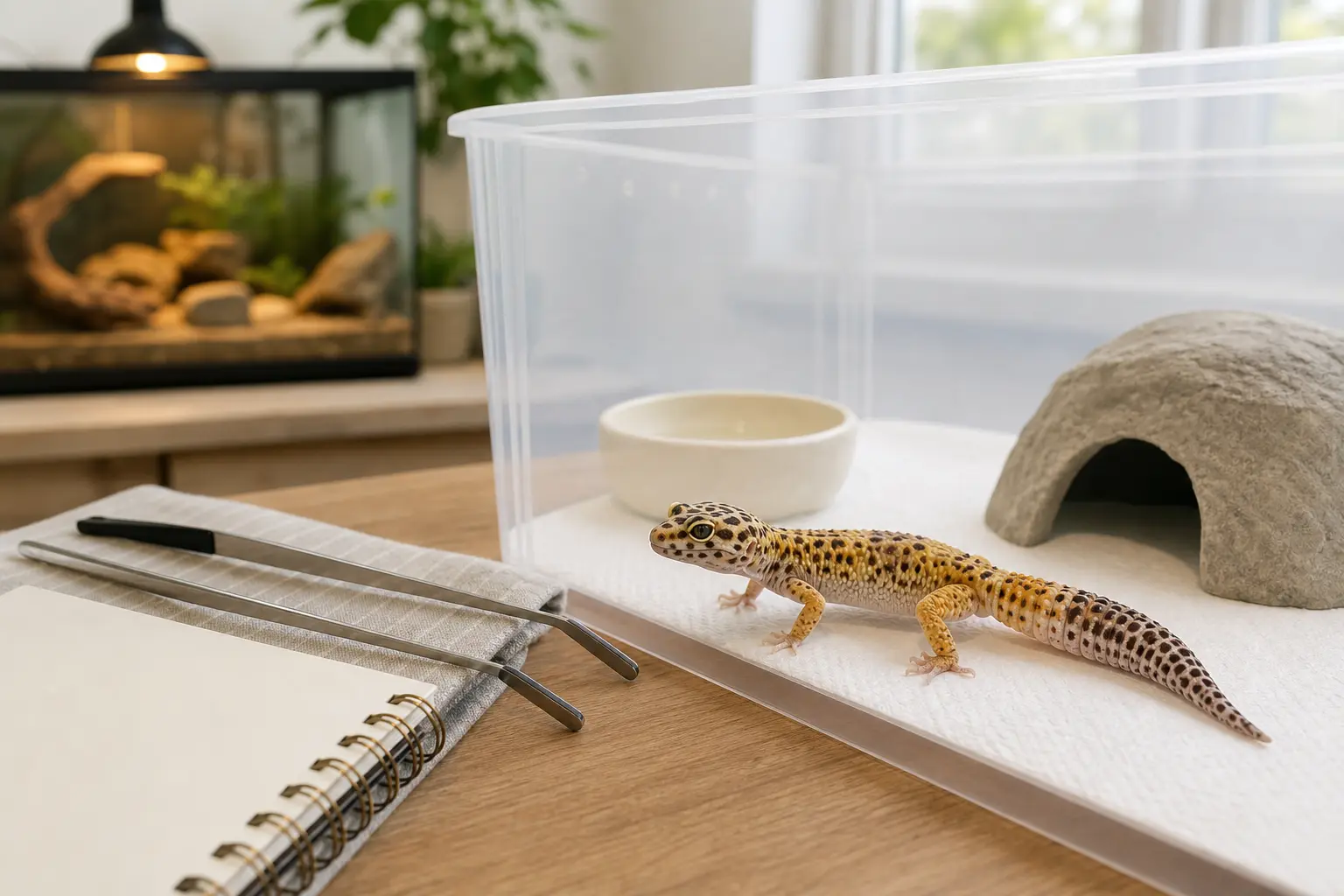
Use separate housing and equipment, and ask a reptile veterinarian about examination, testing, and quarantine for the exact reptiles involved before they share space or tools.
Keep tools from travelling between habitats
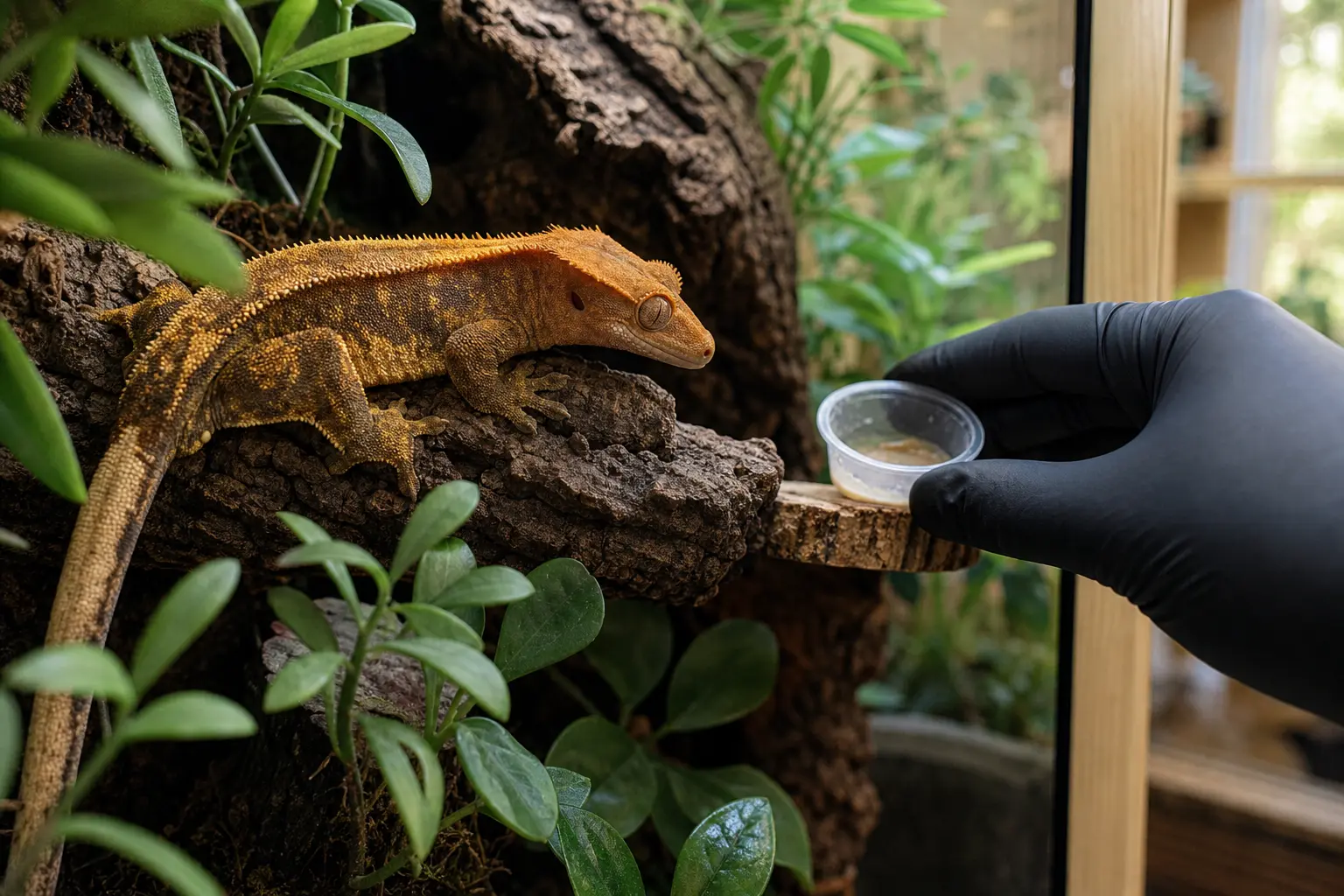
Separate bowls, hides, tongs, cleaning tools, and soaking containers where practical. Clean your hands between reptiles, especially when one is new or unwell.
Let the veterinarian choose the test
A reptile veterinarian cannot identify parasites or infections reliably from a symptom list alone. The veterinarian uses the species, history, examination, and appropriate samples to guide the next step.
Changes that deserve veterinary investigation
A reptile veterinarian may need testing because parasites and infections can resemble habitat, nutrition, skin, or digestive problems.
Something small is moving on the skin
A reptile veterinarian may need to distinguish mites from skin debris or normal markings. Keep the reptile separate and call before treating.
Weight, appetite, or waste changes
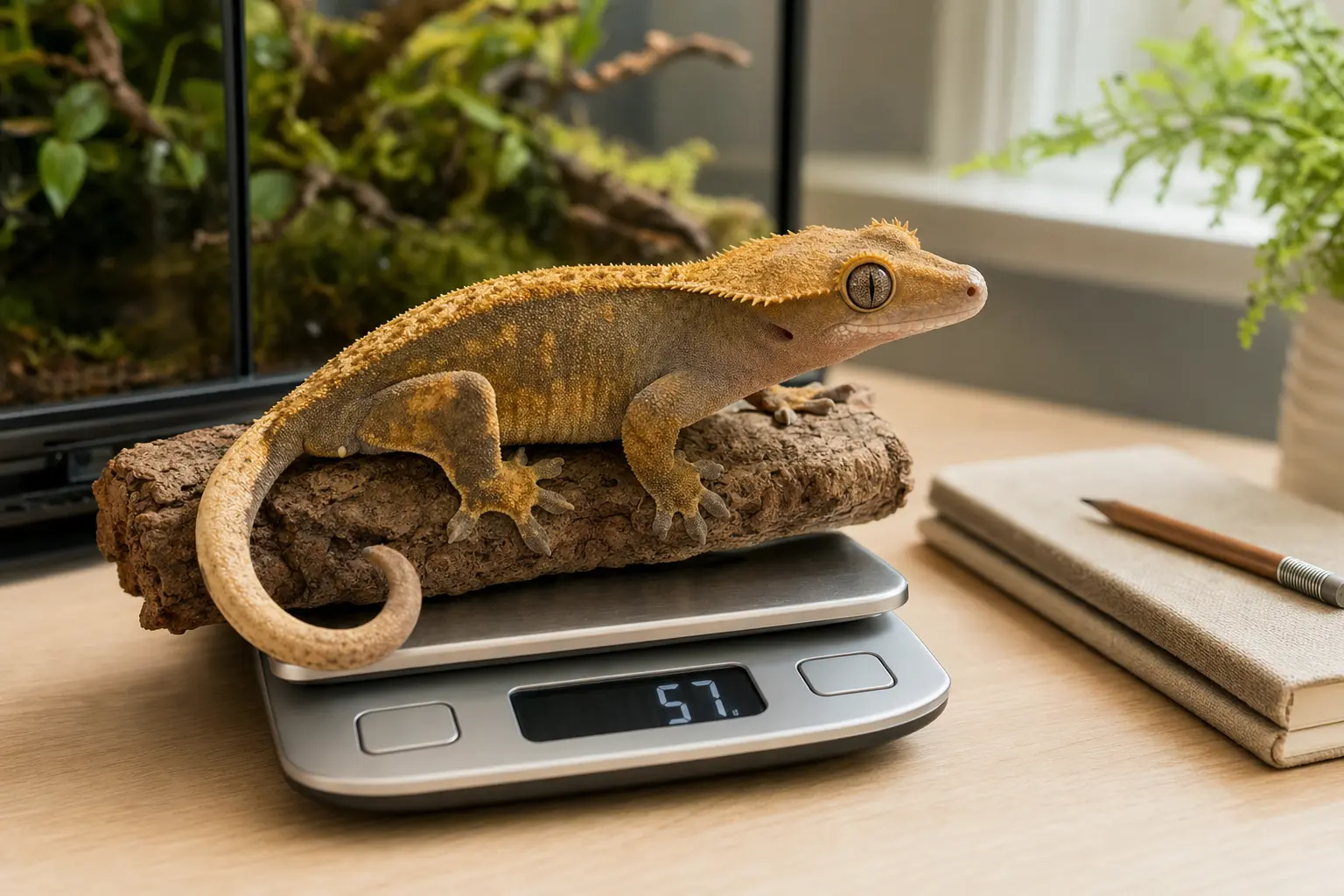
Weight loss, poor appetite, vomiting or regurgitation, persistent diarrhea, mucus, or blood can have several causes and deserves a call to a reptile veterinarian.
More than one reptile is affected
When similar changes appear across a collection, stop sharing tools, care for the unwell reptiles last, and contact a reptile veterinarian promptly.
Protect the people in the home too
Healthy-looking reptiles can carry Salmonella and other germs. Good household hygiene matters whether or not a reptile seems ill.
- Wash handsUse soap and running water after touching reptiles, food, waste, habitat water, or equipment.
- Keep reptile items out of the kitchenDo not clean habitats, feeding tools, or reptile food containers where human food is prepared or eaten.
- Take extra care with higher-risk peopleFollow current public-health guidance for young children, older adults, pregnant people, and anyone with a weakened immune system.