

Choosing an African fat-tailed gecko

Is an African fat-tailed gecko a good beginner reptile?

Yes—for a prepared keeper who understands that this is a humid-hide insectivore, not simply a leopard gecko with different markings.

Decide whether a broad sheltered home, live insects, measured humidity, and a 15–20-year evening-care routine fit your household.

Check the honest fit
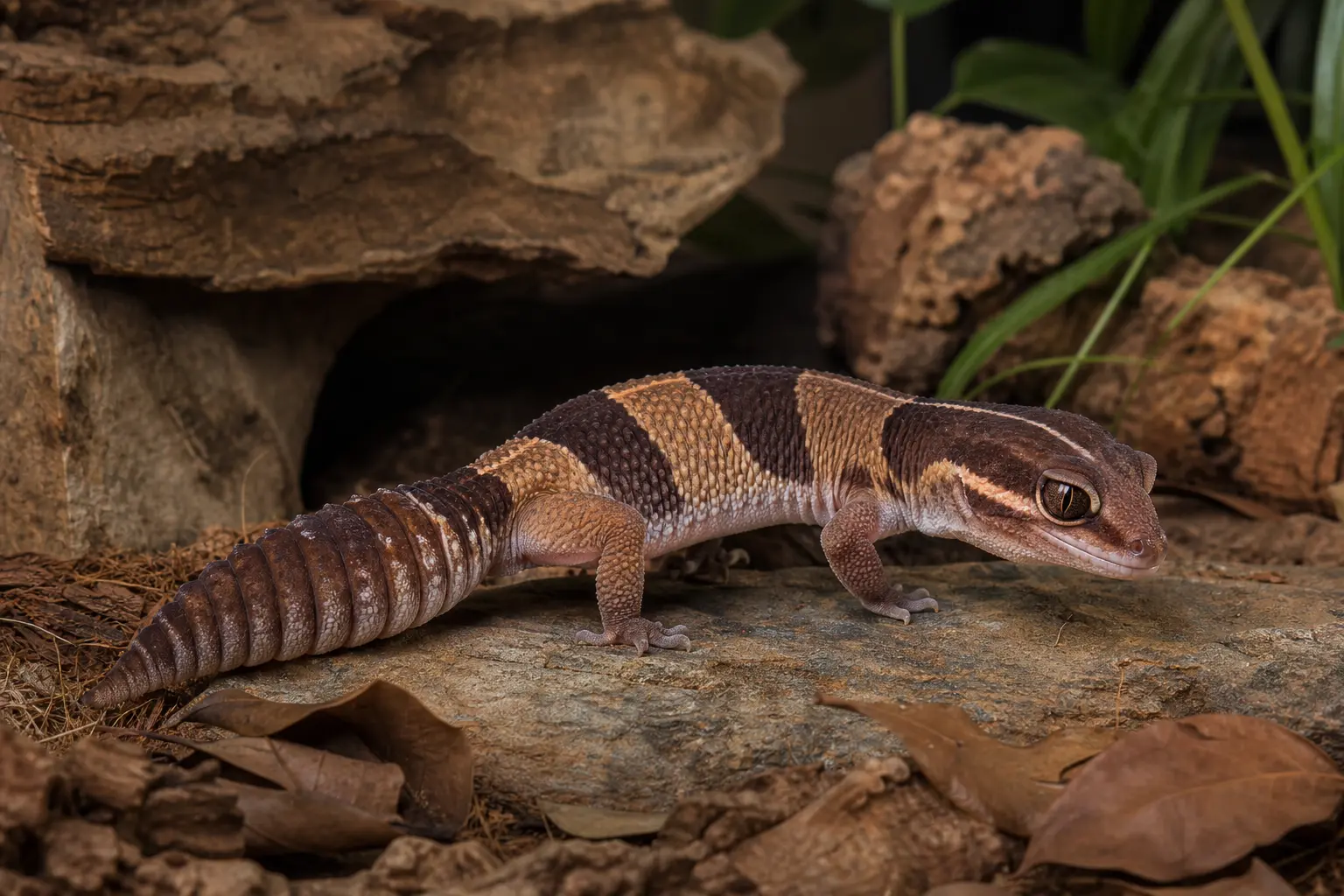
Alert adult African fat-tailed gecko exploring a broad sheltered habitat with warm brown bands, movable eyelids, clawed toes, and a complete plump segmented tail in view.

The short answer

Good first gecko for a prepared evening keeper

An African fat-tailed gecko can be a rewarding first reptile when its 91 × 46 × 46 cm adult home is built and tested before adoption. Covered warm and cool retreats, roughly 60% ventilated ambient humidity, a separate humid hide, gentle UVB, varied live insects, and reptile-veterinary planning must stay dependable for 15–20 years.

Adult size
About 15–20 cm (6–8 in)
Adult home
About 91 × 46 × 46 cm (36 × 18 × 18 in) or larger
Commitment
About 15–20 years
Daily rhythm
Quiet daytime rests; most visible around dusk and night
Food
Varied appropriately prepared live insects
Handling
Brief, fully supported, and never by the tail

The honest fit

Would the adult routine work in your home?

This may suit you if…

  • You enjoy observing a quiet ground-dwelling gecko as it begins exploring after dusk.
  • A broad furnished adult enclosure with several covered climate choices fits permanently in your home.
  • Buying, caring for, supplementing, and removing live feeder insects feels manageable.
  • You will measure warmth and humidity, maintain a separate humid refuge, keep records, and use a reptile veterinarian.
Pause if…

  • You expect the dry setup, low humidity, or care schedule used for a leopard gecko to transfer unchanged.
  • Live feeder insects or a ventilated humidity plan would be difficult to maintain.
  • You want a daytime display pet or one that seeks frequent handling.
  • The adult habitat would need to stay small, bare, temporary, or shared with another gecko.
01

Why they can work for a first-time keeper

African fat-tailed geckos are compact, deliberate evening animals. Their routine is understandable: check covered warm and cool retreats, humidity, water, locks, and waste; prepare live insects when due; then watch quiet dusk exploration.

Many tolerate short, fully supported handling after settling, but observation comes first. A retreat, vocalization, struggle, shed, recent meal, or health concern means leave the gecko alone.

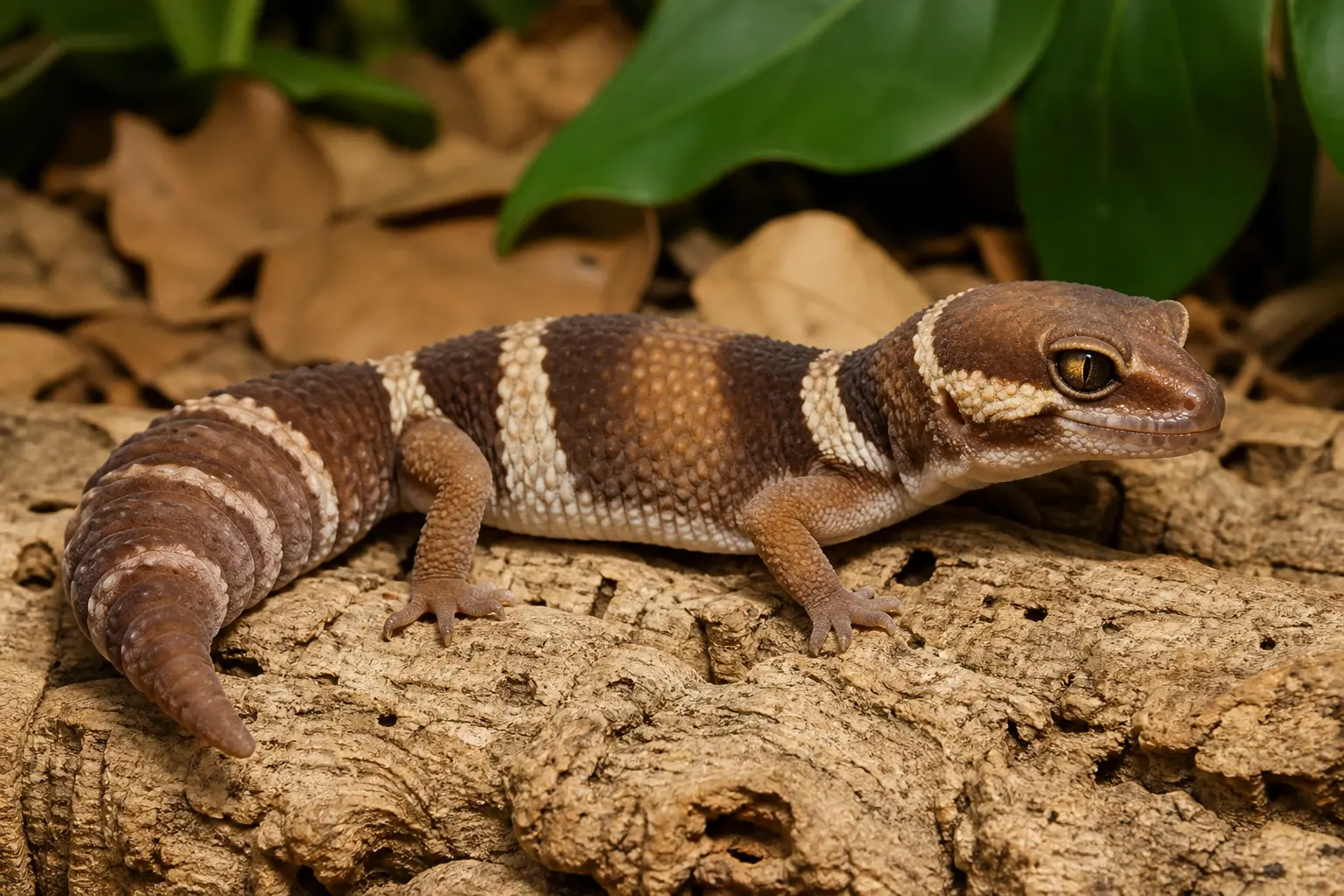
Adult African fat-tailed gecko resting alertly on pale cork with its warm brown bands, movable eyelid, clawed toes, and full segmented tail in clear view.
02

Humidity and insects are the honest tests

The adult home should be broad rather than tall, with about 91 × 46 × 46 cm of usable space or more. Add several secure hides, a separate humid shedding refuge, low stable structure, fresh water, and ventilation.

The reviewed veterinary baseline uses a 28–30°C warm zone, about 25°C cool cover, and roughly 60% ambient humidity. Food is varied live insects from safe sources, prepared and supplemented as one coordinated plan.

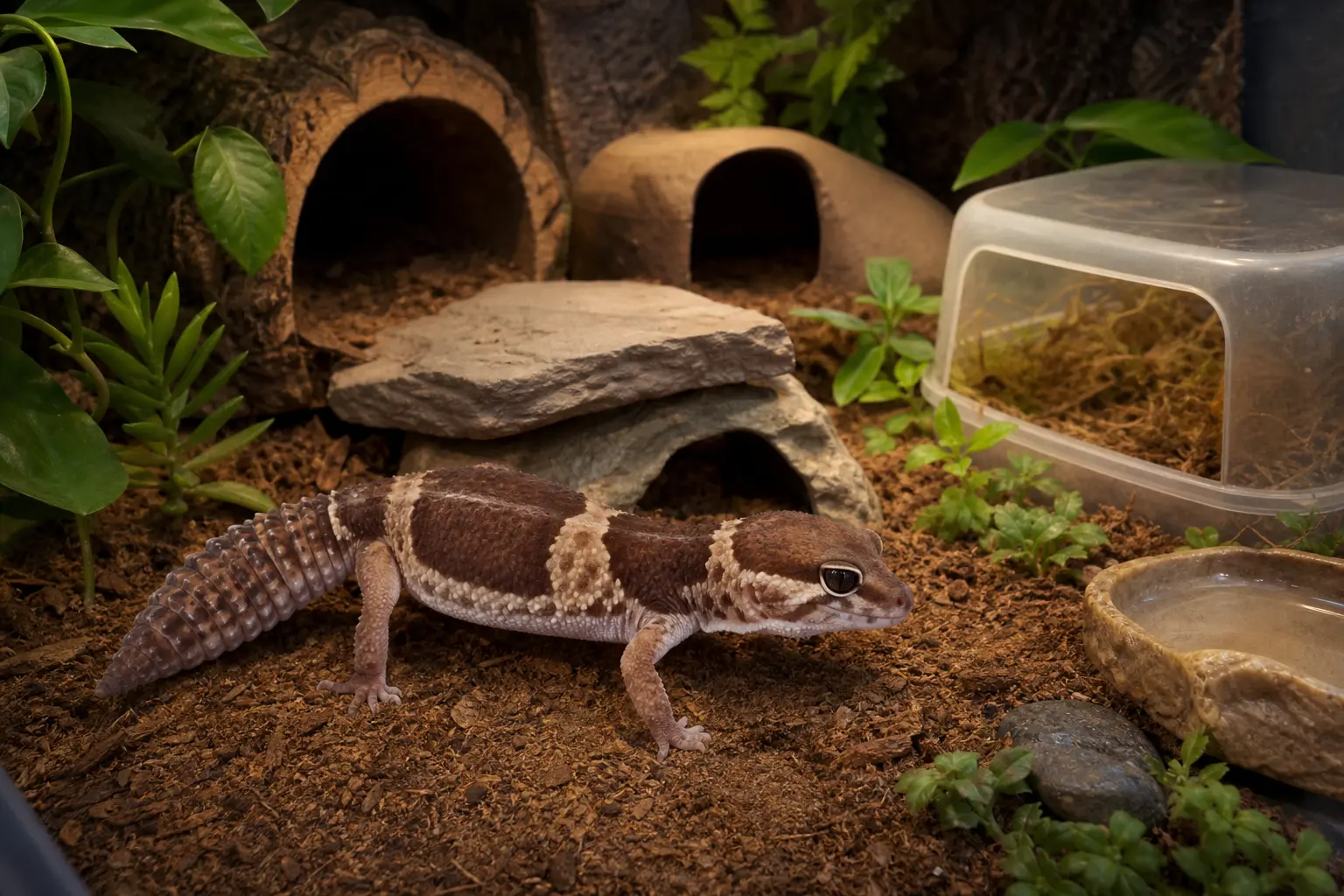
Adult African fat-tailed gecko in a broad sheltered enclosure with secure warm and cool hides, a separate humid refuge, low stable cover, fresh water, and clean substrate.
03

Picture an ordinary evening

Before activity begins, you read the warm, cool, and humidity probes, refresh water, inspect the humid refuge, remove waste, and check that substrate is clean rather than wet or stale.

On feeding nights, you offer measured appropriately sized insects, remove what is rejected, and record intake. You notice eyes, toes, skin, breathing, droppings, movement, tail and body condition, and call a reptile veterinarian about persistent change.

Keep deciding

See the complete care picture

Sources and further reading