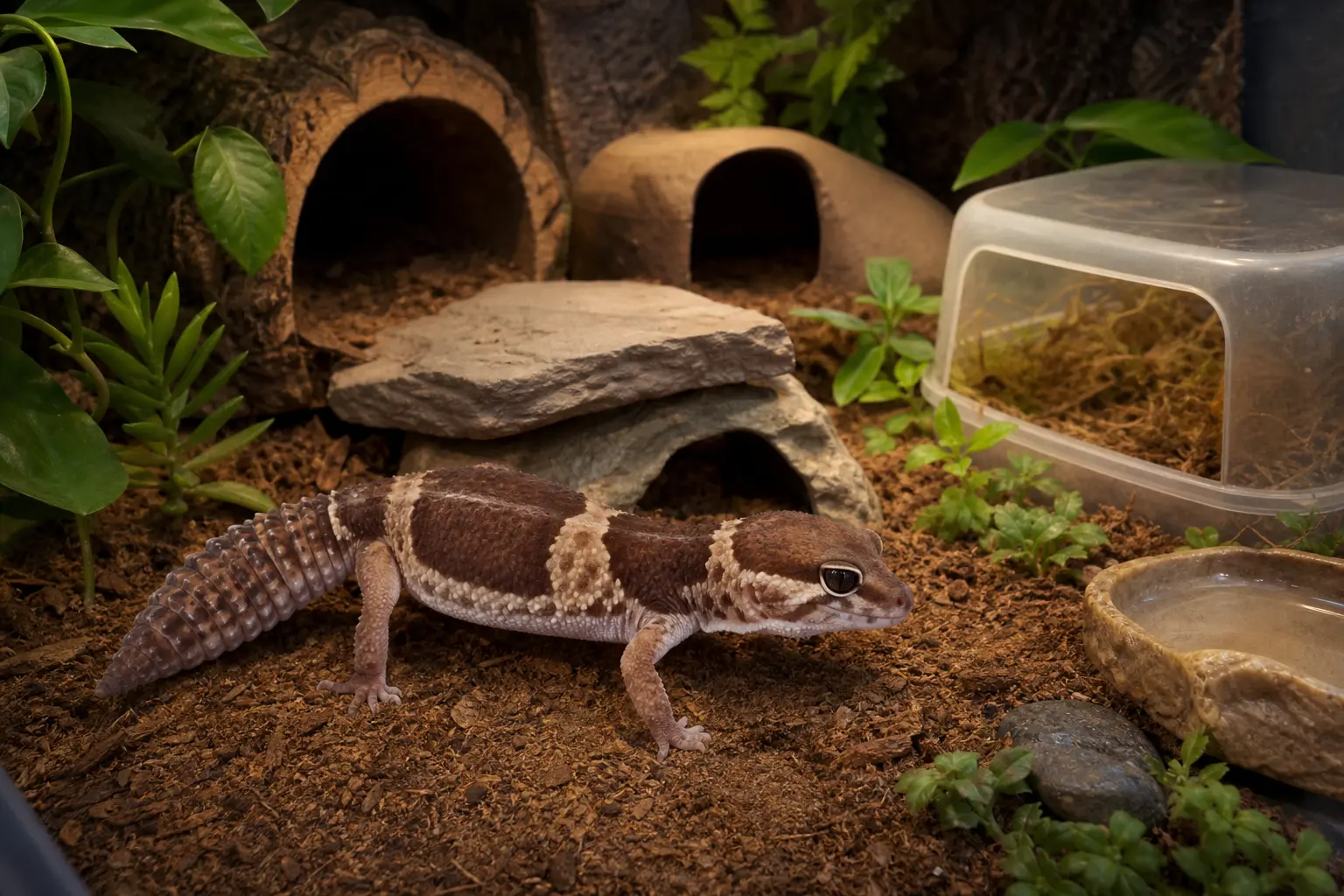
African fat-tailed gecko · Adult enclosure

What enclosure does an African fat-tailed gecko need?

African fat-tailed gecko adults need the minimum shown below. Arrange the usable space so they can choose cover without losing their preferred climate.

Routes, retreats, climate choices, and daily maintenance turn an enclosure into a dependable home for an African fat-tailed gecko.

Use the practical checks
Adult African fat-tailed gecko in a broad sheltered enclosure with secure warm and cool hides, a separate humid refuge, low stable cover, fresh water, and clean substrate.

The short answer

Use adult dimensions and make every zone usable for African fat-tailed geckos

African fat-tailed gecko adults need the minimum shown below. Arrange the usable space so they can choose cover without losing their preferred climate.

Adult home
Plan about 91 × 46 × 46 cm (36 × 18 × 18 in) or larger for one adult, with useful floor space for covered warm, cool, and humid choices
Warm zone
Daytime warm retreat about 28–30°C (82–86°F)
Cool and night
Covered cool retreat about 25°C (77°F); All visible lights off; measure a nighttime range around 20–25°C (68–77°F) and use guarded non-light heat only when needed
Humidity
About 60% ambient humidity, plus a clean humid hide, fresh water, and ventilation
UVB
Gentle product-specific linear UVB over part of the warm side with complete shade and secure dark retreats
Food
Varied appropriately sized live insects, safely sourced and prepared, with calcium and vitamins used to an individual reviewed plan

The honest fit

Would the adult routine work in your home?

Do this

  • Use adult dimensions before choosing furniture.
  • Place secure cover across warm, cool, bright, and shaded zones.
  • Keep fresh water and monitor african fat-tailed gecko behavior every day.
  • Record changes so a reptile veterinarian receives useful evidence.

Avoid this

  • Do not trade usable space for decoration.
  • Do not leave a temperature zone without a secure retreat.
  • Do not copy another reptile species' setup.
  • Do not treat a persistent health change as a shopping problem.
01

Plan the full-size enclosure

Treat the African fat-tailed gecko adult minimum shown above as the starting point, not a target to squeeze beneath. Extra room lets an African fat-tailed gecko move among warm, cool, bright, shaded, dry, and humid choices.

Set the finished enclosure in its permanent location, away from direct sun and household heat. Run it for at least a week before move-in so readings can be corrected without the gecko inside.

Adult African fat-tailed gecko resting alertly on pale cork with its warm brown bands, movable eyelid, clawed toes, and full segmented tail in clear view.
02

Furnish the gradient

A good African fat-tailed gecko home is a broad low home with warm, cool, and humid hides, low anchored cover, clean substrate, fresh water, and ventilation. Retreats must continue across the temperature gradient so choosing a safe temperature never means giving up cover.

Secure heavy furnishings, remove narrow traps, and make doors and ventilation escape-proof. Water, feeding access, and spot-cleaning points should remain reachable without dismantling the animal's safest retreat.


Alert adult African fat-tailed gecko exploring a broad sheltered habitat with warm brown bands, movable eyelids, clawed toes, and a complete plump segmented tail in view.
03

Test ordinary maintenance

Record warm and cool readings, humidity, lighting time, water condition, locks, and waste during a normal week. A beautiful layout is not finished until those checks stay dependable.

Keep one gecko per enclosure. Solitary housing lets you track feeding, droppings, weight, shedding, and daily behavior without another animal competing for cover or food.

Keep deciding

See the complete care picture

Sources and further reading