

Russian tortoise · Daily diet

What should I feed a Russian tortoise?

Feed a russian tortoise a varied high-fibre, low-protein menu of safe pesticide-free weeds, leaves, and flowers. Keep fruit and protein-rich foods out of the staple plan.

Plant identity, variety, calcium balance, and body condition matter more than a large bowl of supermarket greens.

Use the practical checks
Adult Russian tortoise approaching a varied spread of safe pesticide-free leafy weeds and flowers on a clean stone feeding surface.

The short answer

Build the menu from safe fibrous plants for russian tortoises

Feed a russian tortoise a varied high-fibre, low-protein menu of safe pesticide-free weeds, leaves, and flowers. Keep fruit and protein-rich foods out of the staple plan.

Adult home
At least 180 × 120 cm (71 × 47 in) indoors for one adult, plus a secure seasonal outdoor area where climate permits
Warm zone
Broad basking zone about 35°C (95°F)
Cool and night
Daytime ambient gradient about 20–25°C (68–77°F); Visible lights off; RSPCA guidance allows a nighttime drop toward 15°C (59°F) for a healthy, appropriately managed animal
Humidity
Dry, well-ventilated main habitat with deep burrowable substrate, a sheltered retreat, shallow clean water, and no waterlogged ground
UVB
Broad species-appropriate linear UVB over the basking area, installed to the fixture maker's measured distance guidance with complete shade
Food
A varied high-fibre, low-protein menu of safe pesticide-free weeds, leaves, and flowers with a reviewed calcium plan

The honest fit

Would the adult routine work in your home?

Do this

  • Use the exact species diet and a reviewed supplement plan.
  • Remove spoilable food and uneaten insects promptly.
  • Keep fresh water and monitor russian tortoise behavior every day.
  • Record changes so a reptile veterinarian receives useful evidence.

Avoid this

  • Do not make one treat or feeder the entire diet.
  • Do not combine supplements without checking the instructions.
  • Do not copy another reptile species' setup.
  • Do not treat a persistent health change as a shopping problem.
01

Choose a broad plant base

For a russian tortoise, build meals around a varied high-fibre menu of safe pesticide-free weeds, leaves, and flowers, with calcium and other supplements used only to a reviewed plan. RSPCA examples include dandelion, chickweed, clover, plantain, white dead-nettle, and sow thistle.

Identify every foraged plant confidently and use only areas free from pesticides, herbicides, roadside contamination, and animal waste. When uncertain, leave the plant out.

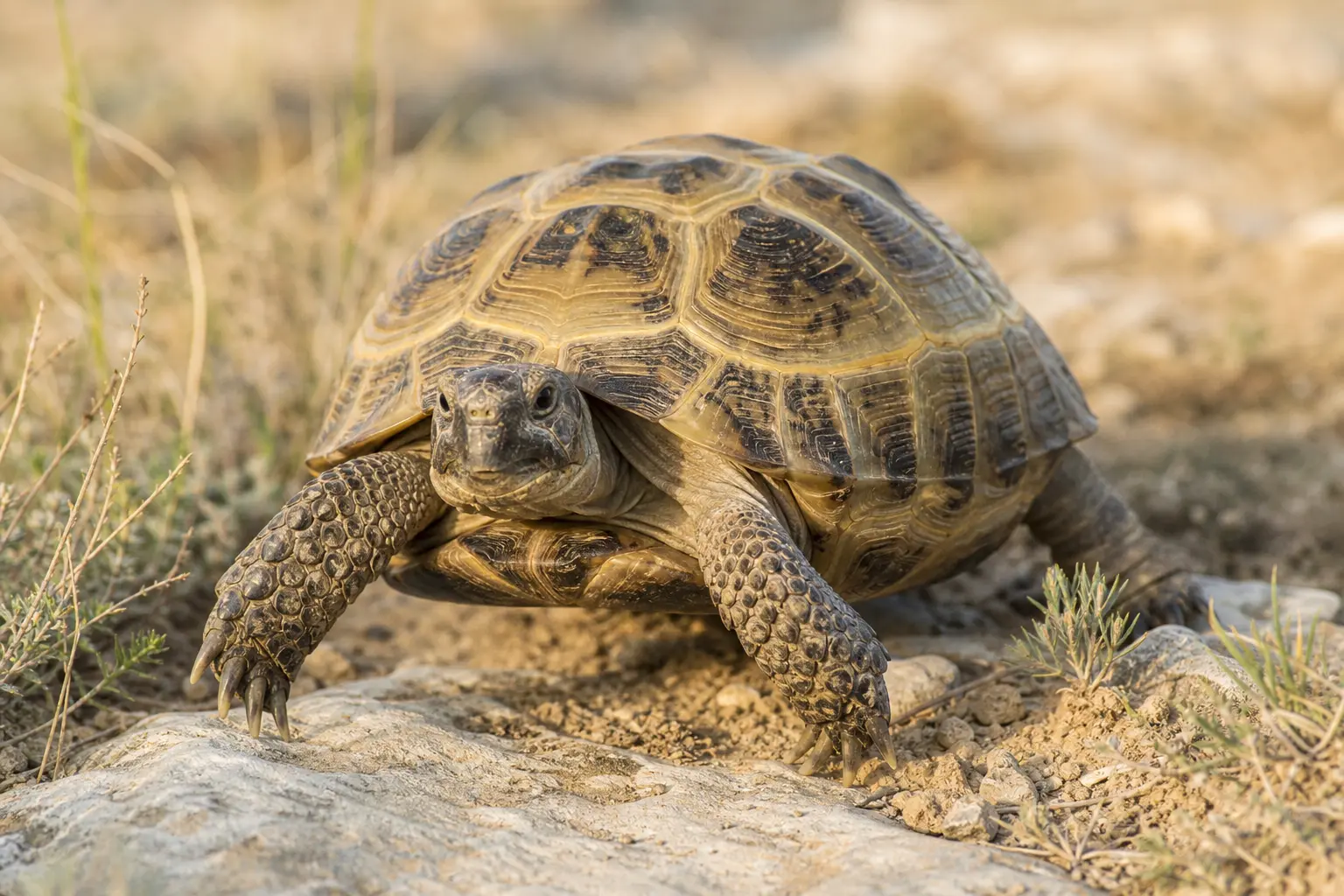
Adult Russian tortoise walking across dry steppe soil with its rounded patterned shell, sturdy forelegs, and bright face in clear view.
02

Avoid the protein shortcut

Russian tortoises are not fed meat, insects, dog food, or other high-protein staples. The RSPCA also advises against peas and green beans and notes that watery lettuce offers poor nutrition per gram.

Use calcium and vitamin-mineral products only to a current reviewed plan. Supplements can be overprovided, and they cannot repair weak UVB, poor heat, or an unbalanced plant menu.

Alert adult Russian tortoise walking through a spacious dry planted habitat with its rounded tan-and-dark shell, sturdy digging legs, and clear eyes in view.
03

Use the body and waste record

Serve plants on a clean surface, refresh shallow water daily, and remove wilted or contaminated food. Track weight, shell growth, gait, appetite, feces, and urates.

Call a reptile veterinarian for continuing refusal, weight loss, weakness, swollen eyes or limbs, a soft shell, abnormal gait, blood in waste, or repeated diarrhea. Do not force-feed without direction.

Keep deciding

See the complete care picture

Sources and further reading