

Do this
- Read a hygrometer before adding water.
- Keep ventilation open and the wet area clean.
- Keep fresh water and monitor African fat-tailed gecko behavior every day.
- Record changes so a reptile veterinarian receives useful evidence.
African fat-tailed gecko · Humidity control
About 60% ambient humidity, plus a clean humid hide, fresh water, and ventilation.
This gecko needs more moisture than a leopard gecko, balanced with fresh air, clean substrate, and a real drying pattern.
Use the practical checks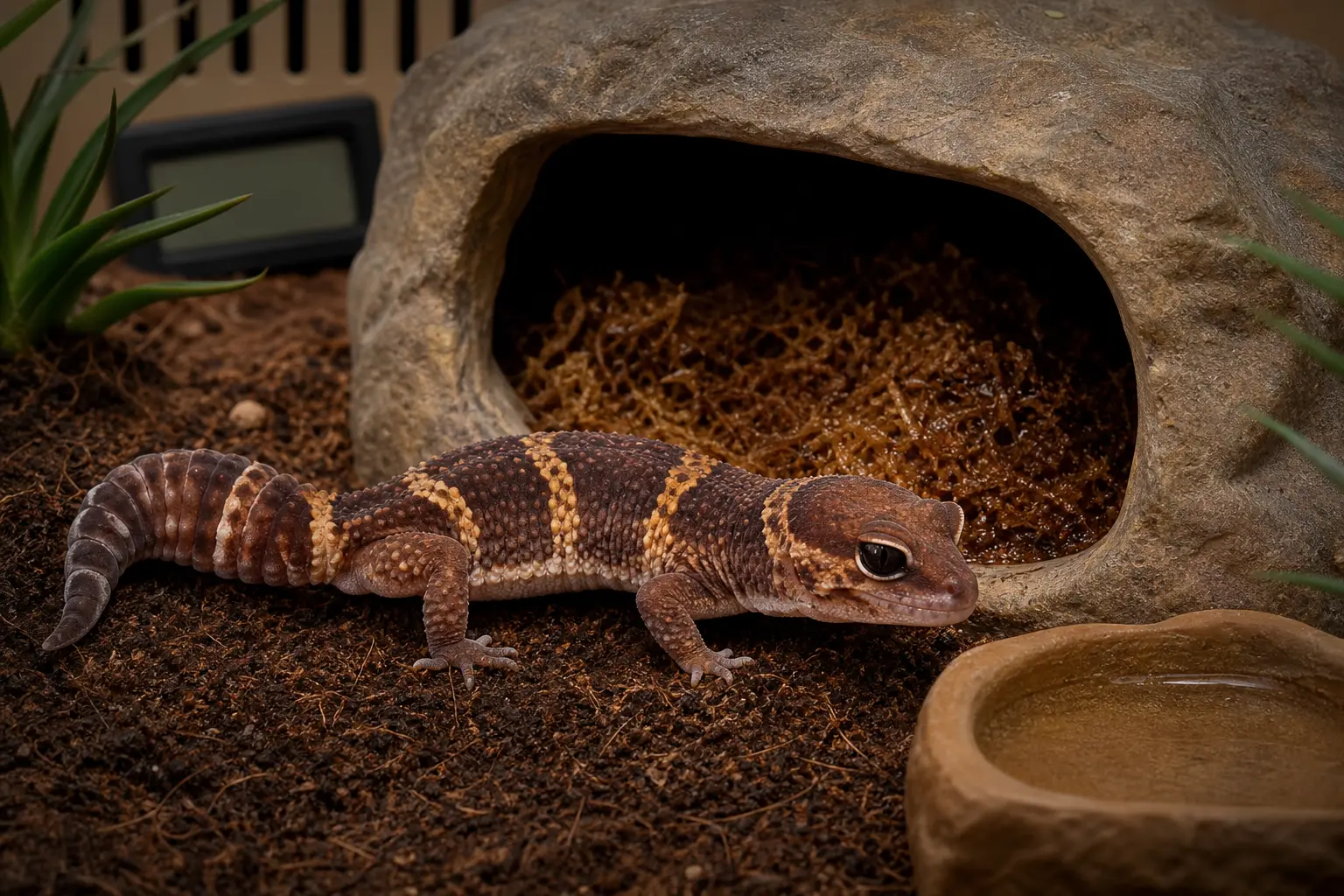
Put it into practice
Use a digital hygrometer, clean humid hide, fresh water, ventilation, and substrate that never stays waterlogged. Place the main probe at animal level away from the water dish, then check the humid refuge separately.
Read temperature with humidity because cool saturated air and warm ventilated air are not equivalent. Record the daily high, low, and drying pattern instead of reacting to one moment.
Refresh the humid refuge with clean lightly moist material and add only enough clean water to maintain the measured pattern. Keep vents clear, remove waste and rejected insects promptly, and replace any sour or moldy material.
Fresh drinking water remains available every day. A humid hide does not replace the bowl, and a water bowl does not prove the substrate is clean or the air is moving.
Watch shed quality, eyes, nostrils, skin, toes, breathing, appetite, droppings, activity, and use of each retreat alongside the readings.
Repeated poor sheds, wheezing, open-mouth breathing, blisters, persistent avoidance of the humid zone, weakness, or weight loss deserves a full husbandry review and reptile-veterinary advice.
Optional equipment for measuring and managing the enclosure. The target range, ventilation, drainage, and drying cycle remain species-specific.
Affiliate links: Furball Cove may earn from qualifying purchases at no extra cost to you.
Keep deciding