

Do this
- Work over a low soft surface after the gecko has settled.
- Let the animal step onto fully supporting hands.
- Keep fresh water and monitor crested gecko behavior every day.
- Record changes so a reptile veterinarian receives useful evidence.
Crested gecko · Gentle handling
Let a crested gecko step onto fully supporting hands, then keep the session short. Stop at the first sign it wants to leave.
Begin with choice and finish before the gecko struggles. Quiet observation is often the better interaction.
Use the practical checks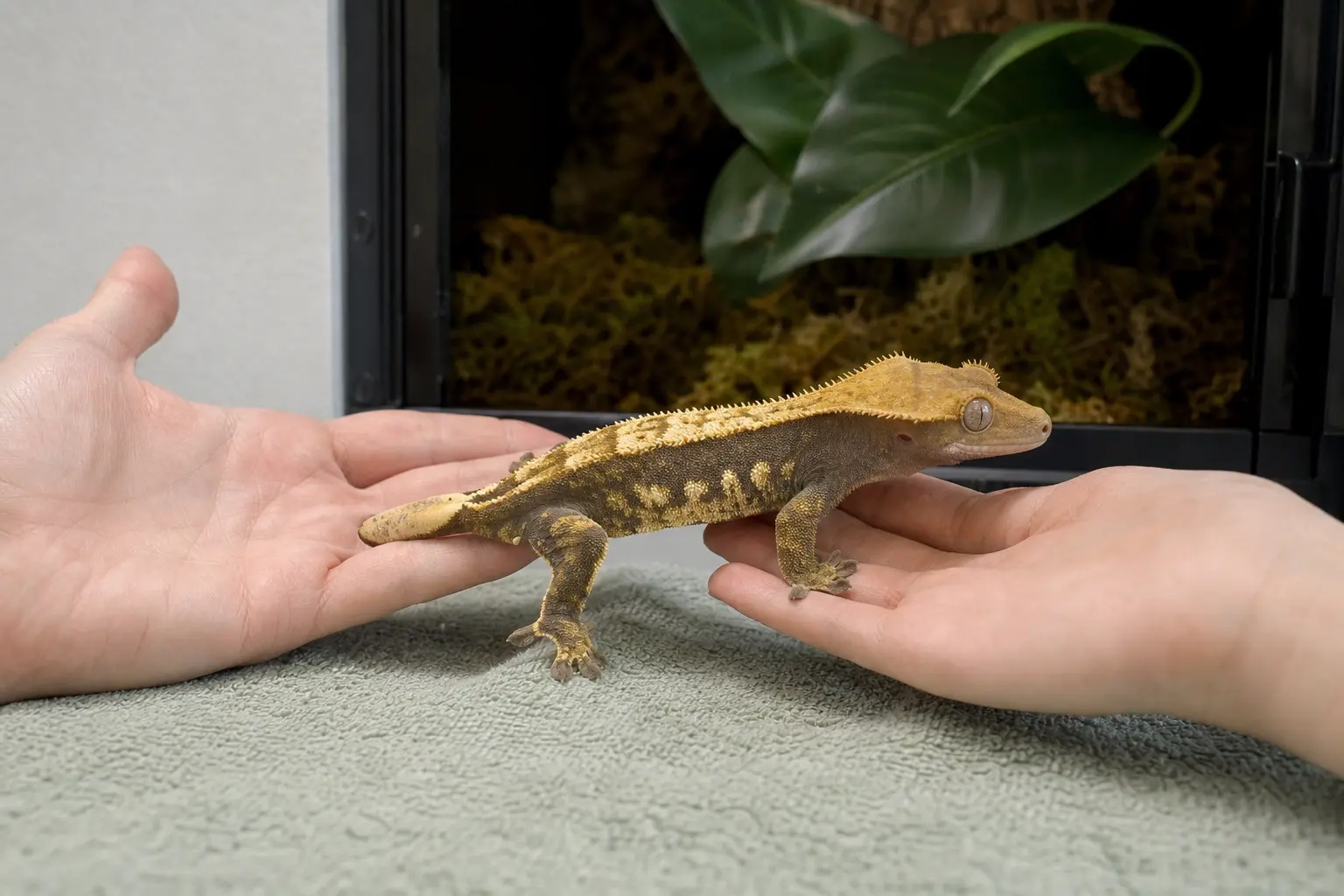
Put it into practice
Give a new crested gecko at least the first week to learn the habitat, find food, and establish hiding places. Begin only when routine behavior and appetite are steady.
Wash and dry your hands, close the room, remove other pets, and work over a low soft surface. Approach slowly from the side rather than dropping a hand from above like a predator.
For this species, let the gecko climb onto open hands, keep the session low and brief, and never grasp the tail because it will not regrow. Keep sessions around 10 minutes at first and return the gecko before its body cools or behavior changes.
Never chase repeatedly through the habitat or pin the body. Stop if the gecko backs away, jumps, squeaks, bites, freezes, or repeatedly tries to escape. Let it settle before another attempt.
A short fall can injure a gecko, and tail autotomy is stressful. Keep hands close together, move slowly, and maintain a clear landing surface without gaps or hard edges.
Use handling mainly for voluntary interaction and brief health checks. Pain, weakness, poor grip, swelling, an injury, or sudden new defensiveness is a reason to stop and consider veterinary advice.
Keep deciding