

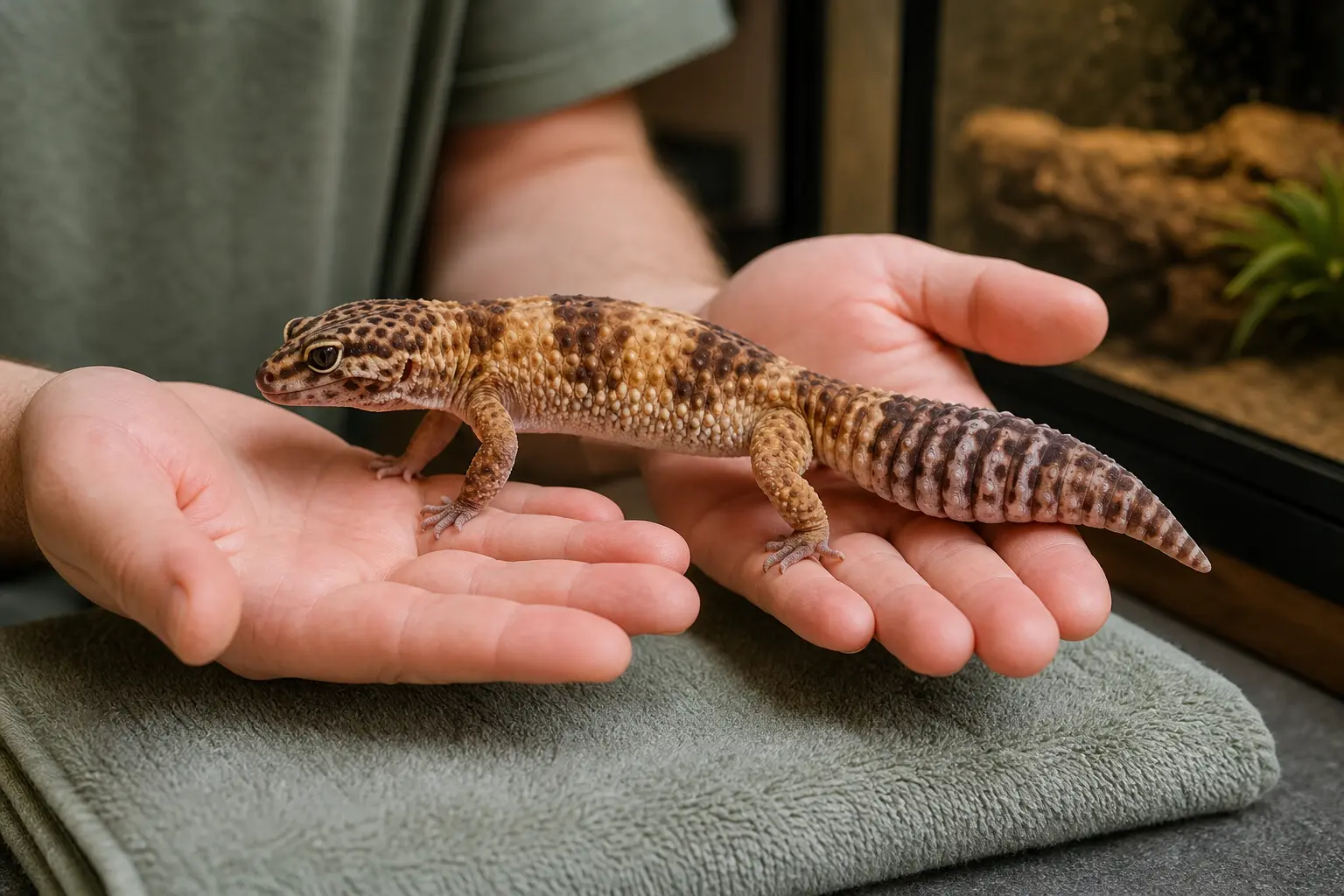
African fat-tailed gecko · Gentle handling

How do I handle an African fat-tailed gecko safely?

Scoop the gecko from below, support the whole body and all four feet, and leave the fat-storing tail completely free. Handling should remain brief and optional.

The tail is part of the gecko's health record and defense—not a handle.

Use the practical checks
Adult African fat-tailed gecko walking calmly across two open hands with its whole body supported and its plump tail completely free.

The short answer

Support the whole gecko and never grasp the tail for African fat-tailed geckos

Scoop the gecko from below, support the whole body and all four feet, and leave the fat-storing tail completely free. Handling should remain brief and optional.

Adult home
Plan about 91 × 46 × 46 cm (36 × 18 × 18 in) or larger for one adult, with useful floor space for covered warm, cool, and humid choices
Warm zone
Daytime warm retreat about 28–30°C (82–86°F)
Cool and night
Covered cool retreat about 25°C (77°F); All visible lights off; measure a nighttime range around 20–25°C (68–77°F) and use guarded non-light heat only when needed
Humidity
About 60% ambient humidity, plus a clean humid hide, fresh water, and ventilation
UVB
Gentle product-specific linear UVB over part of the warm side with complete shade and secure dark retreats
Food
Varied appropriately sized live insects, safely sourced and prepared, with calcium and vitamins used to an individual reviewed plan

The honest fit

Would the adult routine work in your home?

Do this

  • Work over a low soft surface after the gecko has settled.
  • Let the animal step onto fully supporting hands.
  • Keep fresh water and monitor african fat-tailed gecko behavior every day.
  • Record changes so a reptile veterinarian receives useful evidence.

Avoid this

  • Do not chase, pin, squeeze, or grasp the tail.
  • Do not continue after backing away or frantic escape attempts.
  • Do not copy another reptile species' setup.
  • Do not treat a persistent health change as a shopping problem.
01

Wait for a settled routine

Give a new African fat-tailed gecko time to establish hiding, drinking, feeding, waste, and evening exploration before attempting contact.

Wash and dry your hands, close the room, remove other pets, and work over a low towel-covered surface. Approach from the side instead of dropping a hand overhead.

Adult African fat-tailed gecko resting alertly on pale cork with its warm brown bands, movable eyelid, clawed toes, and full segmented tail in clear view.
02

Lift from below

For this species, scoop from below with two hands, support the whole body and all four feet, keep the animal low, and never grasp or restrain the plump tail. Let the gecko walk across open hands without squeezing the ribs, legs, or tail.

Return it when it retreats, vocalizes, stiffens, thrashes, or repeatedly tries to flee. Never restrain the tail; tail loss is an injury, not a harmless reset.

Alert adult African fat-tailed gecko exploring a broad sheltered habitat with warm brown bands, movable eyelids, clawed toes, and a complete plump segmented tail in view.
03

Let observation count

A furnished enclosure supports voluntary approaches and useful health checks without routine excavation or daily lifting.

Pain, weakness, limping, swelling, tail injury, breathing changes, or sudden persistent defensiveness is a reason to stop and seek reptile-veterinary advice.

Keep deciding

See the complete care picture

Sources and further reading