

Uromastyx · Veterinary care

When should a uromastyx see a reptile veterinarian?

A uromastyx should have a reptile veterinarian before trouble starts and an annual health check. Use the guide below when the uromastyx's normal pattern changes.

Compare each change in appearance or routine with the uromastyx's normal baseline. Early differences can reveal illness.

Use the practical checks
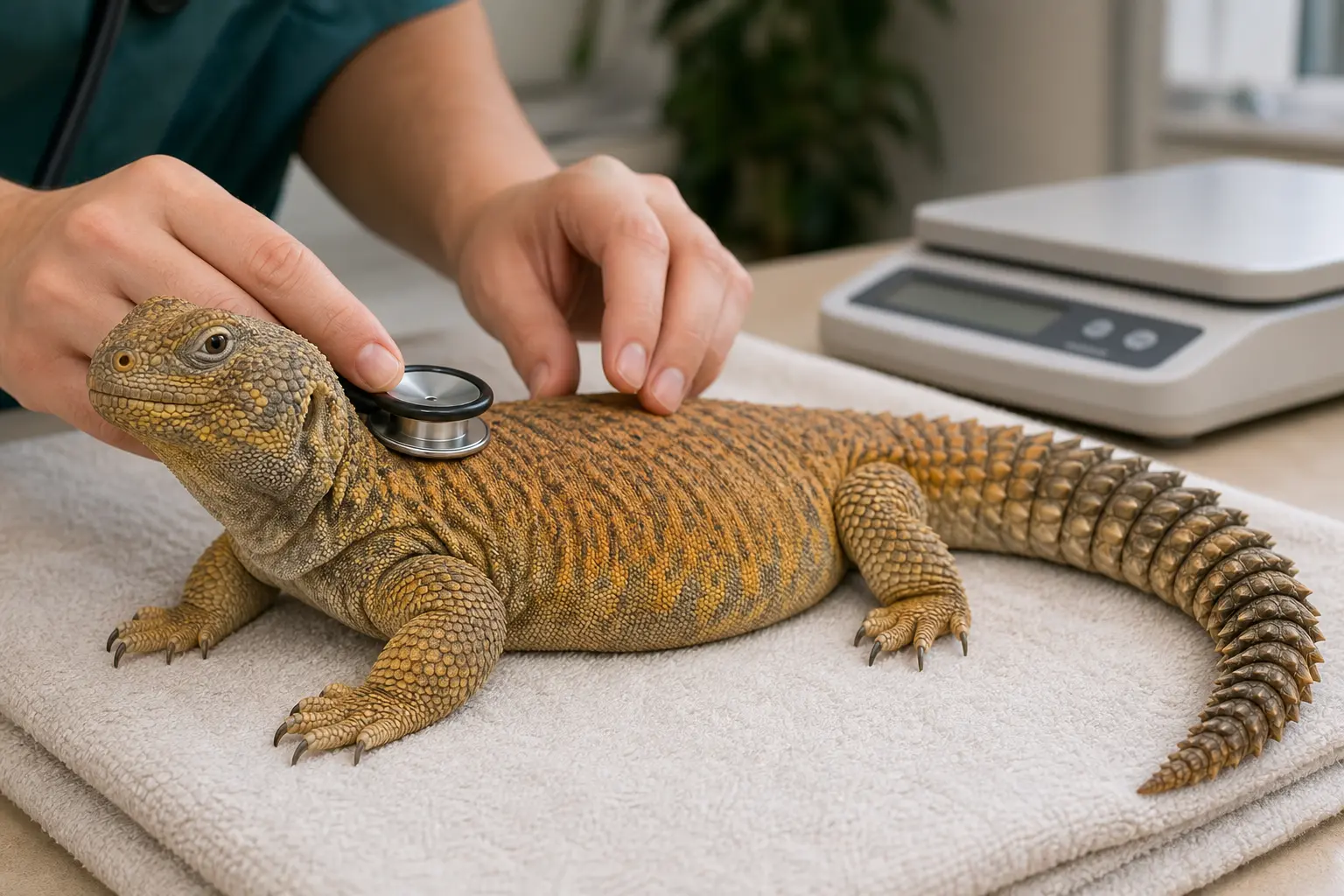
Healthy adult Moroccan uromastyx receiving a calm routine examination from a reptile veterinarian on a clean towel.

The short answer

Establish routine care and act early on abnormal signs for uromastyx

A uromastyx should have a reptile veterinarian before trouble starts and an annual health check. Use the guide below when the uromastyx's normal pattern changes.

Adult home
Identify the exact species first; begin at 227 L (60 gal), then scale up substantially for longer species and provide broad floor space
Warm zone
Basking surface about 49°C (120°F); daytime gradient about 27–38°C (80–100°F)
Cool and night
A deep shaded retreat at the cool end; All visible lights off; allow a measured 5–8°C (10–15°F) drop
Humidity
Usually 10–40%, confirmed for the exact species, with dry ventilation, fresh water, and no persistently damp substrate
UVB
Strong measured linear UVB overlapping the broad basking zone, with unobstructed exposure and complete shade
Food
A varied herbivorous menu led by calcium-rich dark greens, grasses, leaves, and flowers, with suitable vegetables, pulses, and seeds in smaller roles

The honest fit

Would the adult routine work in your home?

Do this

  • Establish a reptile veterinarian before an urgent day.
  • Bring weights, photos, diet details, and measured habitat readings.
  • Keep fresh water and monitor uromastyx behavior every day.
  • Record changes so a reptile veterinarian receives useful evidence.

Avoid this

  • Do not wait on breathing distress, burns, collapse, or prolapse.
  • Do not give human medicine or attempt invasive home treatment.
  • Do not copy another reptile species' setup.
  • Do not treat a persistent health change as a shopping problem.
01

Create a baseline

The Royal Veterinary College recommends annual health checks for pet reptiles. Bring the setup details, diet and supplement plan, recent weights, and clear photos of the enclosure so preventive advice can be specific.

At home, record weight on the same scale and notice eyes, mouth, skin, toes, tail, gait, posture, droppings, appetite, breathing, and activity. Small consistent observations are more useful than waiting for a dramatic symptom.

Adult Moroccan spiny-tailed lizard representing the pet uromastyx group, basking beside a rocky retreat with its sturdy body and complete whorled tail in clear view.
02

Know the signs that should not wait

Call promptly for an abrupt change in breathing, posture, movement, appetite, droppings, weight, or shedding. Burns, severe weakness, bleeding, seizures, and prolapsed tissue are urgent.

Do not improvise treatment before the examination. Ask the reptile veterinarian what supportive care is appropriate while you prepare for the appointment.

Alert adult Moroccan uromastyx exploring a spacious dry rocky habitat with its broad head, sturdy orange-tan body, and complete armored spiny tail in view.
03

Make transport useful

Use a secure ventilated carrier lined with clean absorbent paper or a towel, keep transit short, and prevent temperature extremes. Heat packs must stay outside the carrier with a buffer and room to move away from warmth.

Call ahead, then bring the uromastyx's timeline, weights, food and supplement names, photos of droppings or lesions, and actual warm, cool, and humidity readings. Keep the enclosure stable while you travel unless the clinic tells you otherwise.

Keep deciding

See the complete care picture

Sources and further reading