Uromastyx · Stuck shed

Why is my uromastyx having stuck shed?

Uromastyx shed problems need a gentle response. Correct hydration and humidity, never pull skin, and call a reptile veterinarian about tight toe bands or repeated trouble.

Loose skin on a uromastyx differs from a tight retained band. Protect its new skin while improving the enclosure.

Use the practical checks
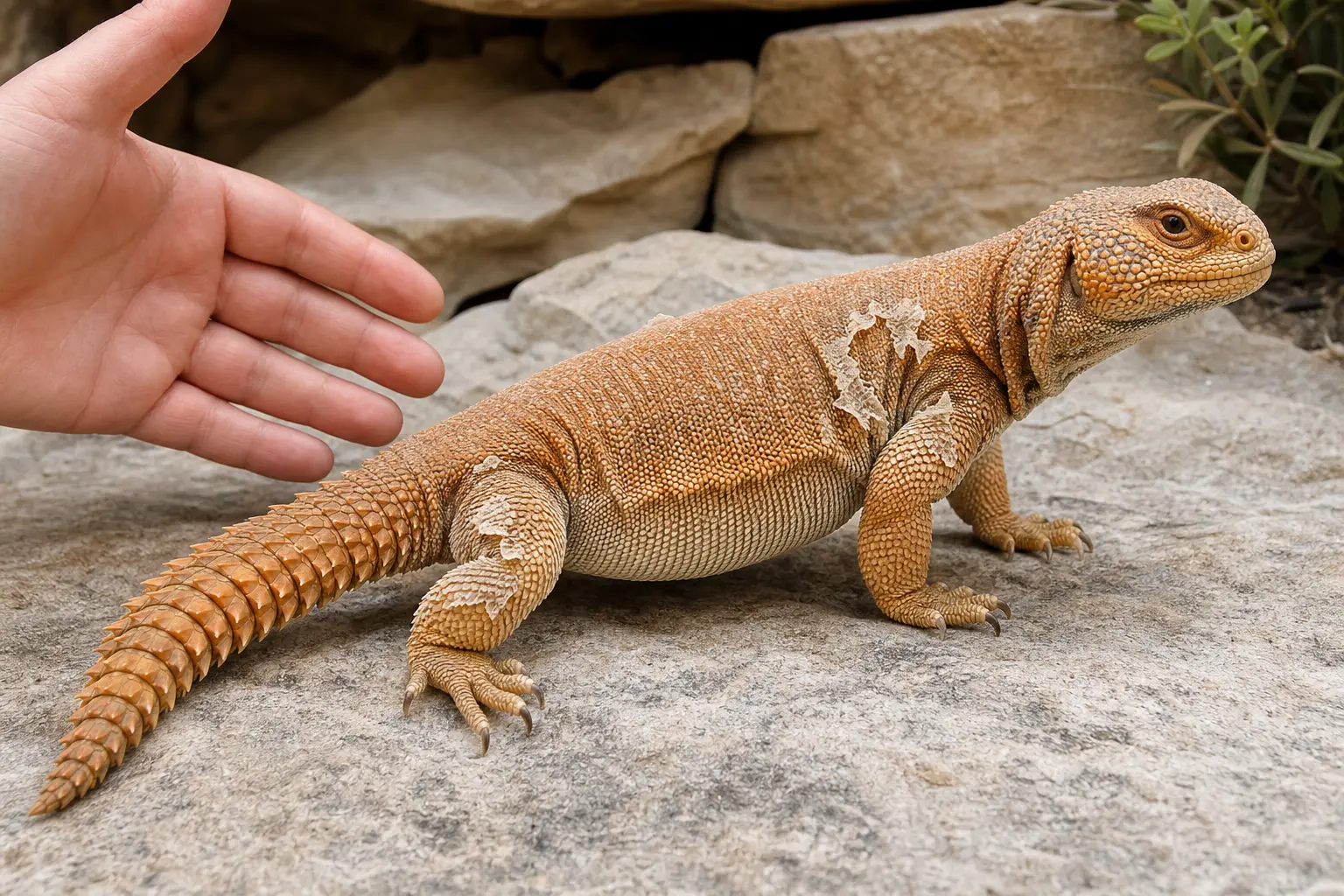
Adult Moroccan uromastyx during a normal patchy shed while a keeper visually checks the toes, limbs, and armored tail without pulling skin.

The short answer

Fix the conditions and protect delicate toes for uromastyx

Uromastyx shed problems need a gentle response. Correct hydration and humidity, never pull skin, and call a reptile veterinarian about tight toe bands or repeated trouble.

Adult home
Identify the exact species first; begin at 227 L (60 gal), then scale up substantially for longer species and provide broad floor space
Warm zone
Basking surface about 49°C (120°F); daytime gradient about 27–38°C (80–100°F)
Cool and night
A deep shaded retreat at the cool end; All visible lights off; allow a measured 5–8°C (10–15°F) drop
Humidity
Usually 10–40%, confirmed for the exact species, with dry ventilation, fresh water, and no persistently damp substrate
UVB
Strong measured linear UVB overlapping the broad basking zone, with unobstructed exposure and complete shade
Food
A varied herbivorous menu led by calcium-rich dark greens, grasses, leaves, and flowers, with suitable vegetables, pulses, and seeds in smaller roles

The honest fit

Would the adult routine work in your home?

Do this

  • Inspect the toes, limbs, eyes, vent, and every tail ring after a shed.
  • Correct temperature, hydration, and the species moisture pattern.
  • Keep fresh water and monitor uromastyx behavior every day.
  • Record changes so a reptile veterinarian receives useful evidence.

Avoid this

  • Do not pull firmly attached skin.
  • Do not use oils, tape, hot baths, or tools near the eyes.
  • Do not copy another reptile species' setup.
  • Do not treat a persistent health change as a shopping problem.
01

Inspect without peeling

After a shed, look closely at toes, limbs, eyes, vent, skin folds, and every ring of the armored tail during the normal patchy shed. Use bright neutral light and let the uromastyx stand naturally so tight rings, swollen tissue, or reduced grip are easier to notice.

Do not tear or tug at skin that does not release with almost no resistance. Pulling can damage fresh skin, eyes, toe pads, or circulation, especially on a small animal.

Adult Moroccan spiny-tailed lizard representing the pet uromastyx group, basking beside a rocky retreat with its sturdy body and complete whorled tail in clear view.
02

Correct the shed environment

Review usually 10–40%, confirmed for the exact species, with dry ventilation, fresh water, and no persistently damp substrate, fresh water, diet, temperatures, and clean textured surfaces. For this species, use species confirmation, dry cross-ventilation, hygrometers at animal level, clean fresh water, moisture-rich plant foods, and immediate correction of persistently damp substrate.

A clean humid retreat can help loosen a small remnant. Avoid hot baths, oils, adhesive tape, forceps near eyes, and prolonged restraint; repeated trouble may have a medical cause rather than a misting-only solution.


Alert adult Moroccan uromastyx exploring a spacious dry rocky habitat with its broad head, sturdy orange-tan body, and complete armored spiny tail in view.
03

Know when not to wait

Call a reptile veterinarian when retained skin on a uromastyx circles a toe, limb fold, or tail ring, involves the eye, causes swelling or color change, or returns across several sheds.

Bring recent weight, feeding, humidity, and temperature records. A qualified reptile veterinarian can use them to investigate parasites, infection, nutrition problems, dehydration, or another underlying condition.

Keep deciding

See the complete care picture

Sources and further reading