

Do this
- Read a hygrometer before adding water.
- Keep ventilation open and the wet area clean.
- Keep fresh water and monitor Russian tortoise behavior every day.
- Record changes so a reptile veterinarian receives useful evidence.
Russian tortoise · Humidity control
Dry, well-ventilated main habitat with deep burrowable substrate, a sheltered retreat, shallow clean water, and no waterlogged ground.
Russian tortoises come from dry country but still drink, soak, and shelter below the surface. Surface dryness and access to water must coexist.
Use the practical checks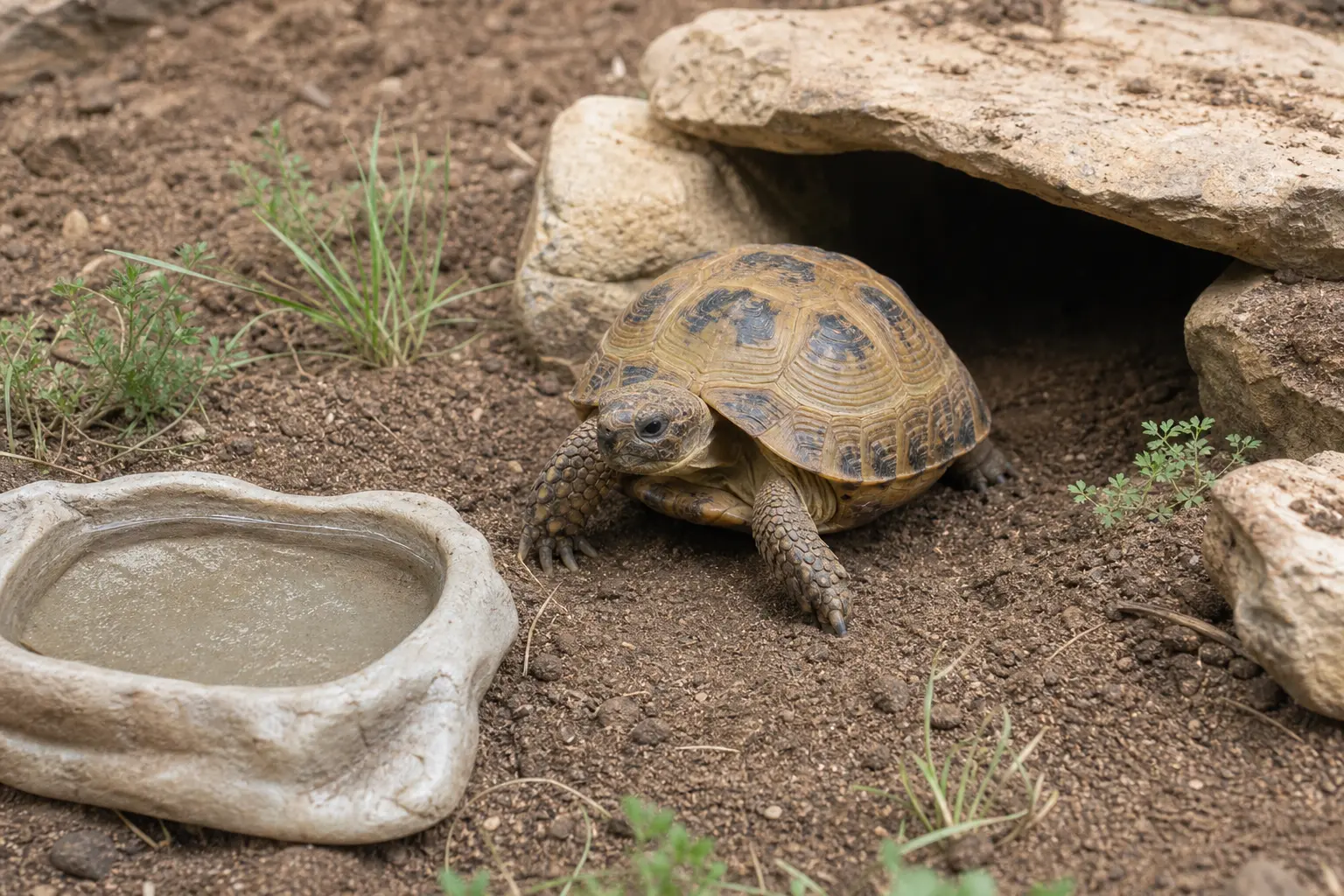
Put it into practice
For a Russian tortoise, use dry ventilated surface conditions, deep naturalistic substrate that supports burrowing, a sheltered retreat, a shallow water dish, and regular checks for damp or waterlogged areas. Check conditions where the tortoise basks, hides, and burrows instead of treating one room reading as the whole habitat.
Keep the surface free of persistent wetness and remove damp waste promptly. A dry-climate enclosure still needs a clean shallow dish the tortoise can enter and leave safely.
Use deep stable soil-based substrate that supports digging without collapsing, producing dust clouds, or remaining waterlogged. Keep the sheltered area clean and inspect it for cold damp patches.
Avoid calci-sand, gravel, wood shavings, cat litter, and other substrates the RSPCA identifies as unsuitable. Outdoor ground needs drainage plus shade and a waterproof refuge.
Watch drinking, urates, skin, eyes, appetite, weight, breathing, and use of the water and buried retreat. Record changes alongside temperature and substrate condition.
Sunken eyes, persistent thick or gritty urates, wheezing, nasal discharge, swollen eyes, sores, or continuing appetite loss deserve reptile-veterinary advice rather than repeated soaking experiments.
Optional equipment for measuring and managing the enclosure. The target range, ventilation, drainage, and drying cycle remain species-specific.
Affiliate links: Furball Cove may earn from qualifying purchases at no extra cost to you.
Keep deciding