

Russian tortoise · Stuck shed

Why is my Russian tortoise having stuck shed?

Russian tortoises normally shed neck and leg skin gradually in small pieces. Do not pull it, and get veterinary advice if skin or shell changes look abnormal or keep returning.

Tortoise skin does not usually release as one complete sheet, and shell scutes should not be peeled like loose skin.

Use the practical checks
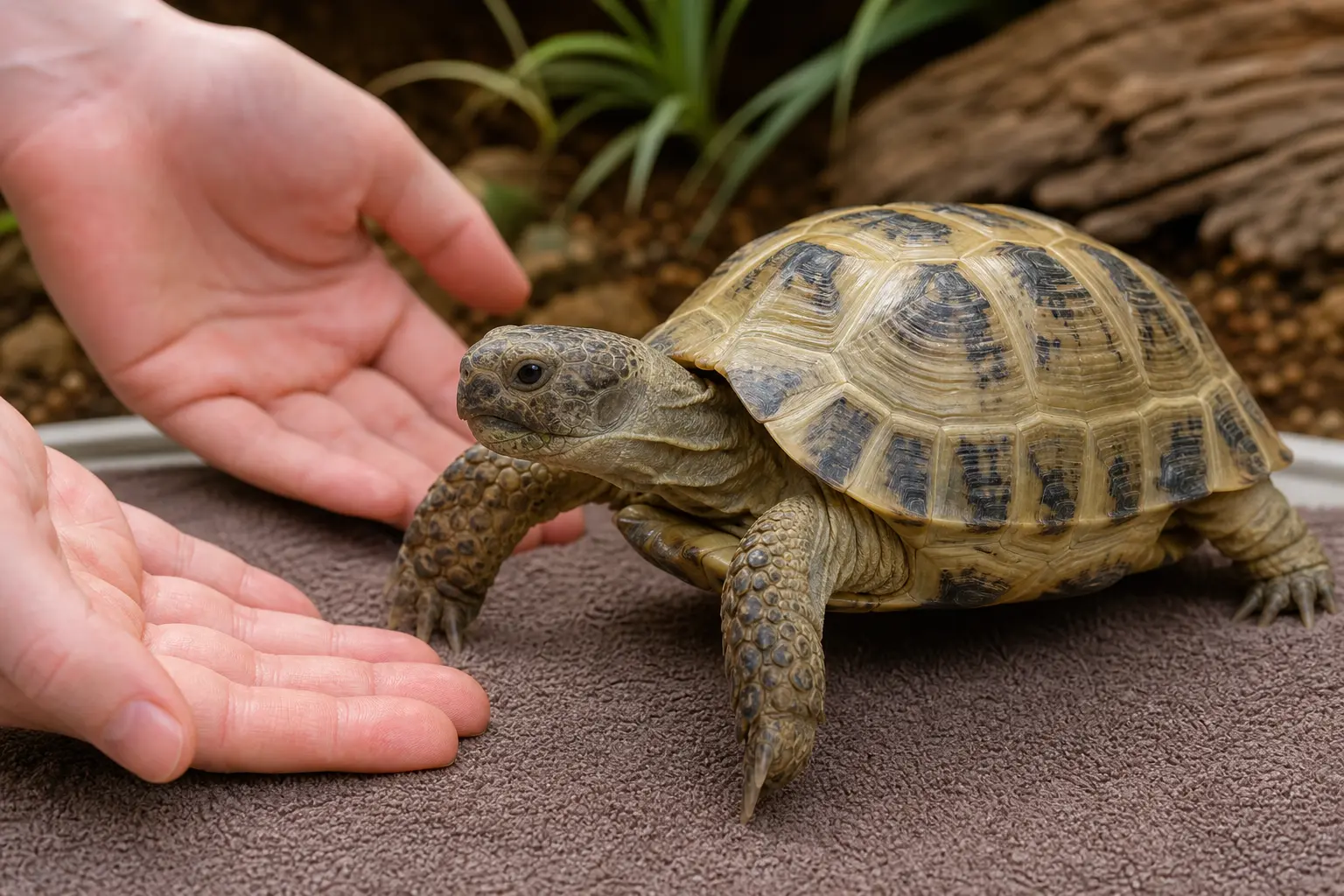
Adult Russian tortoise standing calmly while a keeper visually checks the neck and leg skin without pulling naturally loosening flakes.

The short answer

Let normal flakes release and investigate abnormal skin or shell for russian tortoises

Russian tortoises normally shed neck and leg skin gradually in small pieces. Do not pull it, and get veterinary advice if skin or shell changes look abnormal or keep returning.

Adult home
At least 180 × 120 cm (71 × 47 in) indoors for one adult, plus a secure seasonal outdoor area where climate permits
Warm zone
Broad basking zone about 35°C (95°F)
Cool and night
Daytime ambient gradient about 20–25°C (68–77°F); Visible lights off; RSPCA guidance allows a nighttime drop toward 15°C (59°F) for a healthy, appropriately managed animal
Humidity
Dry, well-ventilated main habitat with deep burrowable substrate, a sheltered retreat, shallow clean water, and no waterlogged ground
UVB
Broad species-appropriate linear UVB over the basking area, installed to the fixture maker's measured distance guidance with complete shade
Food
A varied high-fibre, low-protein menu of safe pesticide-free weeds, leaves, and flowers with a reviewed calcium plan

The honest fit

Would the adult routine work in your home?

Do this

  • Inspect the neck, limbs, tail, eyes, and shell margins after a shed.
  • Correct temperature, hydration, and the species moisture pattern.
  • Keep fresh water and monitor russian tortoise behavior every day.
  • Record changes so a reptile veterinarian receives useful evidence.

Avoid this

  • Do not pull firmly attached skin.
  • Do not use oils, tape, hot baths, or tools near the eyes.
  • Do not copy another reptile species' setup.
  • Do not treat a persistent health change as a shopping problem.
01

Know what normal looks like

Small dry flakes around the neck, legs, and tail can loosen as a russian tortoise grows. The skin beneath should not be raw, swollen, wet, foul-smelling, or bleeding.

The shell should remain hard and intact. Lifting, soft, pitted, cracked, or discolored shell areas are not a stuck-shed problem to solve by pulling.

Adult Russian tortoise walking across dry steppe soil with its rounded patterned shell, sturdy forelegs, and bright face in clear view.
02

Correct the whole setup

Review basking heat, UVB, diet, calcium guidance, and cleanliness. Maintain dry ventilated surface conditions, deep naturalistic substrate that supports burrowing, a sheltered retreat, a shallow water dish, and regular checks for damp or waterlogged areas. Rough stable surfaces and normal walking help more than forced peeling.

Do not use oils, adhesive tape, forceps, or hot baths. Never pry at shell scutes or firmly attached skin; those methods can damage living tissue and hide the real cause.

Alert adult Russian tortoise walking through a spacious dry planted habitat with its rounded tan-and-dark shell, sturdy digging legs, and clear eyes in view.
03

Know when not to wait

Call your veterinarian or a reptile veterinarian for sores, fungal-looking patches, swelling, redness, odor, shell softness, cracks, bleeding, or skin that hangs in unusual thick folds.

Bring your veterinarian recent weights, food and supplement details, temperatures, lighting distance, substrate notes, and clear photos. Repeated abnormal shedding may reflect infection, nutrition, parasites, dehydration, or another illness.

Keep deciding

See the complete care picture

Sources and further reading