

Do this
- Read a hygrometer before adding water.
- Keep ventilation open and the wet area clean.
- Keep fresh water and monitor uromastyx behavior every day.
- Record changes so a reptile veterinarian receives useful evidence.
Uromastyx · Humidity control
Usually 10–40%, confirmed for the exact species, with dry ventilation, fresh water, and no persistently damp substrate.
Desert care means dry air and dependable hydration choices—not deliberate dehydration.
Use the practical checks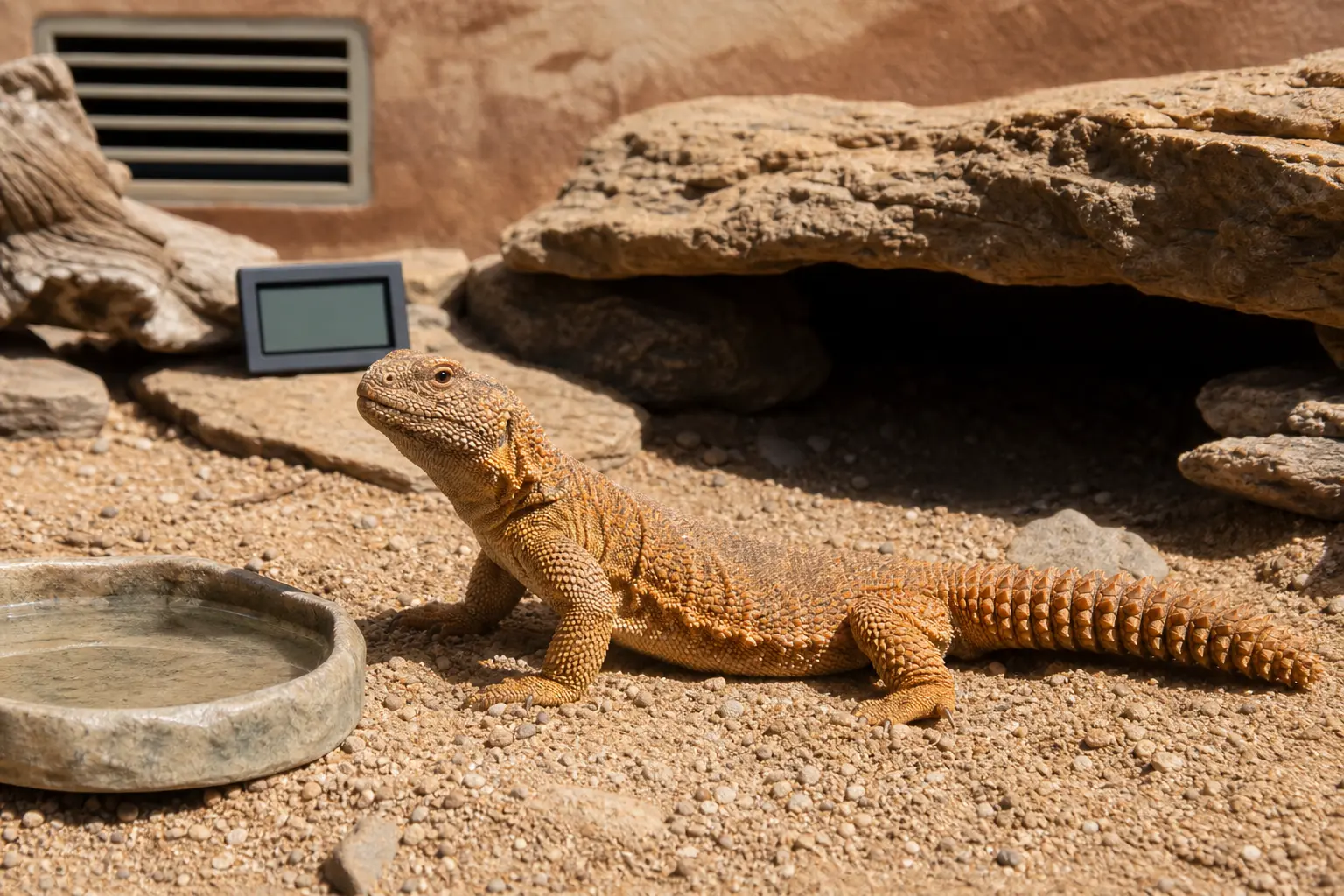
Put it into practice
For a uromastyx, use species confirmation, dry cross-ventilation, hygrometers at animal level, clean fresh water, moisture-rich plant foods, and immediate correction of persistently damp substrate. Moroccan, ornate, and Egyptian animals differ enough that one generic number should not decide the whole habitat.
Place digital hygrometers in representative warm and cool areas, away from the water dish. Read them with ventilation, substrate, room season, and the animal's use of retreats.
Offer fresh shallow water in a stable dish and replace it daily. Moisture-rich plant foods also contribute water, but they do not make drinking access optional.
Remove spills, waste, and wilted food promptly. Keep vents clear and correct any substrate pocket that stays damp, smells sour, or grows mold.
Watch eyes, skin, urates, appetite, weight, breathing, activity, and patchy shed quality alongside measured humidity.
Sunken eyes, persistent gritty urates, wheezing, nasal discharge, sores, swelling, or continuing appetite and weight loss deserve reptile-veterinary advice rather than repeated misting or withholding water.
Optional equipment for measuring and managing the enclosure. The target range, ventilation, drainage, and drying cycle remain species-specific.
Affiliate links: Furball Cove may earn from qualifying purchases at no extra cost to you.
Keep deciding