Pancake tortoise · Malacochersus tornieri
Meet the pancake tortoise.
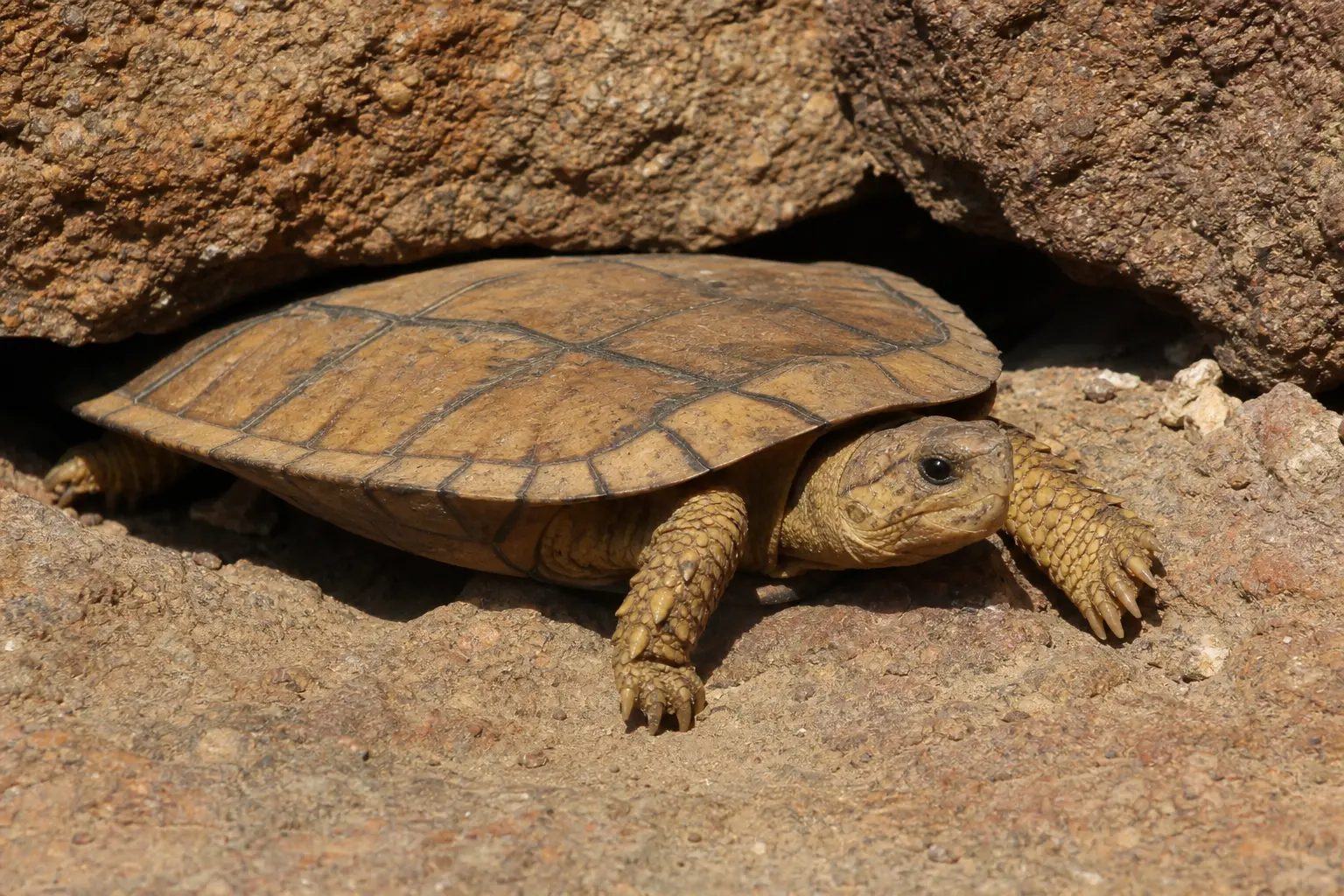
The pancake tortoise is a flat, flexible-shelled East African rock specialist that runs to narrow cracks instead of withdrawing behind heavy armour.
Its unusual shell only makes sense in a sunlit stone maze.
See what they needBefore you decide
Could a pancake tortoise thrive in your home?
Picture the full-grown animal, the permanent enclosure, and the ordinary care you would still be happy to give years from now.
The honest fit
Would their everyday rhythm suit you?
Think about an ordinary week, including the days when you are tired, busy, or away from home.
Life together may suit you if…
- You can provide a large permanent floor or outdoor pen
- You enjoy planting and maintaining a living landscape
- You are ready for a decades-long commitment
- You have a reptile veterinarian and lawful captive-bred source
Pause if…
- You plan to use a glass tank
- You want a pet to carry around
- You cannot provide measured UVB and deep digging soil
- Anchor every rock to structural supports and never pull a hiding tortoise from a crevice.
A comfortable home
Build the home around their choices.
Build a wide, escape-proof landscape with deep diggable soil, edible planting, several hides, bright open basking, deep shade, a shallow walk-in water pan, guarded heat, measured UVB, and opaque walls. Anchor every rock to structural supports and never pull a hiding tortoise from a crevice.
Measure where the animal actually rests
A real retreat from the warm side
Use a digital hygrometer and watch ventilation
Build light and shade as a gradient
The rhythm
What an ordinary week asks of you.
Open the grazing ground
Check basking, shade, UVB, water, humidity choices, eyes, nose, shell, feet, gait, appetite, and boundaries.
Scatter the day's browse
Offer a measured plant rotation across several patches so walking and choosing are part of the meal.
Renew the landscape
Remove waste, refresh water and hides, inspect soil and walls, prune plants, and review weight and shell growth.
Care with tenderness
Learn what is normal for your pancake tortoise.
The adult home comes first
At least 180 × 90 cm for one adult, built around fixed narrow rock crevices. Build and budget that space before bringing home a juvenile.
Shell shape reflects long care
Growth, hydration, diet, heat, and UVB work together; there is no powder that repairs a poor habitat.
Seasonal rest needs a written plan
Never copy a generic hibernation calendar. Identity, origin, health, age, and veterinary guidance matter.
Call for warning signs
Nasal bubbles, swollen eyes, soft shell, shell injury, weak movement, weight change, or appetite loss need a reptile veterinarian.
Good to know
Common questions, answered.
Open any question for a short, practical answer.
Life together
Could a pancake tortoise suit a first-time keeper?
This may suit you if you can provide a large permanent floor or outdoor pen. Pause if you plan to use a glass tank. Build and test the habitat before deciding.
How large do pancake tortoises get?
15–18 cm (6–7 in)
How long do pancake tortoises live?
Often 30 years or more. Individual lifespan varies, so plan around the longer end.
When are pancake tortoises active?
A daytime walker, grazer, digger, and deliberate explorer
Do pancake tortoises enjoy handling?
Keep lifting rare; support the shell and all four feet when necessary. Watch the animal's posture and movement, support the whole body, and stop when it tries to leave.
Can two pancake tortoises live together?
House alone
What do pancake tortoises eat?
A high-fibre rotation of safe grasses, weeds, leaves, and flowers
How large should a pancake tortoise's enclosure be?
Start with at least 180 × 90 cm for one adult, built around fixed narrow rock crevices. More usable room is valuable when it creates better gradients, cover, and movement choices.
Home and health
What temperatures does a pancake tortoise need?
Provide a broad shell-sized zone around 35–40°C (95–104°F), with a shaded retreat around 23–27°C (73–81°F). Measure both where the animal actually spends time and control every heater appropriately.
Does a pancake tortoise need UVB?
The reviewed plan calls for measured strong UVB over open basking ground, with complete shade. Fixture, reflector, mesh, distance, lamp age, and shade all change what reaches the animal.
What humidity does a pancake tortoise need?
Mostly 30–50%, with a secure humid retreat. Check it with a digital hygrometer. Keep fresh air moving through the enclosure, and let the animal choose between damp shelter and dry ground.
What should be inside the enclosure?
Build a wide, escape-proof landscape with deep diggable soil, edible planting, several hides, bright open basking, deep shade, a shallow walk-in water pan, guarded heat, measured UVB, and opaque walls. Anchor every rock to structural supports and never pull a hiding tortoise from a crevice.
What substrate works for a pancake tortoise?
Deep packed soil with species-appropriate sand, leaf litter, and humid shelter pockets
What does ordinary cleaning involve?
Remove waste and spoiled food promptly; refresh water and inspect eyes, nose, mouth, shell, feet, weight, burrows, guards, and boundaries.
What should I arrange before bringing a pancake tortoise home?
Build and test the complete adult habitat, verify the readings over several days, identify a reptile veterinarian, check local and rental rules, and choose a responsible captive source or rescue.
Can a healthy-looking pancake tortoise carry Salmonella?
Yes. Reptiles can carry Salmonella without looking ill, so handwashing and keeping habitat water, food, and cleaning equipment away from kitchens are part of ordinary care.
Still thinking about pancake tortoises?
Put this animal beside the others on your shortlist. Then build and test the complete adult habitat before anyone comes home.
Compare reptilesSources and care boundaries
Exact targets depend on the measured location, equipment, animal, and veterinary context. This profile keeps source disagreements visible instead of blending them into one number.