Reptile guides
Choose and Set Up a Reptile Habitat
Choose the exact habitat first, then build and test each system.
Start with the species and its full-grown needs.
1. Choose the habitat
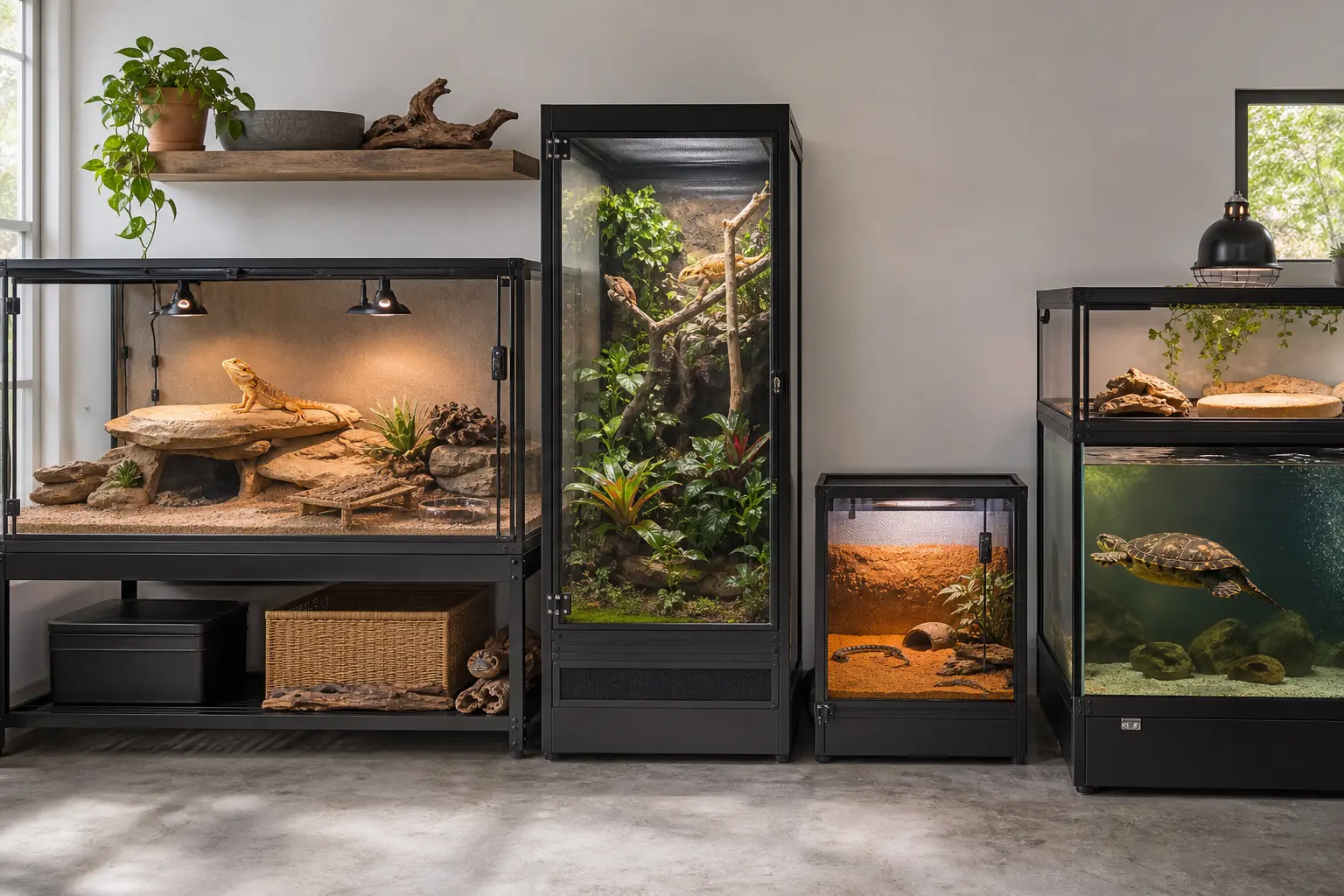
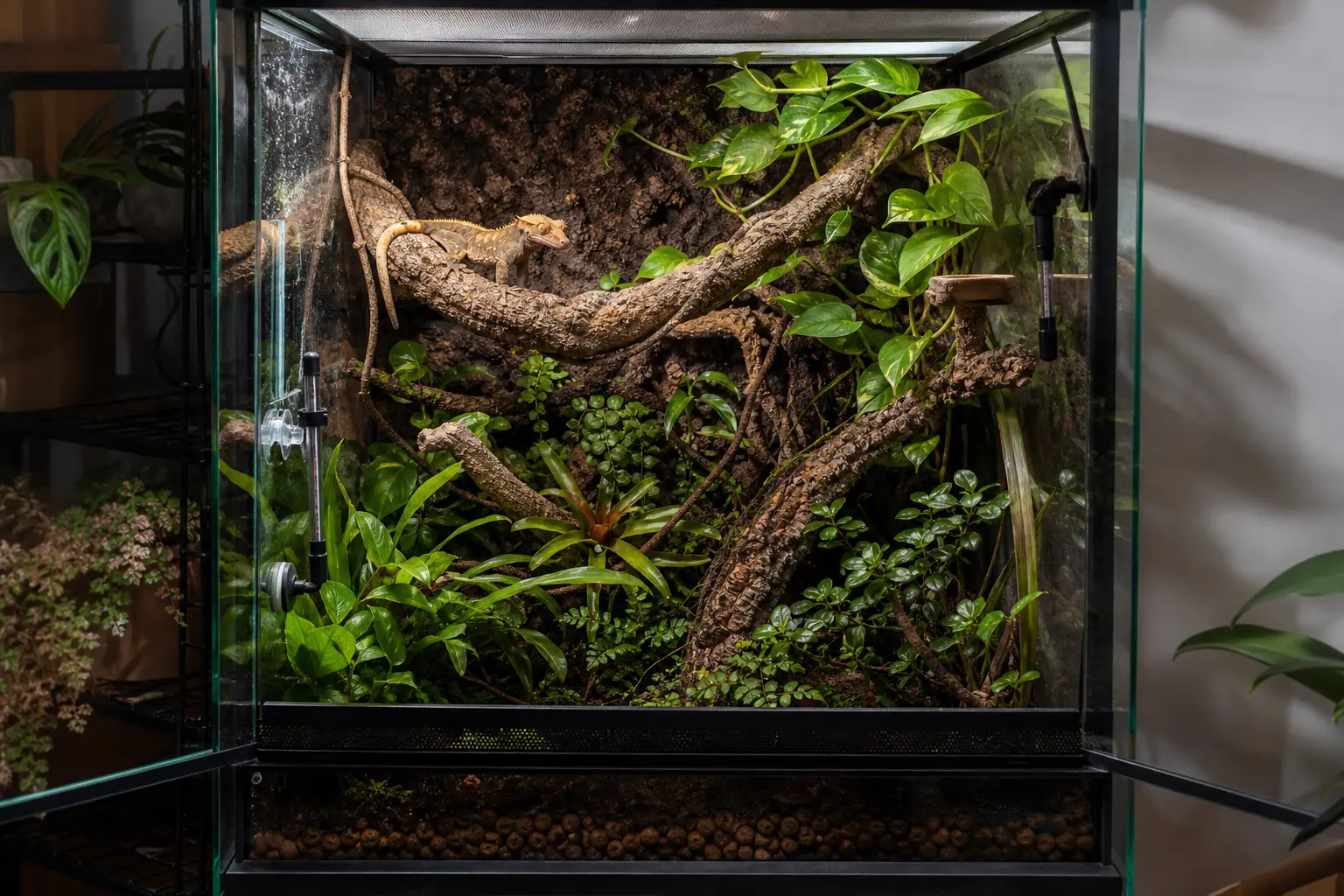
Choose from the exact species, adult size, and natural movement.
2. Set it up
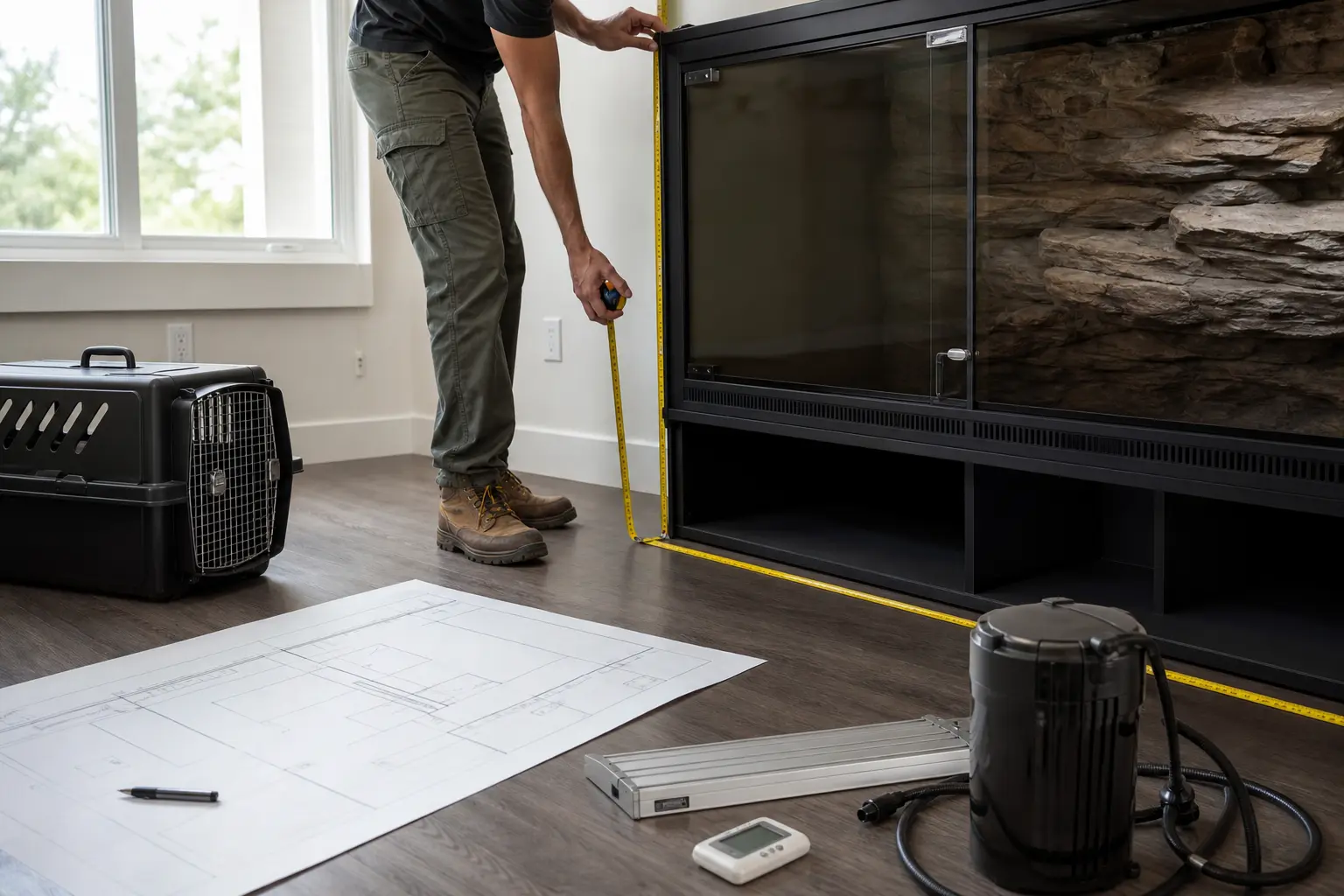
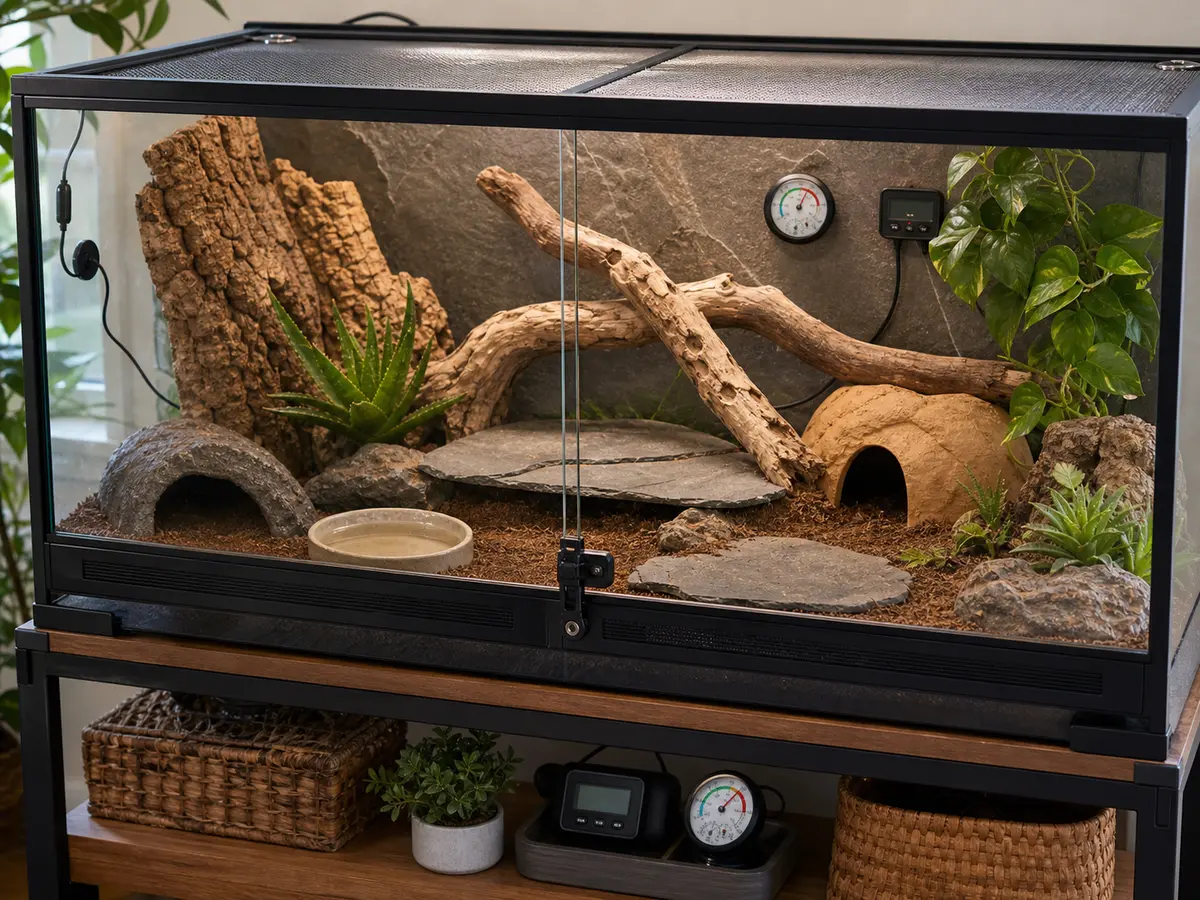
Build the empty habitat in order, then measure it before move-in.
 Follow the Setup Roadmap
Work through five setup steps in order.
Follow the Setup Roadmap
Work through five setup steps in order.
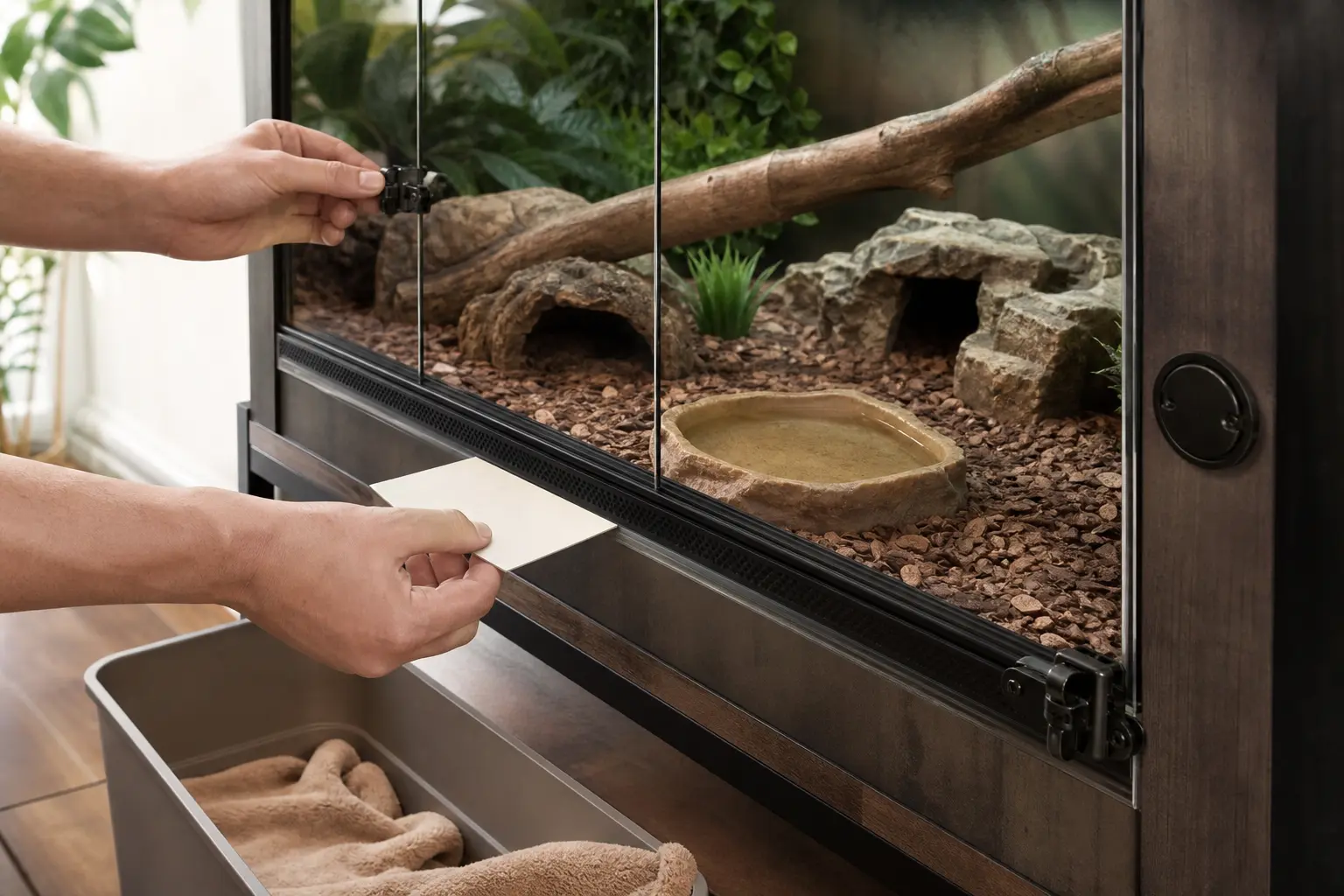 Size & Security
Plan adult space, access, doors, gaps, and stable equipment.
Size & Security
Plan adult space, access, doors, gaps, and stable equipment.
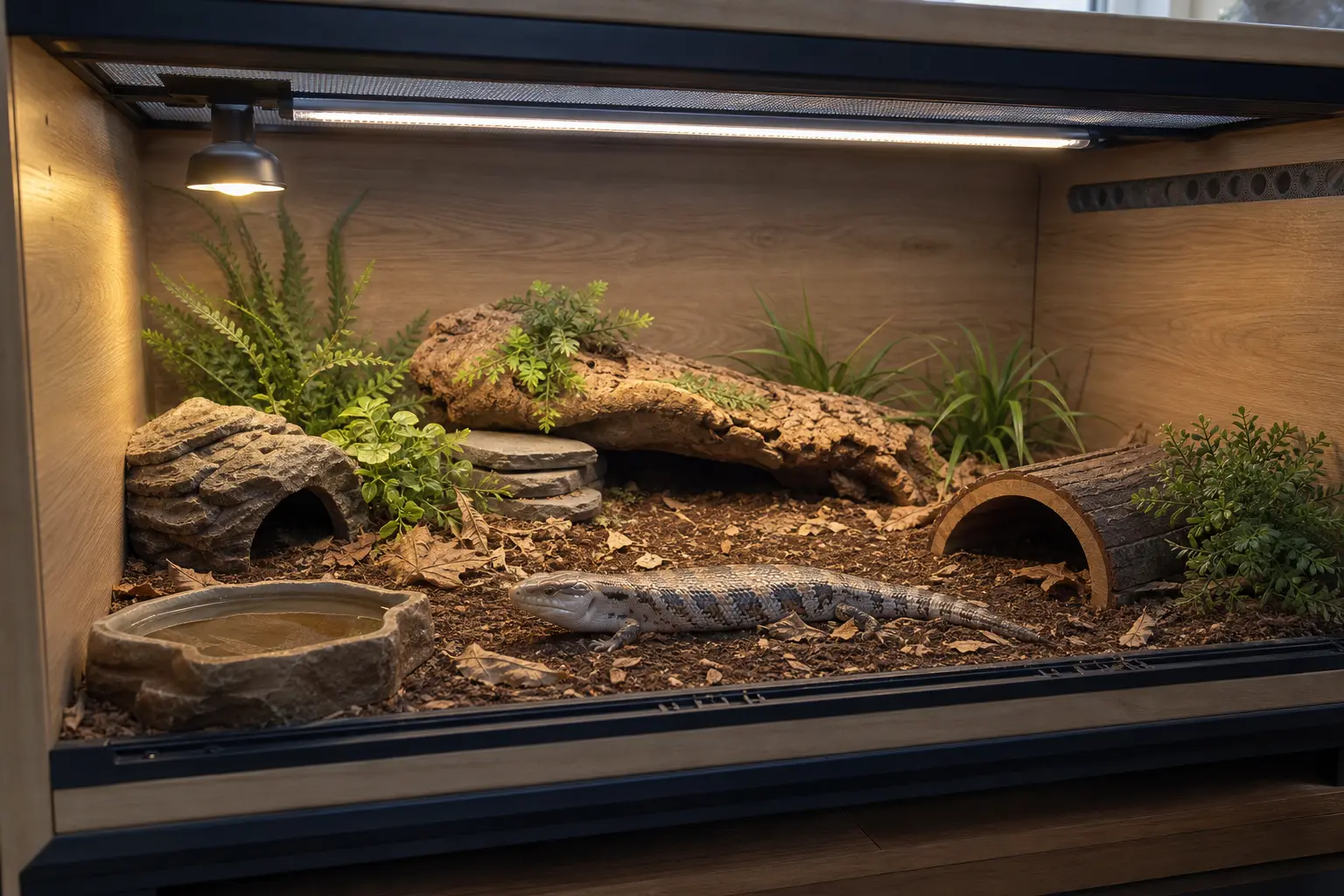 Layout, Hides & Furnishings
Arrange cover and movement routes for the species.
Layout, Hides & Furnishings
Arrange cover and movement routes for the species.
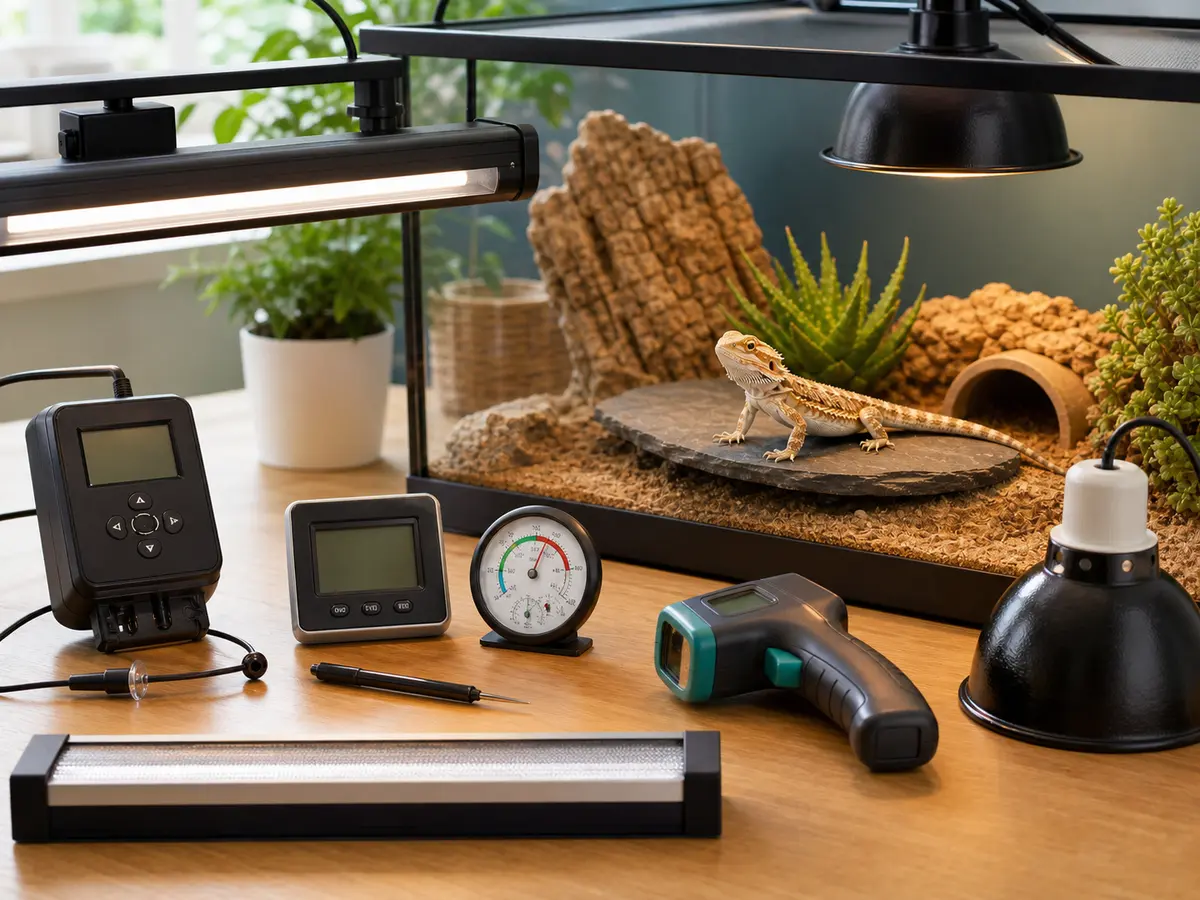 Heating & Lighting
Build and measure the warm-to-cool light cycle.
Heating & Lighting
Build and measure the warm-to-cool light cycle.
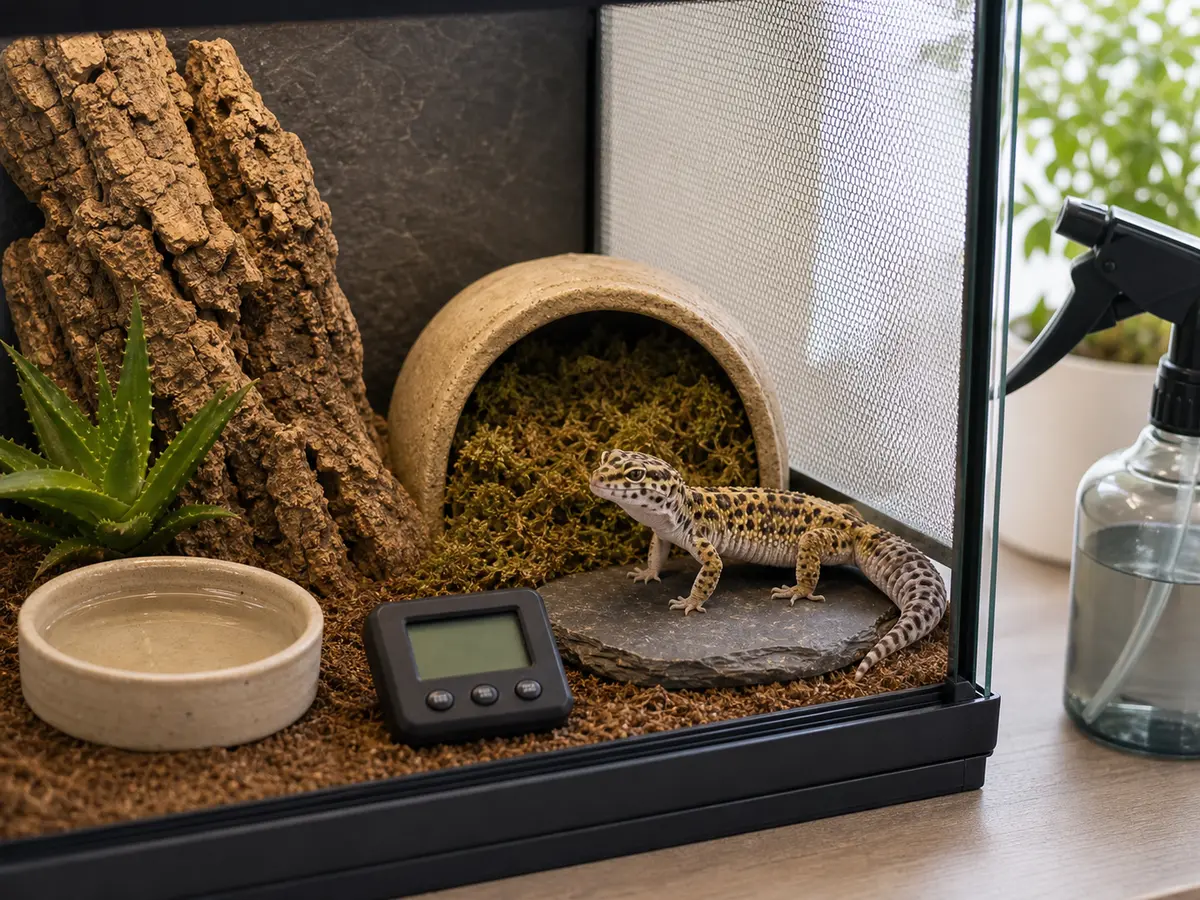 Humidity & Airflow
Create the species' moisture pattern without stale air.
Humidity & Airflow
Create the species' moisture pattern without stale air.
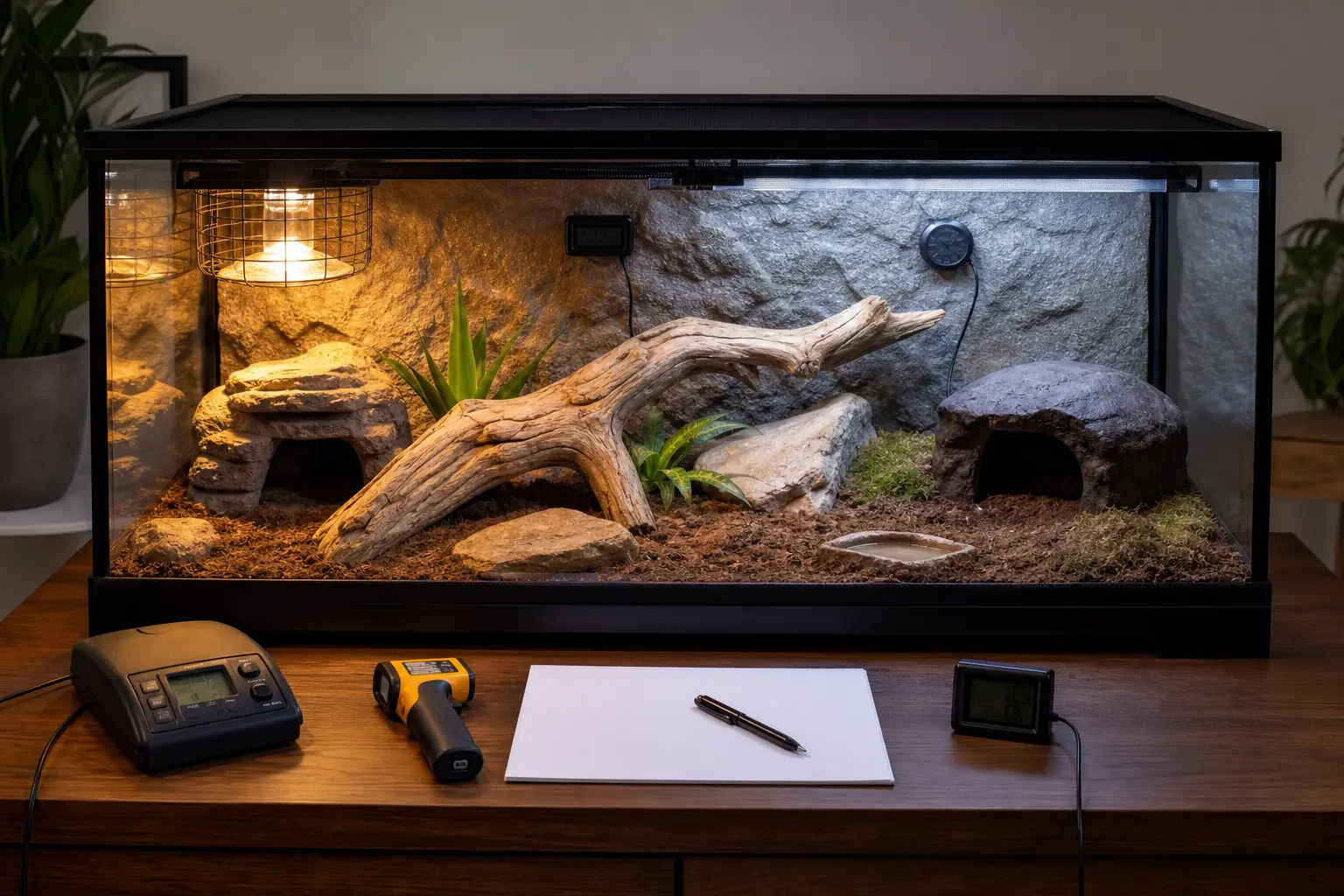 Test the Empty Habitat
Run every system and correct unstable conditions.
Test the Empty Habitat
Run every system and correct unstable conditions.
References
Useful tools for a secure, measurable habitat
Optional equipment matched to this enclosure topic. Start with adult dimensions and species-specific heat, UVB, humidity, and security requirements.
Affiliate links: Furball Cove may earn from qualifying purchases at no extra cost to you.