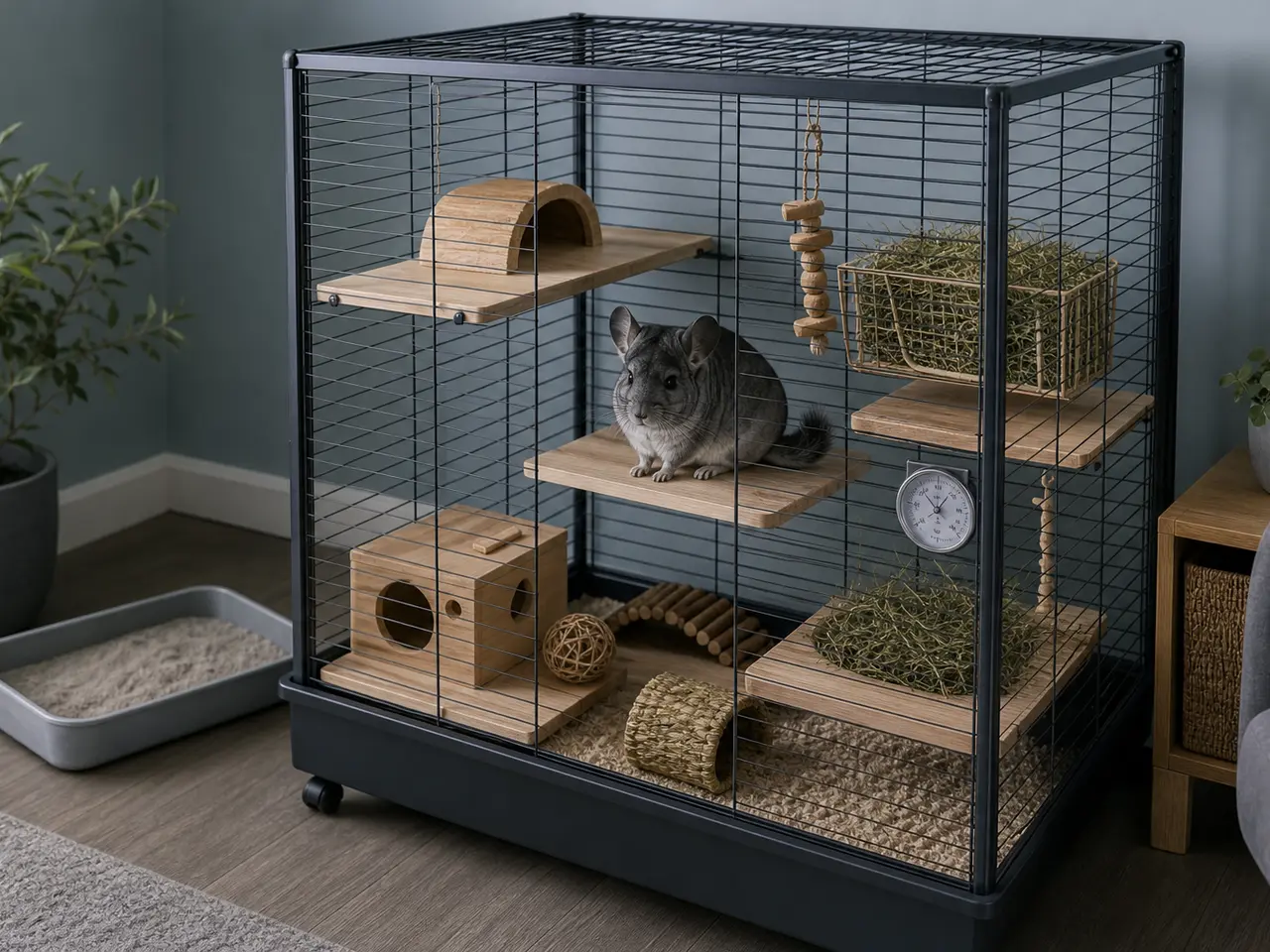
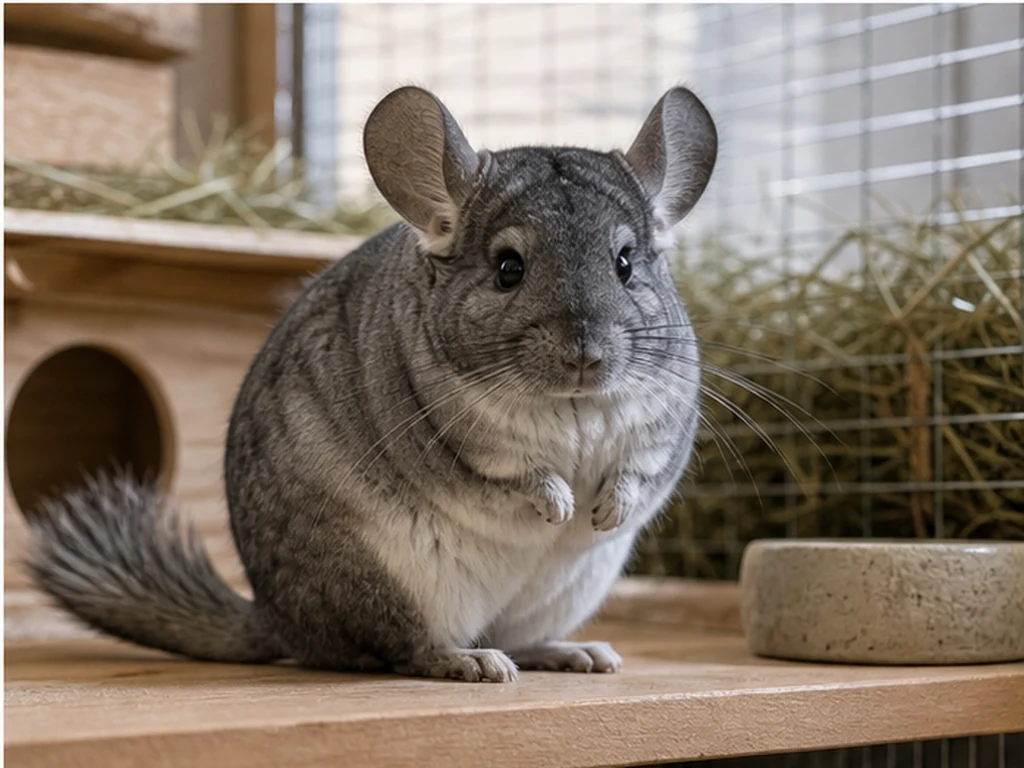
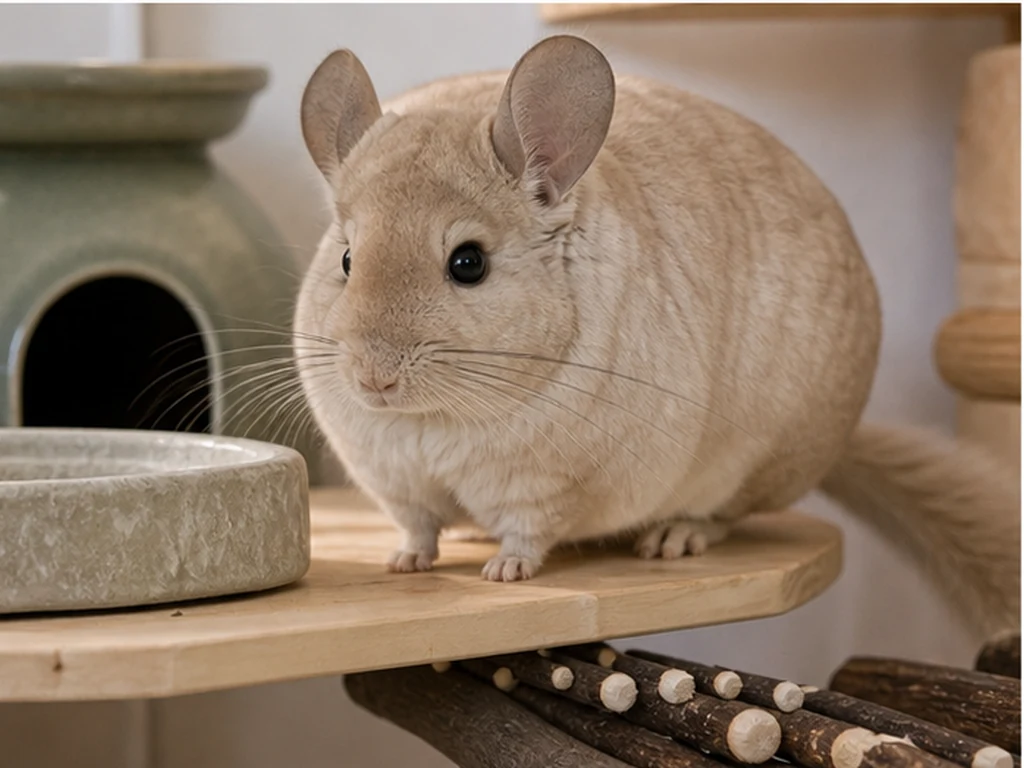
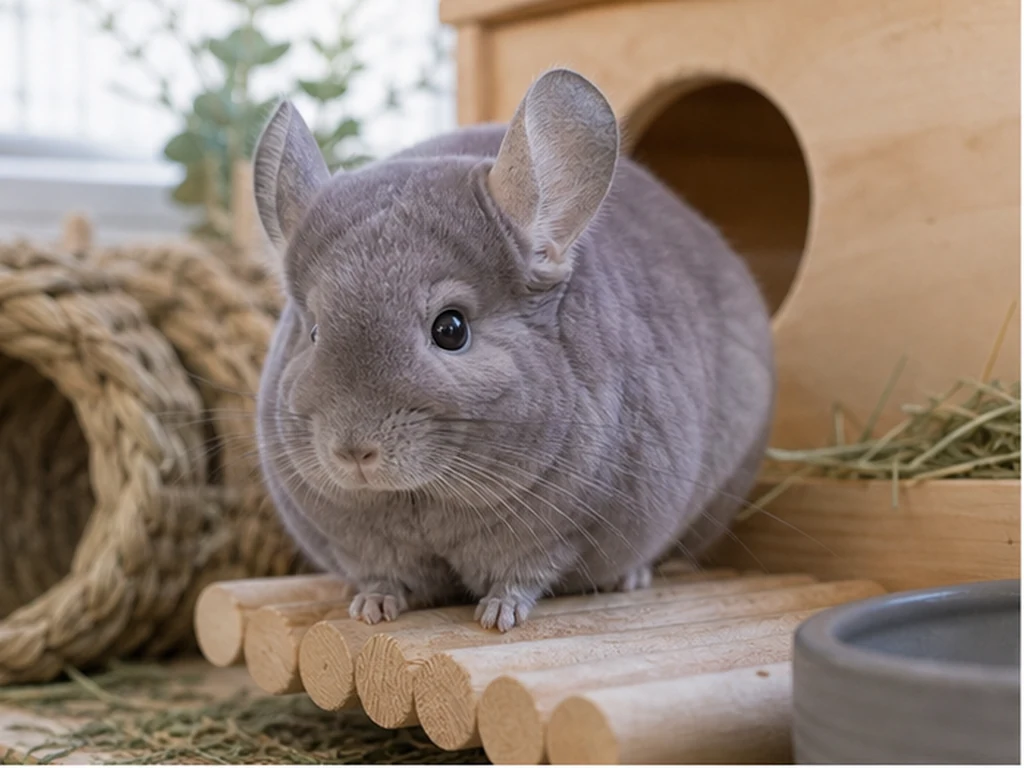
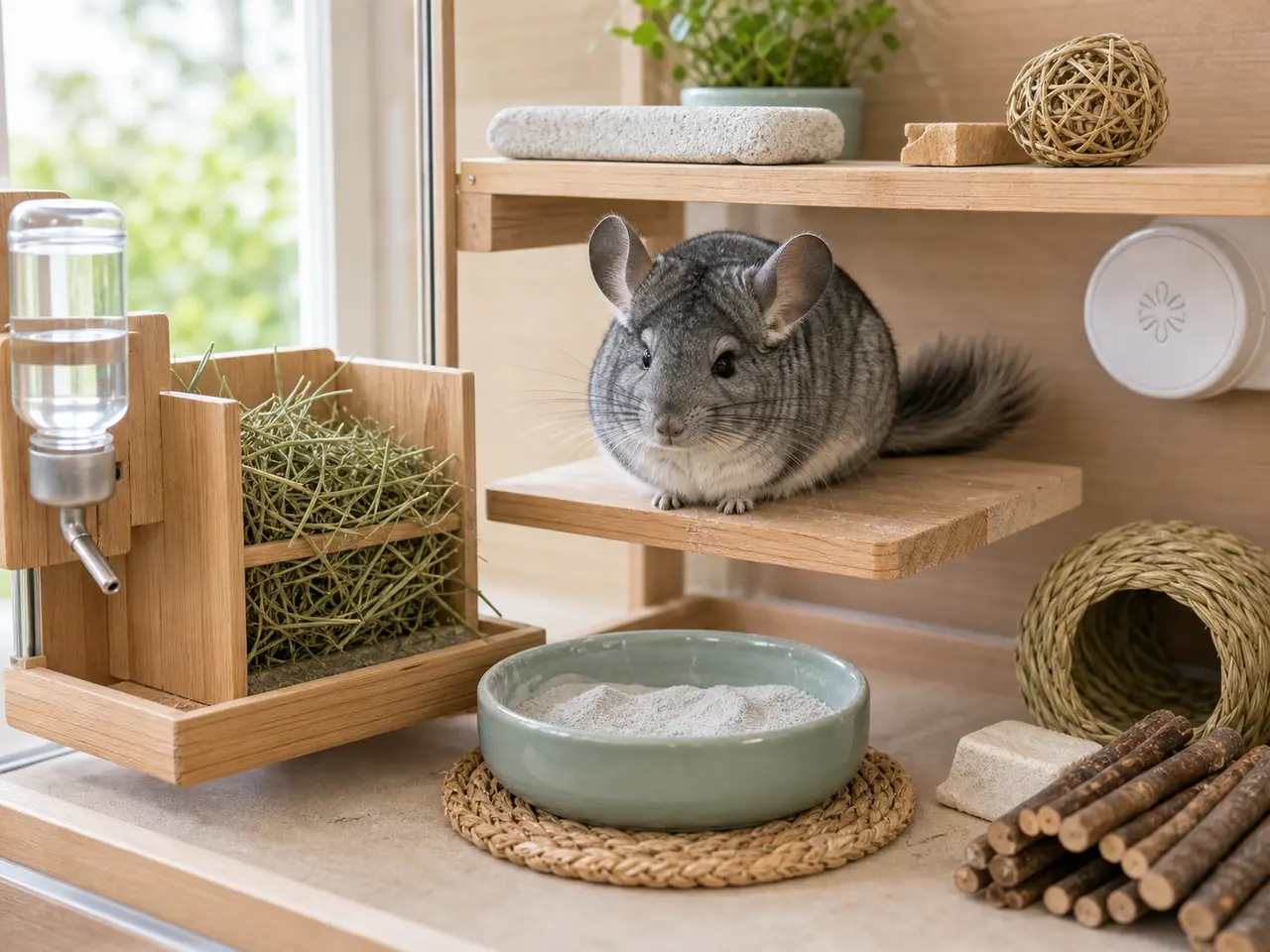
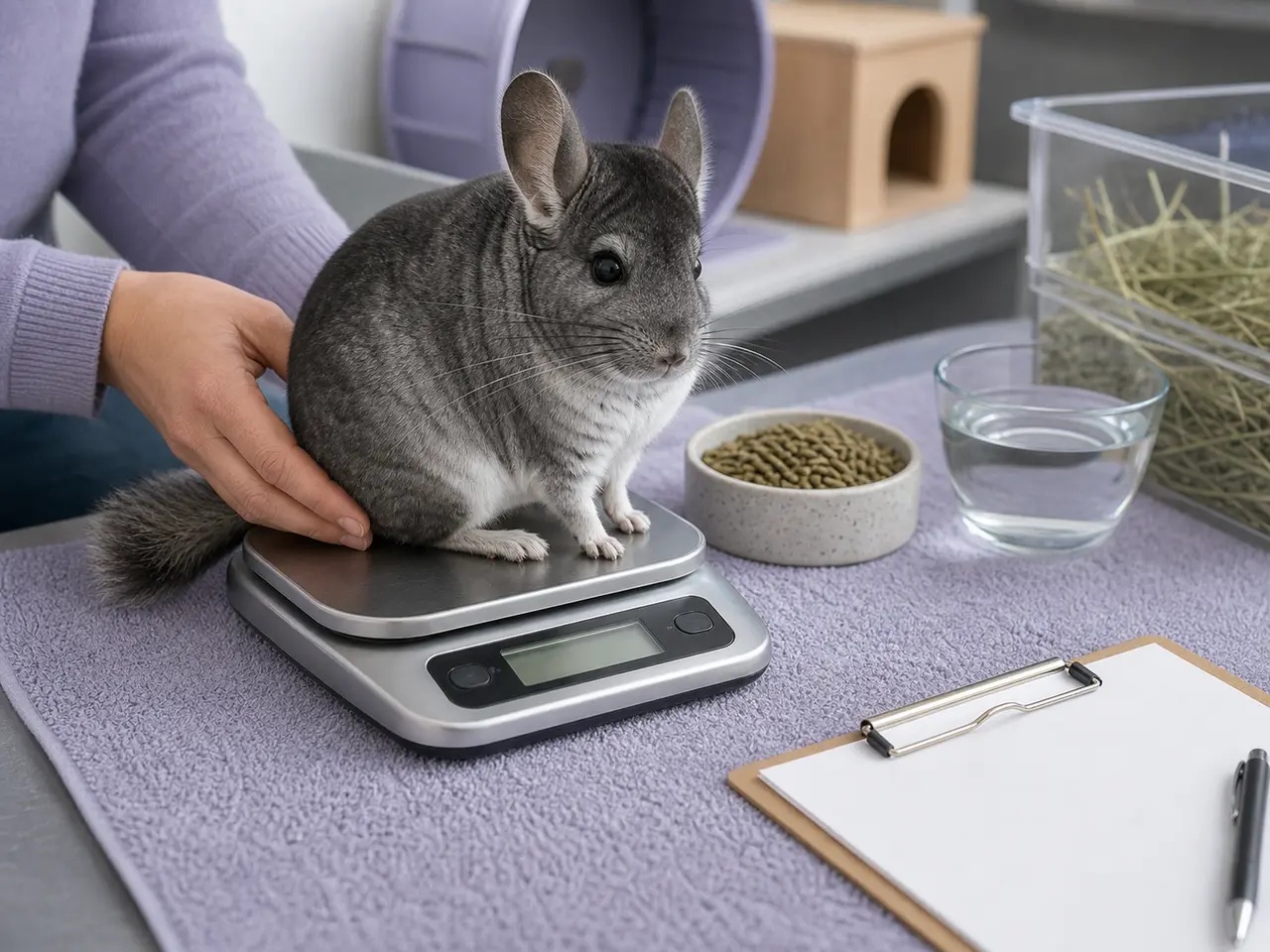
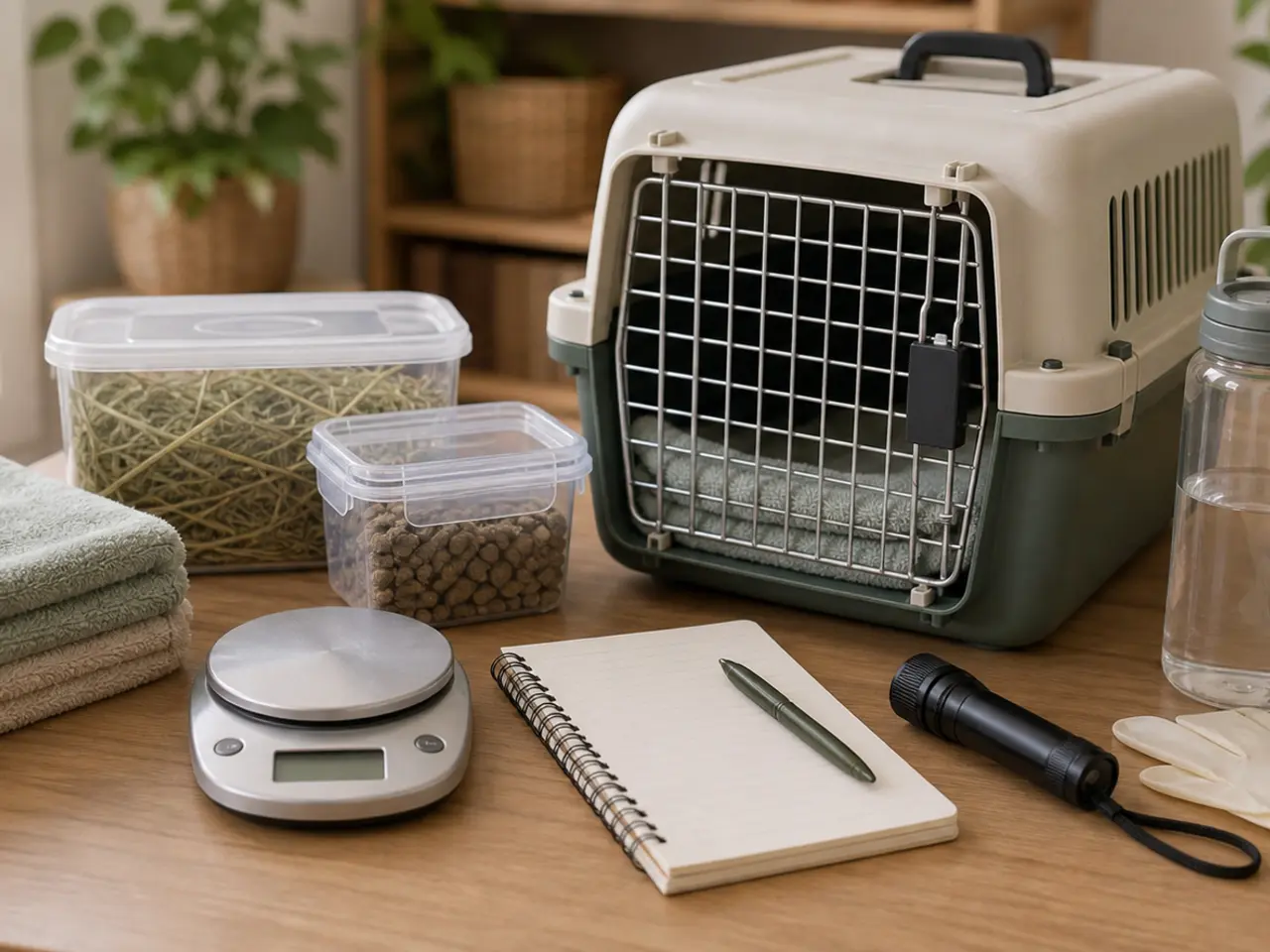
Chinchilla housing should stay cool and dry, with solid ledges, hay, controlled dust baths, chew items, and safe cleaning access.
The room matters as much as the enclosure.
Solve the room before the cage
A chinchilla habitat belongs in a cool, dry, stable room away from direct sun, heat vents, damp air, and loud daytime disruption.
If the room cannot stay safe during summer or heat waves, the housing plan is not ready. Cooling is core care, not an accessory.
Use solid ledges and fall-aware spacing
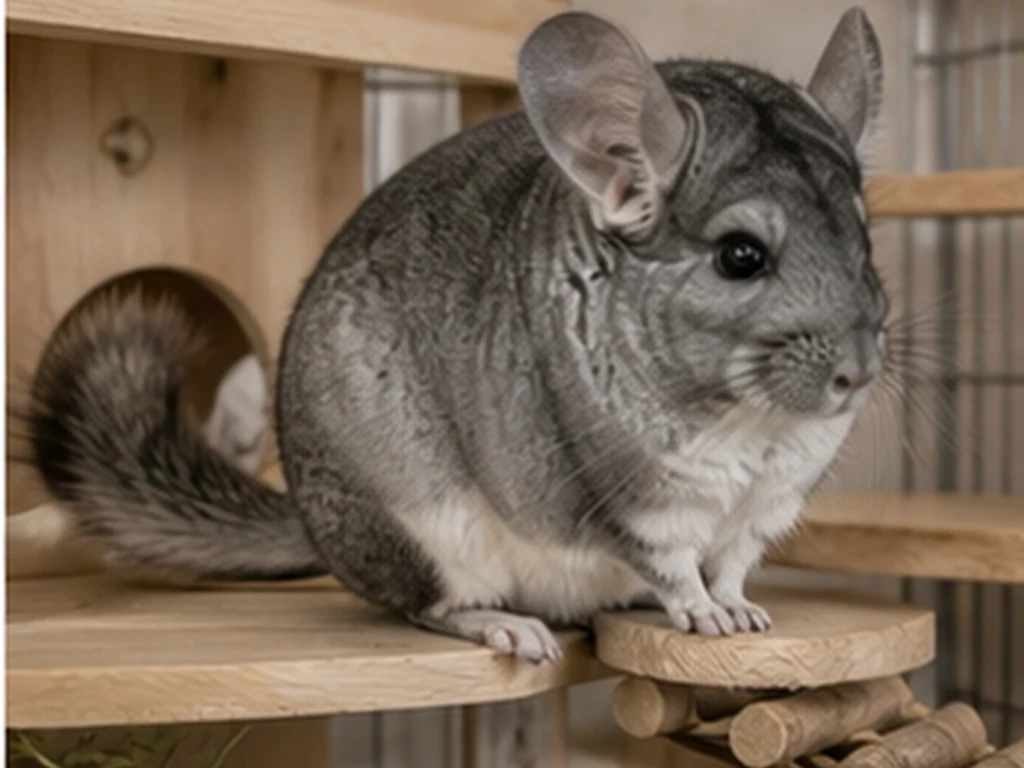
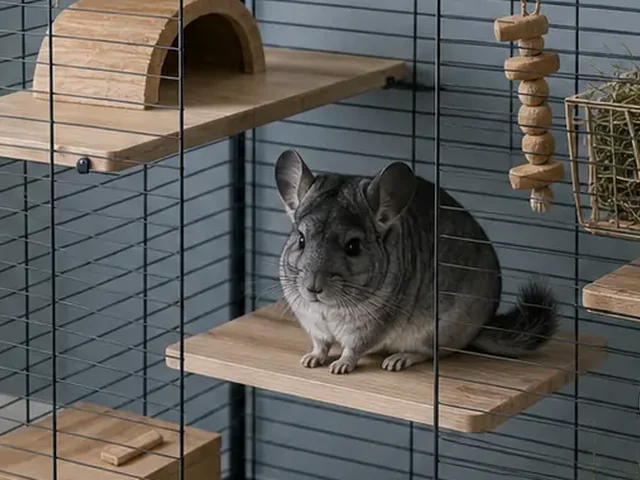
Chinchillas like shelves and jumping routes, but long falls and wire floors are poor tradeoffs. Use solid ledges, stable spacing, and surfaces that protect feet.
Arrange ledges so movement is interesting without forcing risky launches. Heavy items should not shift when the chinchilla lands.
Keep hay easy and clean
Grass hay should be easy to reach and kept away from wet or dirty areas. Hay racks need to be safe for heads, feet, and teeth.
Check hay intake daily. Reduced hay interest can be an early sign of tooth pain, digestive trouble, heat stress, or another health problem.
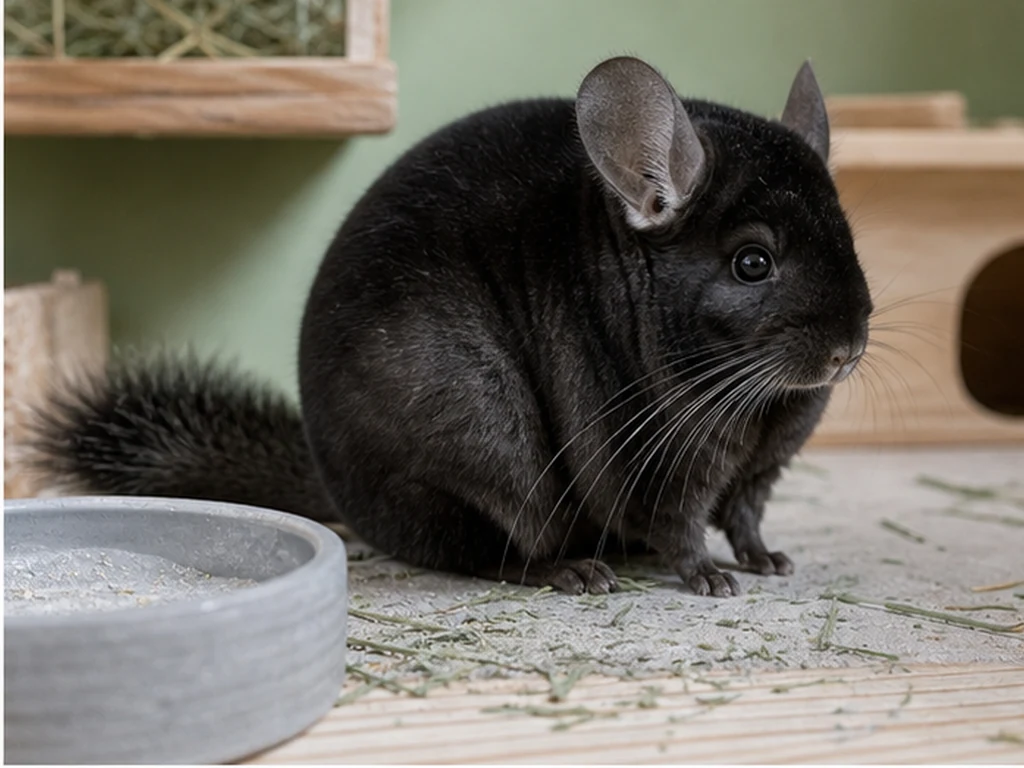
Control dust bath access
Dust baths support fur health, but constant dust access can make the habitat dirty and irritate eyes or breathing. Offer the bath on a routine, then remove it.
Never substitute water bathing. Wet dense fur can be difficult to dry safely and can create skin or chilling problems.
Give chew work that is safe
Chew sticks, pumice, and safe wood help protect teeth and reduce boredom. Avoid painted, scented, resinous, splintery, or unknown wood.
Inspect chews, ledges, and toys often. Chinchillas can turn a safe item into a sharp or unstable one through normal use.
Clean dry and watch droppings
Cleaning should remove wet spots, dirty dust, stale hay, and droppings while keeping surfaces dry. Strong scents and damp wipes can create new problems.
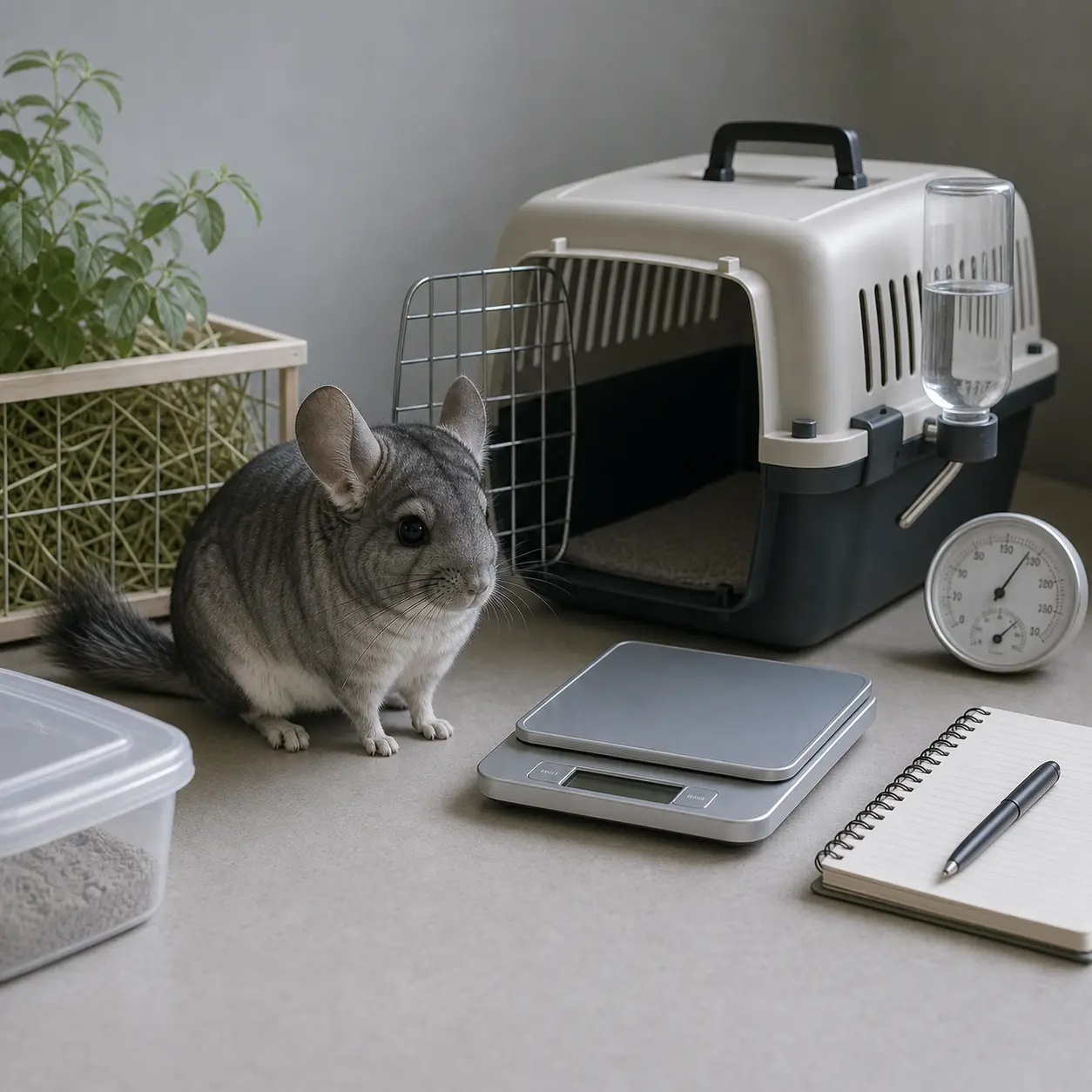
Use cleaning time to watch appetite, droppings, weight, fur condition, foot comfort, and signs of heat stress. Housing and health checks should happen together.
Keep the emergency cooling plan visible
The best chinchilla housing plan includes a visible heat plan: safe room placement, backup cooling, carrier access, and a decision point for calling the exotic-pet vet if heat stress signs appear.
Do not bury that plan in a drawer. The person feeding or cleaning should know what room temperature change, appetite change, droppings change, or behavior change means before summer arrives.
Before you decide
Can the room stay cool, dry, and stable?
Are ledges solid and spaced to reduce fall risk?
Is hay clean and easy to reach?
Is dust bath access controlled instead of constant?
Useful setup pieces
Optional supplies that support the care routine after the species needs are clear.
Affiliate links: Furball Cove may earn from qualifying purchases at no extra cost to you.