Updated

Species guide

Chinchilla Care Guide

Chinchillas need a cool dry room, grass hay, pellets, dust baths, chew-safe ledges, careful handling, and heat planning.

They fit calm homes that value routine more than cuddling.

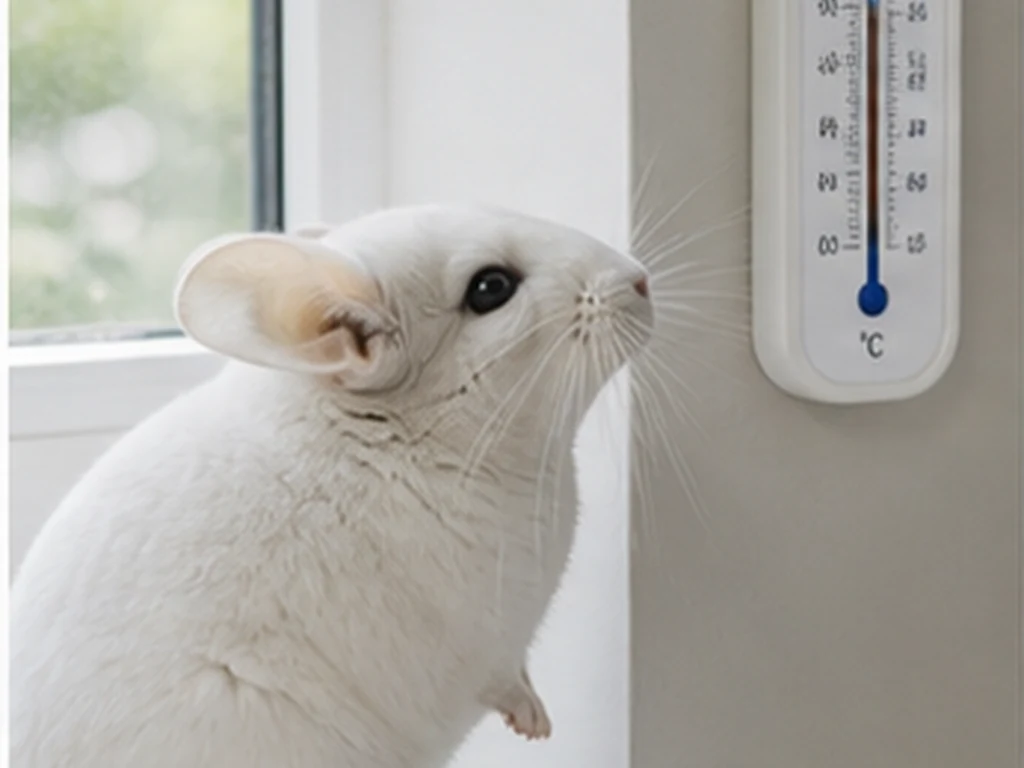
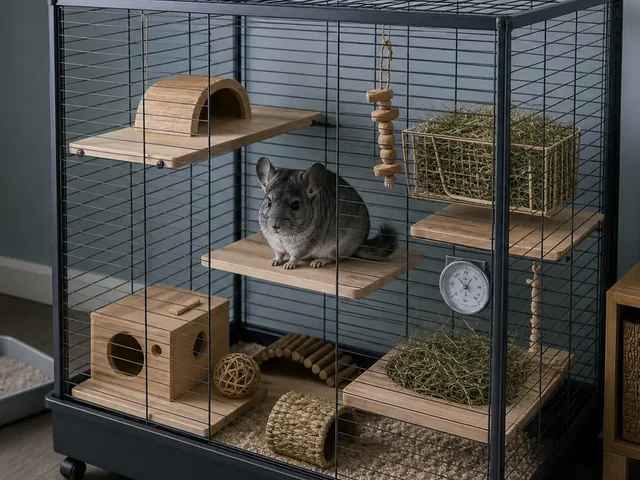
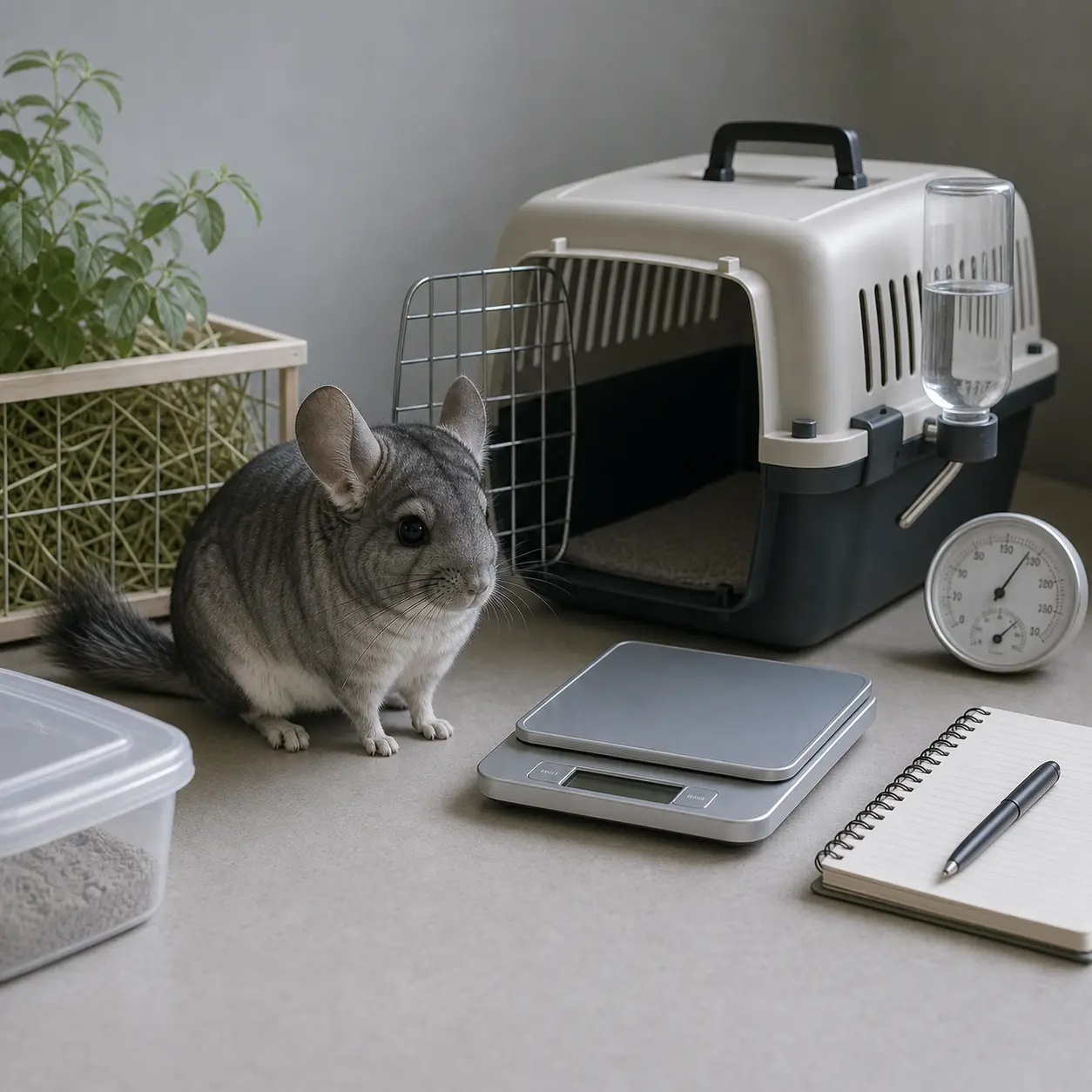
Chinchilla habitat in a shaded cool dry room with thermometer and hygrometer

Keep the room cool and stable

Heat risk is one of the first chinchilla care problems to solve. A sunny room, poor air flow, high humidity, or summer heat spike can become dangerous faster than a new toy can help.

Place the habitat away from direct sun, heat vents, damp rooms, and loud daily disturbance. Plan cooling before adoption, not after the first hot weekend.
Use hay and pellets without sugary extras

Use hay and pellets without sugary extras

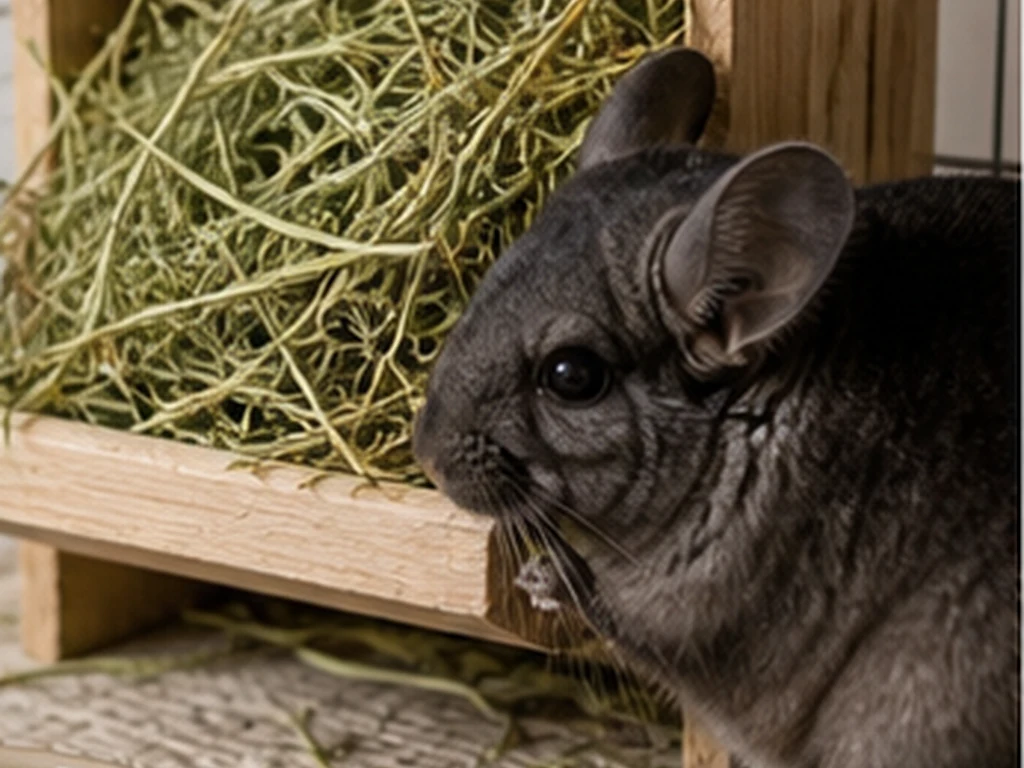
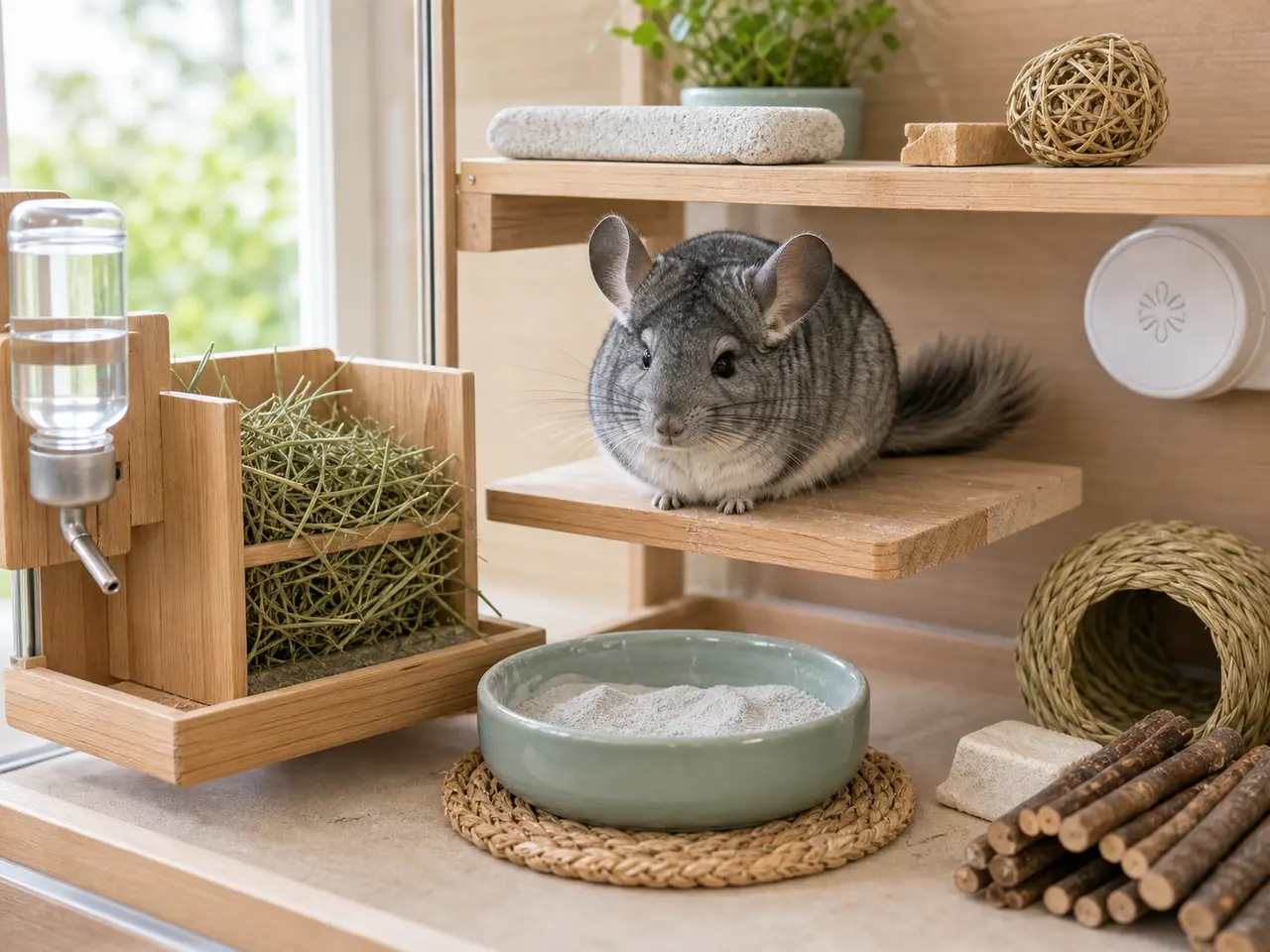
Grass hay should be central to chinchilla feeding because chewing and digestion depend on it. A small amount of appropriate pellets can support the routine, while sugary treats and rich extras can create avoidable digestive trouble.

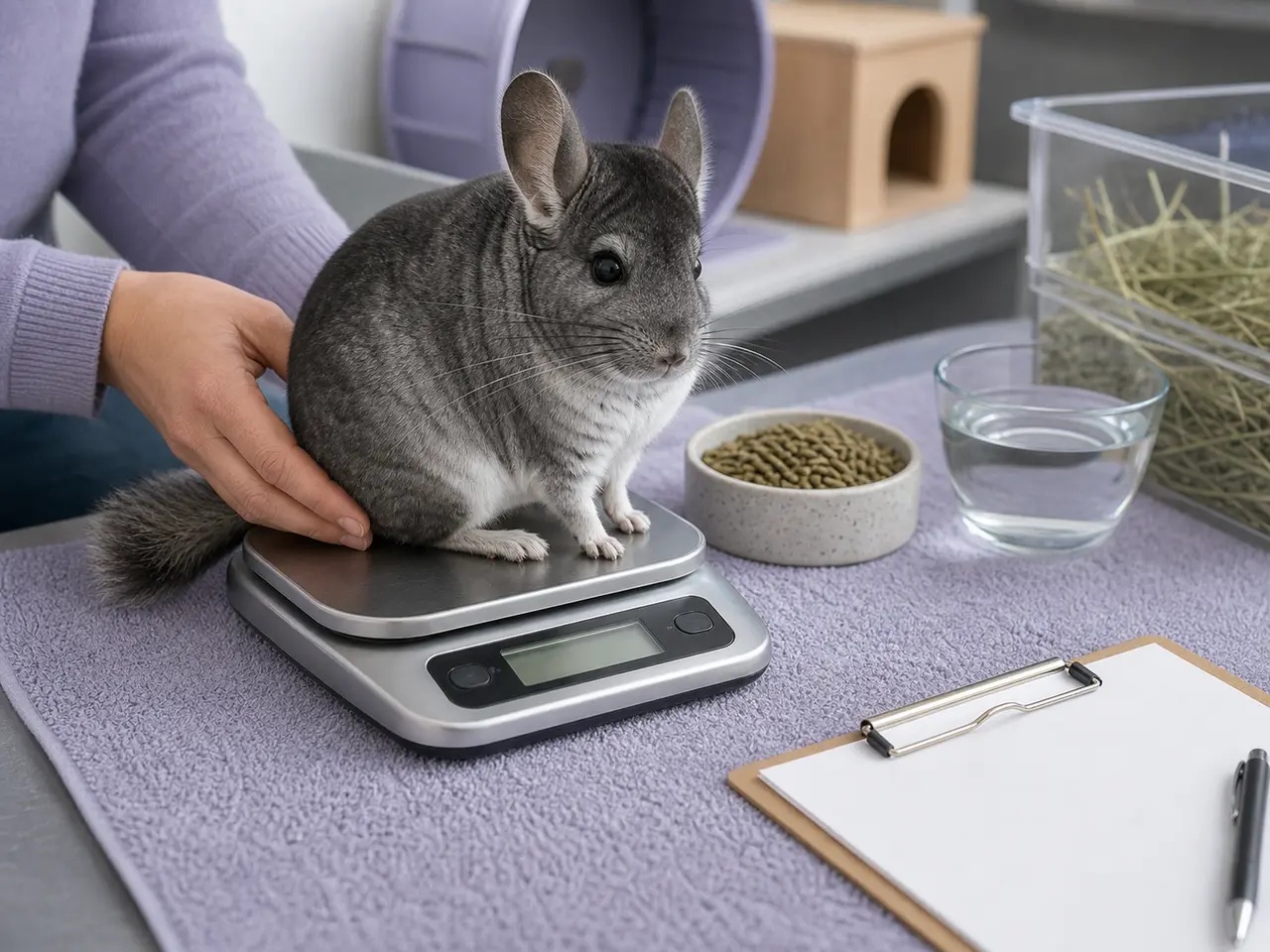
Watch hay interest, pellet intake, droppings, water, and weight. A chinchilla who stops eating or produces fewer droppings needs prompt exotic-pet veterinary advice.

Make dust baths controlled, not constant

Make dust baths controlled, not constant

Chinchillas use dust baths to maintain their dense fur, but the bath should be offered on a routine and removed when the session is done. Constant dust access can irritate eyes, skin, or breathing and make the habitat messy.

Use chinchilla dust, not water bathing. Wet fur can be difficult to dry safely and can lead to chilling, matting, and skin problems.

Design ledges for feet and falls

Design ledges for feet and falls

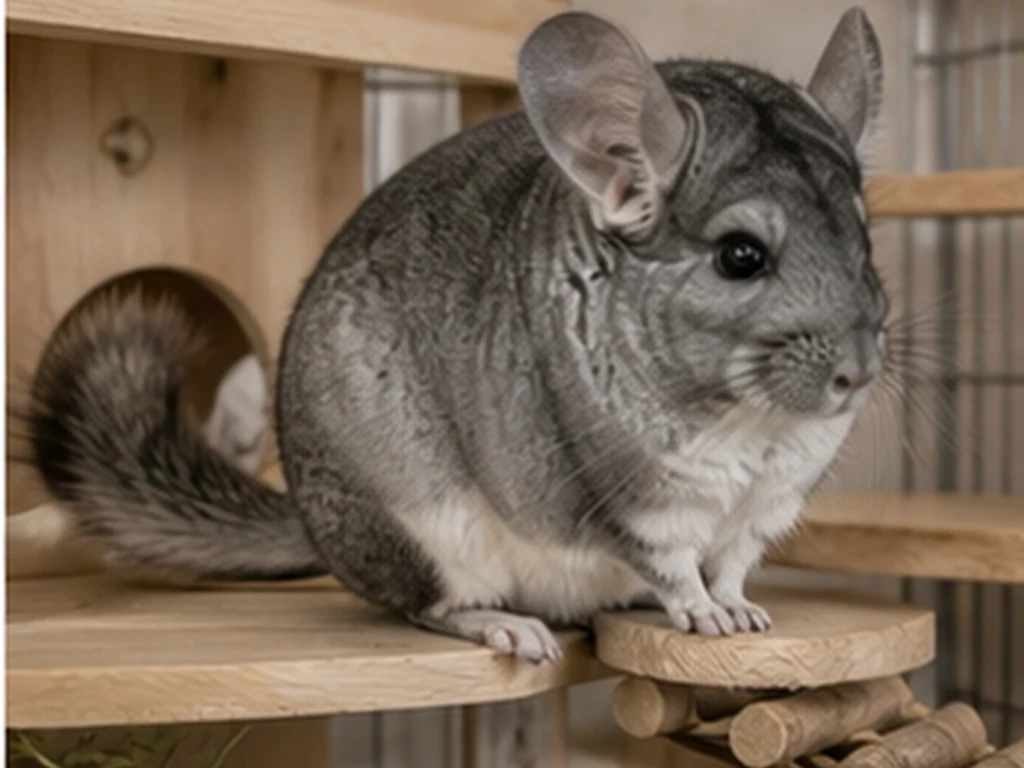
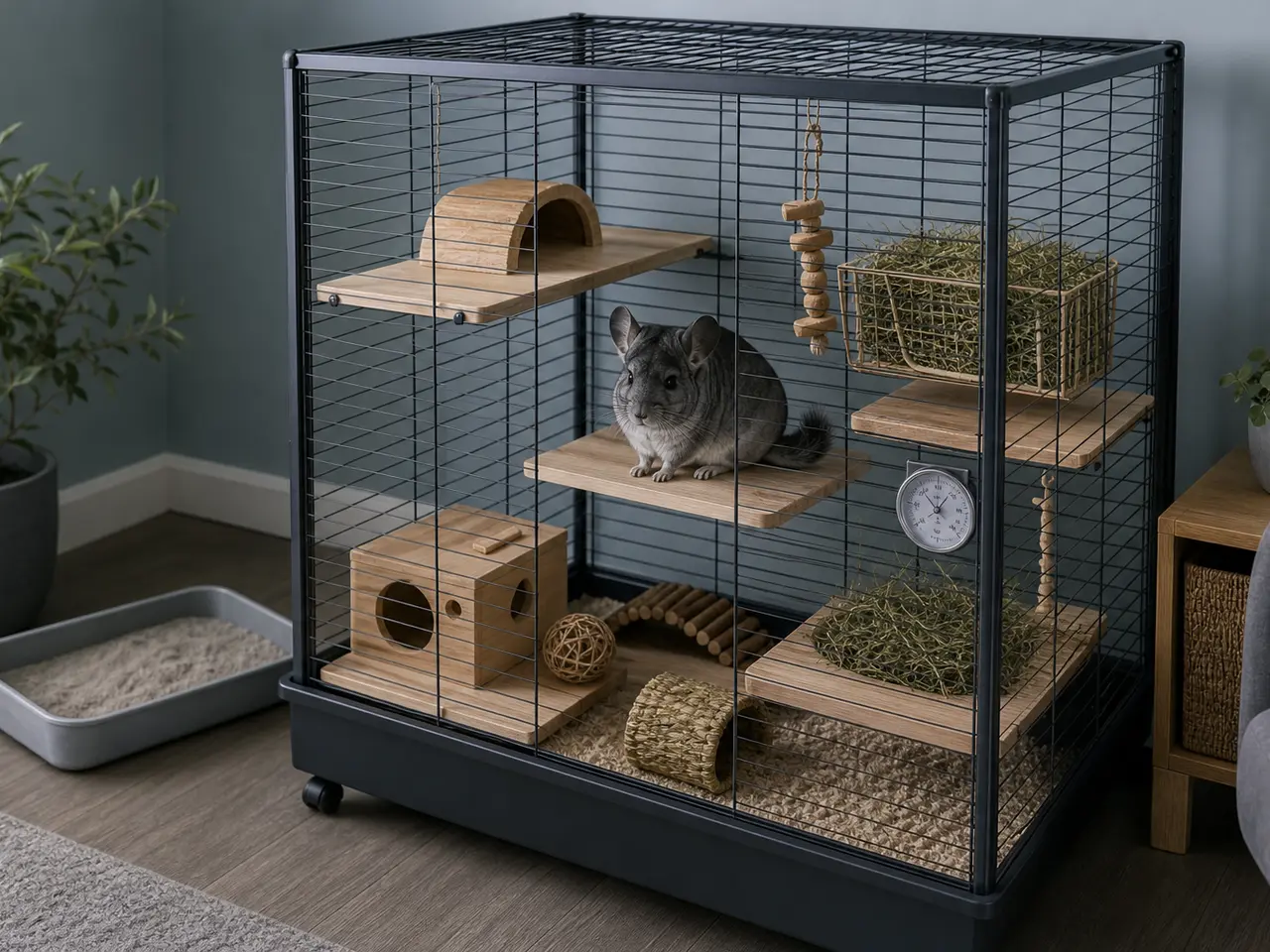
Chinchillas enjoy shelves and jumping routes, but wire floors and long falls are poor tradeoffs. Use solid ledges, stable ramps or shelves, chew-safe materials, and spacing that lets the animal move without crashing through the habitat.

Chew sticks and safe wood protect teeth and reduce boredom. Anything painted, scented, splintery, resinous, or loose should be reconsidered before it becomes a mouth or fall risk.

Handle as a fragile jumper

Handle as a fragile jumper

Many chinchillas prefer predictable interaction over being held tightly. Let the animal approach, support the body fully, stay low, and avoid squeezing the ribs or grabbing fur.

A chinchilla who sprays urine, slips fur, bites, or launches away is stressed. Shorter, calmer sessions in a safe area are better than forcing cuddling.

Keep cleaning dry and predictable

Keep cleaning dry and predictable

Chinchilla cleaning should protect dry fur, clean feet, and familiar routes at the same time. Remove wet or dirty spots quickly, refresh hay mess, wipe ledges, and keep dust out of food and water without soaking the habitat.

A deep clean should not become a stressful room-temperature event. Move calmly, keep the chinchilla secure, dry every surface, and return key hides and ledges where the animal expects them.

Treat appetite and heat signs as urgent

Treat appetite and heat signs as urgent

Not eating, small or missing droppings, drooling, tooth pain signs, wet fur, labored breathing, heat stress, limping, wounds, or sudden quietness should prompt exotic-pet veterinary care.

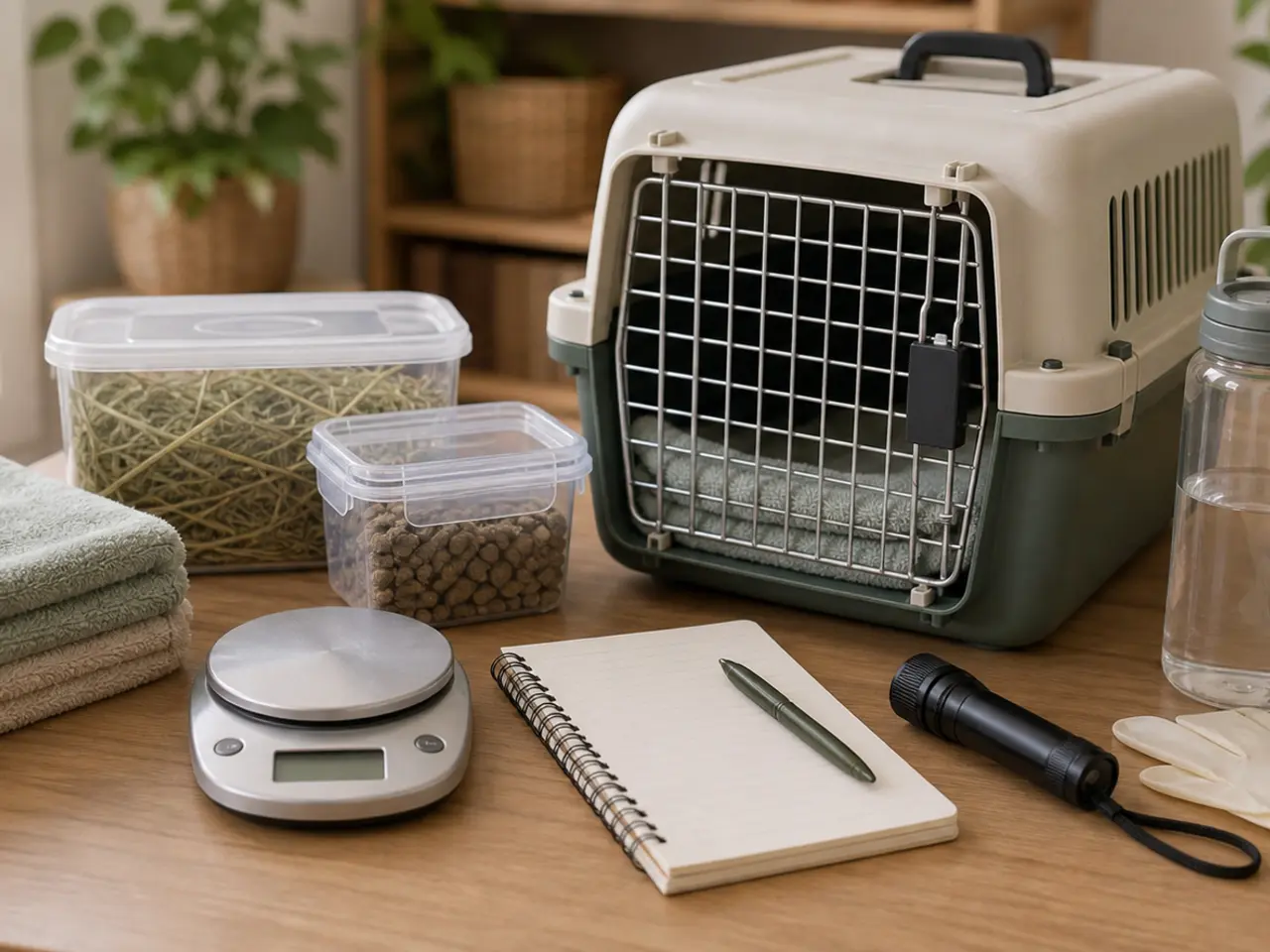
Keep records of room temperature concerns, food intake, hay, pellets, water, droppings, dust-bath schedule, weight, and recent cleaning or diet changes.

Before you decide

  • Can the room stay cool and dry through summer and heat waves?
  • Is grass hay central to the food routine?
  • Are dust baths controlled and water baths avoided?
  • Are ledges solid, chew-safe, and arranged to reduce fall risk?

Next best moves

  • Solve cooling before buying the animal.
  • Keep sugary treats out of the daily routine.
  • Use solid shelves and controlled dust baths as core care, not extras.

Useful setup pieces

Optional supplies that support the care routine after the species needs are clear.

Affiliate links: Furball Cove may earn from qualifying purchases at no extra cost to you.

Well-ventilated chinchilla habitat in a cool dry room.

Large ventilated cage

Prioritizes airflow, solid ledges, hay access, and a cool dry room over glass-display styling.

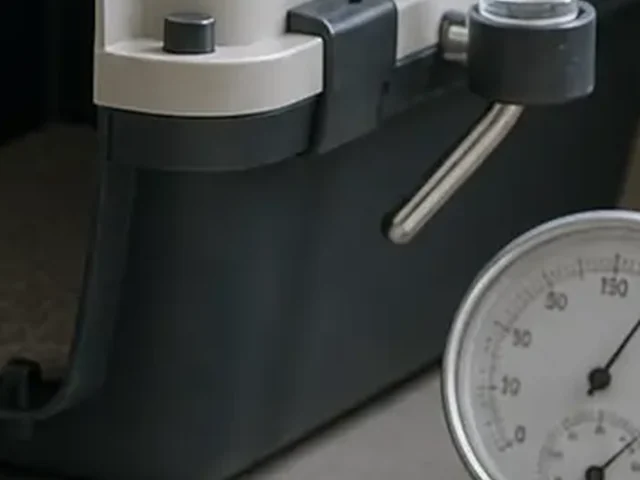
Room thermometer and hygrometer for monitoring a chinchilla room.

Thermometer / hygrometer

Keeps room temperature and humidity visible before heat becomes an emergency.

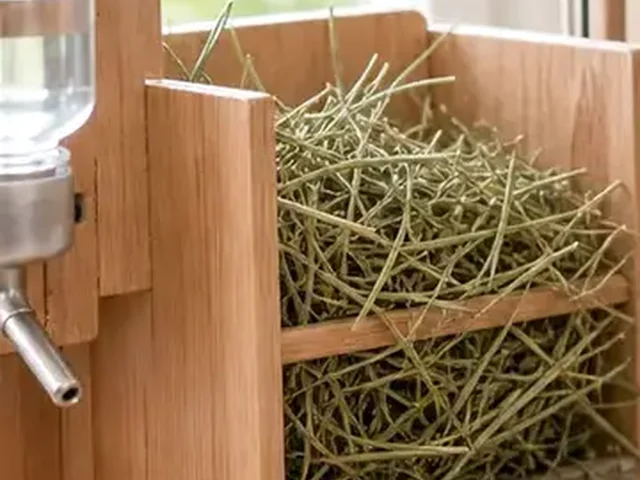
Open hay station with clean grass hay for a chinchilla.

Grass hay station

Keeps clean grass hay open and dry without a hay ball or narrow rack that can trap heads or feet.

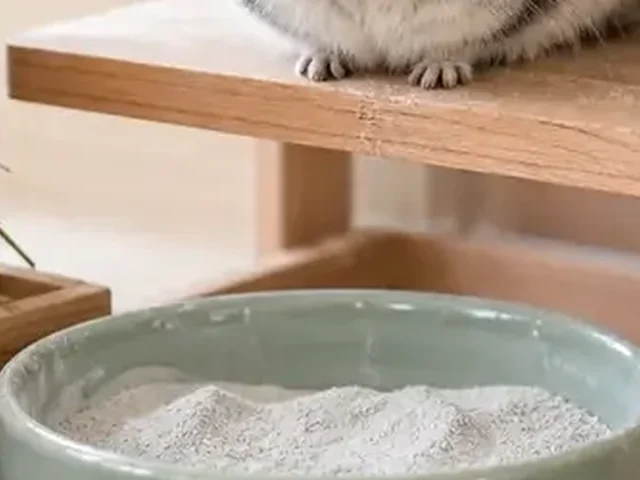
Removable chinchilla dust bath dish.

Removable dust bath

Offer during planned dust-bath sessions, then remove it so dust does not become constant habitat mess.

References