Updated
Small mammal food safety
Can Small Mammals Eat Breaded Chicken?
Avoid
No. Breaded chicken is not small-mammal food. Breading, salt, fat, seasoning, sauces, bones, and greasy crumbs make it a poor choice, even for ferrets.
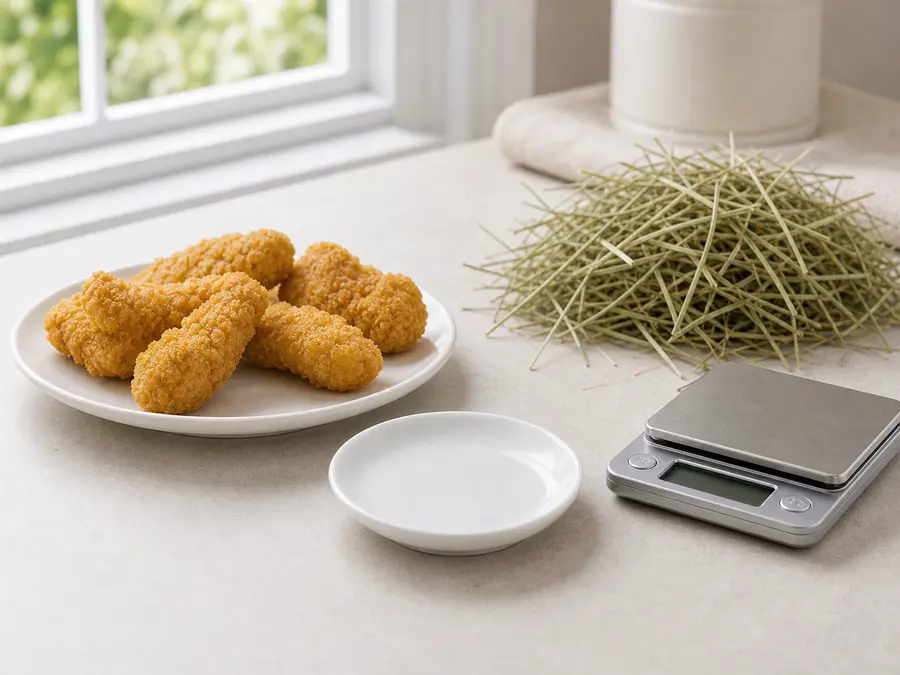 Breaded chicken
Guinea pigs
Do not feed
Do not feed breaded chicken to guinea pigs. They need hay-centered plant-based food.
Syrian and dwarf hamsters
Do not feed
Do not feed breaded chicken to hamsters. Breading, salt, fat, and seasoning are poor fits.
Rats
Do not feed
Do not feed breaded chicken to rats. If protein is used, it should be plain and appropriate, not fried leftovers.
Mice
Do not feed
Do not feed breaded chicken to mice. Tiny bodies do not need salty, greasy crumbs.
Gerbils
Do not feed
Do not feed breaded chicken to gerbils. Use a gerbil-appropriate diet instead.
Chinchillas
Do not feed
Do not feed breaded chicken to chinchillas. It is far outside a hay-centered diet.
Ferrets
Use ferret food
Do not use breaded chicken as ferret food. Ferrets need appropriate meat-based food, not breading, salt, sauces, or fried leftovers.
Breading changes the answer
Plain cooked meat is not the same as breaded chicken. The coating brings starch, salt, fat, seasonings, and often sauces.
Watch the details
Garlic, onion, spicy seasoning, bones, grease, and large amounts raise the concern. Save details before calling a veterinarian.
Remove the crumbs
- Take away breaded chicken, crumbs, grease, sauces, and wrappers.
- Check bedding and hoards for hidden pieces.
- Return to the normal diet and offer plain water.
Avoid
- Chicken nuggets, fried chicken, breaded strips, seasoned breading, sauces, salty crumbs, greasy pieces, bones, or spoiled leftovers.
- Breaded chicken for ferrets; use a ferret-appropriate meat-based diet instead.
- Waiting for vomiting or dramatic symptoms before calling if a tiny animal ate a concerning amount.
Watch
- Reduced appetite, fewer droppings, soft stool, diarrhea, bloating, extra thirst, greasy fur, paw chewing, quietness, choking signs, or mouth discomfort.
- Contact an exotic-pet veterinarian promptly for bone, garlic, onion, spicy seasoning, a large amount, a tiny or weak animal, or any abnormal signs.
Helpful food-safety supplies
Optional tools for measuring, storing, serving, and cleaning up small portions safely.
Affiliate links: Furball Cove may earn from qualifying purchases at no extra cost to you.