Updated
Small mammal food safety
Can Small Mammals Eat Candy?
Avoid
No. Do not feed candy to small mammals. Sugar, sticky texture, wrappers, dyes, chocolate, and sugar-free sweeteners can all create problems without helping the diet.
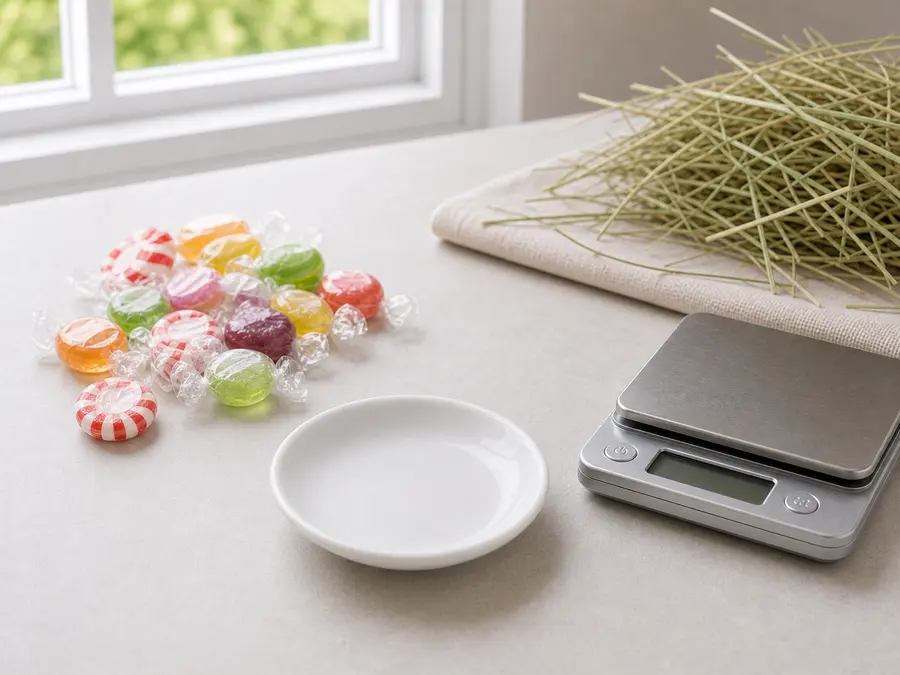 Candy
CandyGuinea pigs
Do not feed
Do not feed candy to guinea pigs. It does not belong in a hay-centered, vitamin-C-supported diet.
Syrian and dwarf hamsters
Do not feed
Do not feed candy to hamsters. Sugar, sticky texture, and wrappers are poor fits.
Rats
Do not feed
Do not feed candy to rats. Use a balanced rat staple and controlled fresh foods instead.
Mice
Do not feed
Do not feed candy to mice. Tiny bodies do not need sugar, dyes, or sticky residue.
Gerbils
Do not feed
Do not feed candy to gerbils. It is unnecessary and easy to overdo.
Chinchillas
Do not feed
Do not feed candy to chinchillas. Sugar and sticky foods are poor fits for hay-centered digestion.
Ferrets
Do not feed
Do not feed candy to ferrets. Ferrets need appropriate meat-based food, not sugar or wrappers.
Ingredients decide urgency
Sugar-free sweeteners, chocolate, caffeine, wrappers, sticks, and large amounts raise the concern. Save the package or ingredient list if you have it.
Clean up sticky residue
Candy can stick to fur, paws, bedding, or teeth. Remove residue and watch appetite, stool or droppings, breathing, movement, and energy.
Remove it
- Take away candy, crumbs, wrappers, sticks, strings, and sticky residue from bowls, bedding, toys, and play areas.
- Check whether the candy was chocolate, sugar-free, xylitol-containing, caffeinated, hard, gummy, or wrapped.
- Call an exotic-pet veterinarian or poison hotline if the ingredient risk is unclear, the animal is tiny, or any symptoms appear.
Avoid
- Hard candy, gummies, caramel, taffy, lollipops, chocolate candy, sugar-free candy, xylitol candy, caffeinated candy, wrappers, sticks, or sticky residue.
- Using candy as a treat because the animal grabbed it.
- Waiting if a tiny animal ate a large amount or any sugar-free, chocolate, or caffeinated candy.
Watch
- Reduced appetite, fewer droppings, soft stool, diarrhea, bloating, sticky fur, mouth irritation, quietness, hyperactivity, weakness, or trouble chewing.
- Call an exotic-pet veterinarian or poison hotline promptly for xylitol, chocolate, caffeine, wrappers, sticks, a large amount, or any abnormal signs.
Helpful food-safety supplies
Optional tools for measuring, storing, serving, and cleaning up small portions safely.
Affiliate links: Furball Cove may earn from qualifying purchases at no extra cost to you.