Updated
Small mammal food safety
Can Small Mammals Eat Cookies?
Avoid
No. Cookies are not small-mammal food. Sugar, fat, chocolate chips, raisins, xylitol, salt, dairy, and crumbs add risk without helping the diet.
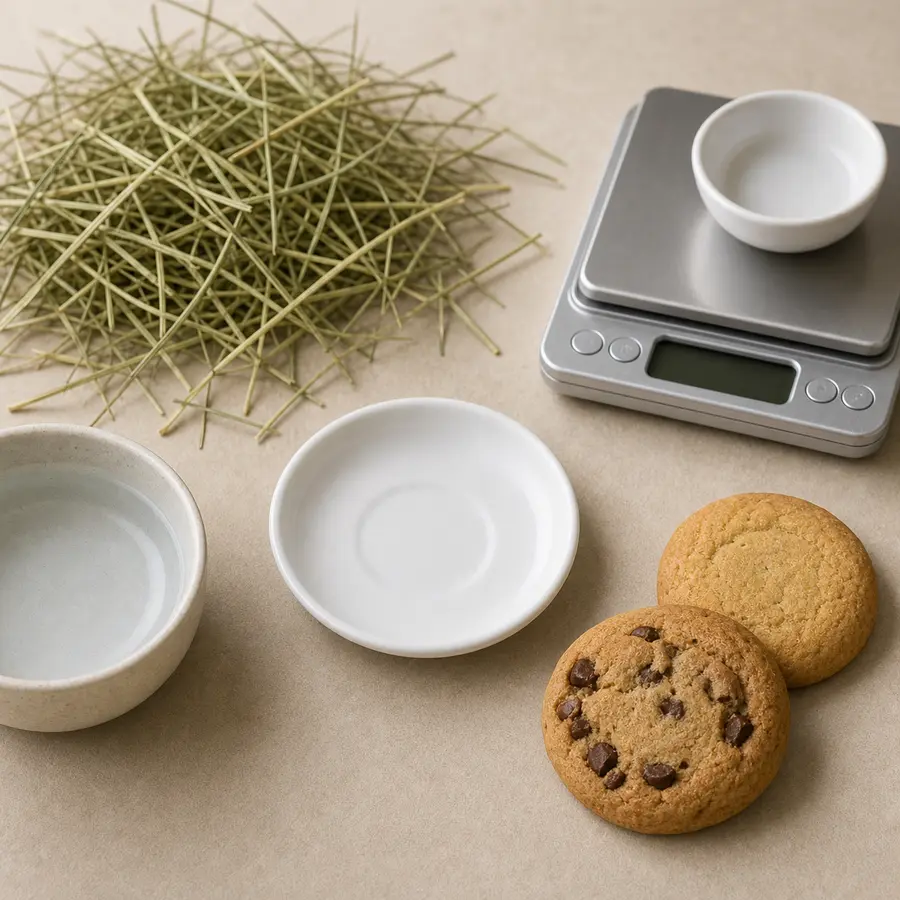 Cookies
Guinea pigs
Do not feed
Do not feed cookies to guinea pigs. Sugar, fat, and additives do not fit hay-centered care.
Syrian and dwarf hamsters
Skip cookies
Skip cookies for hamsters. Sweet crumbs are easy to hoard and do not improve the diet.
Rats
Skip cookies
Skip cookies for rats. Use balanced food and better fresh extras instead.
Mice
Skip cookies
Skip cookies for mice. A crumb is a lot at mouse size.
Gerbils
Skip cookies
Skip cookies for gerbils. Dry balanced food and safer tiny extras are better choices.
Chinchillas
Do not feed
Do not feed cookies to chinchillas. Sugar and fat are a poor fit for hay-centered digestion.
Ferrets
Do not feed
Do not feed cookies to ferrets. Ferrets need meat-based food, not sweets or starches.
Ingredients decide urgency
Chocolate, raisins, xylitol, cannabis, caffeine, and large fatty amounts are call-now details. Save the package if exposure happened.
Crumbs still count
Tiny animals can stash crumbs in bedding. Check hides, hoards, fleece, hammocks, and litter corners.
Remove it
- Take cookies, crumbs, wrappers, and hidden pieces out of the bowl, bedding, hoard, play area, or carrier.
- Check the ingredient list for chocolate, cocoa, raisins, macadamia nuts, xylitol, cannabis, caffeine, dairy, salt, or heavy fat.
- Return to the normal diet and watch appetite, droppings or stool, breathing, movement, and energy.
Avoid
- Chocolate chip cookies, sandwich cookies, frosted cookies, sugar cookies, raisin cookies, cookie dough, crumbs in bedding, wrappers, xylitol, cannabis edibles, and stale or moldy pieces.
- Cookies for any small mammal, especially guinea pigs, chinchillas, ferrets, tiny rodents, or animals with appetite, stool, weight, dental, or digestive concerns.
- Using human sweets as treats because the animal begged, grabbed, or seemed interested.
Watch
- Reduced appetite, fewer droppings, soft stool, diarrhea, bloating, quietness, hyperactivity, weakness, or hidden crumbs.
- Call an exotic-pet veterinarian or poison hotline promptly for chocolate, raisins, xylitol, cannabis, caffeine, a large amount, or any abnormal signs.
Helpful food-safety supplies
Optional tools for measuring, storing, serving, and cleaning up small portions safely.
Affiliate links: Furball Cove may earn from qualifying purchases at no extra cost to you.