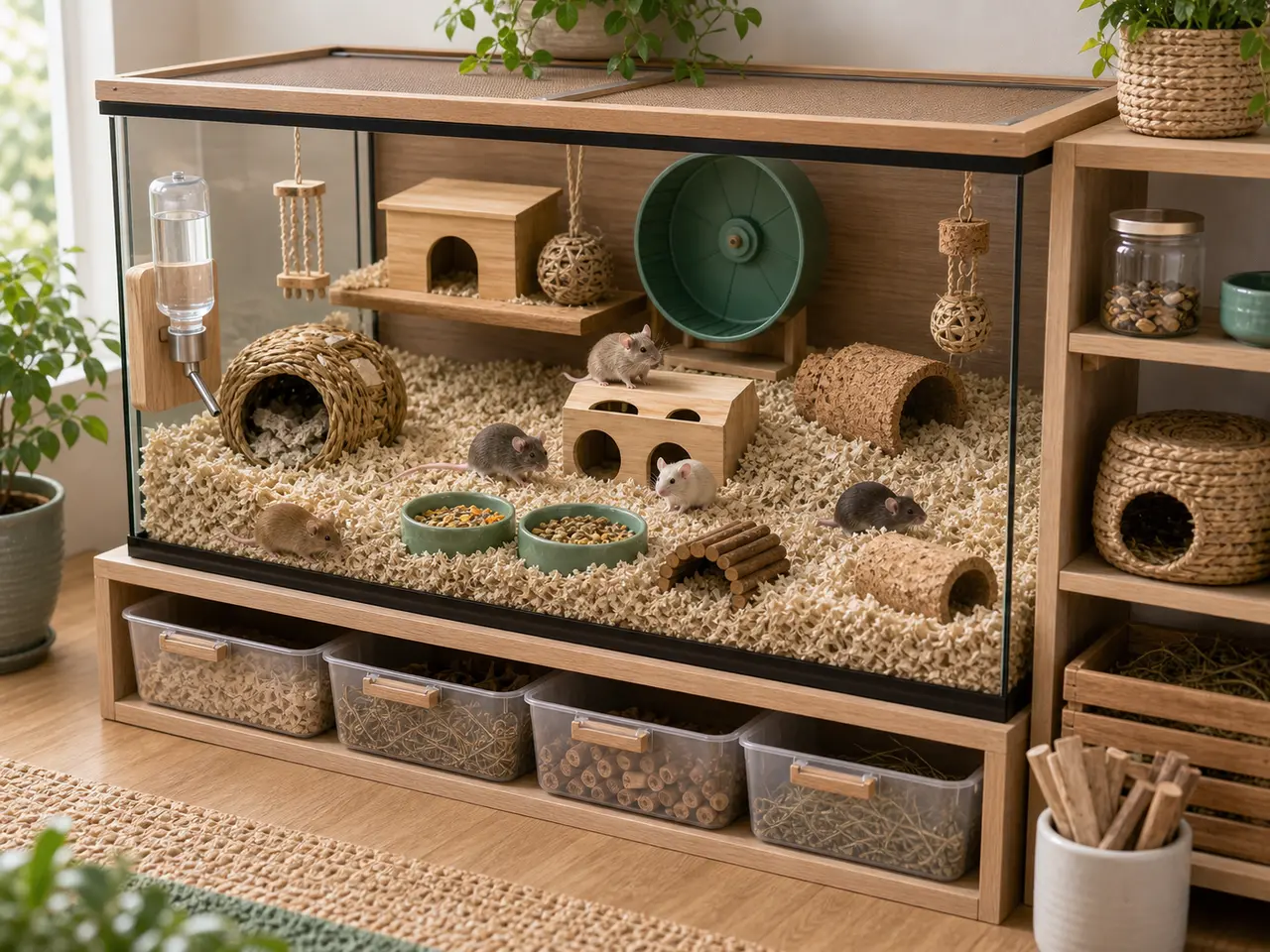
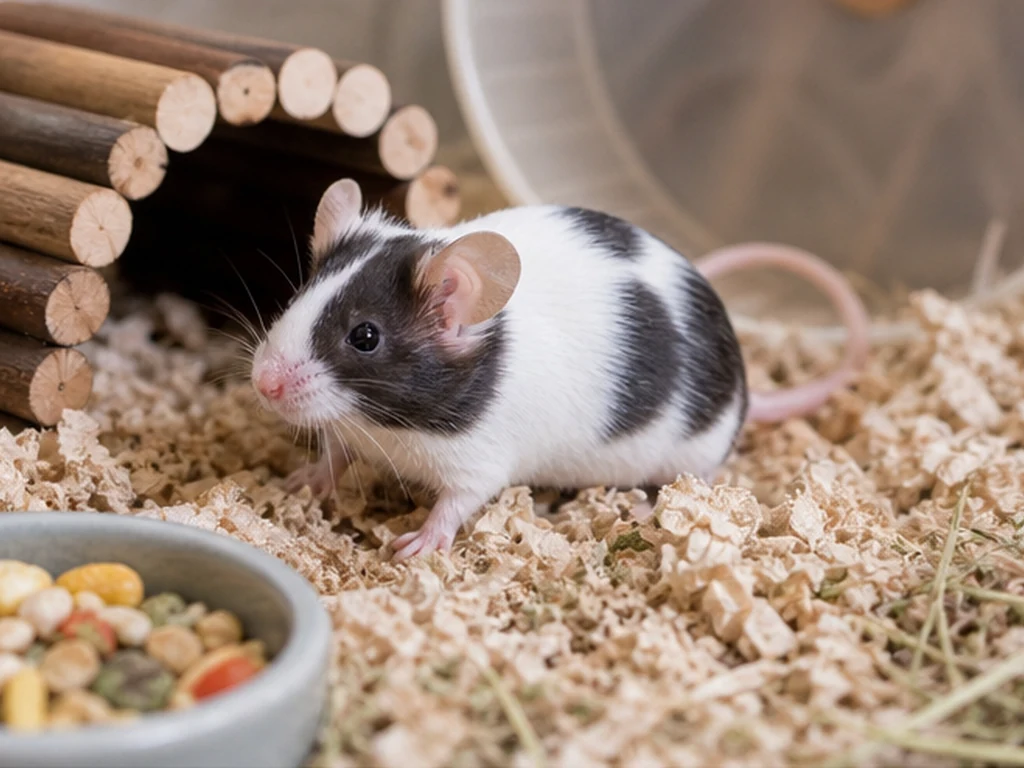
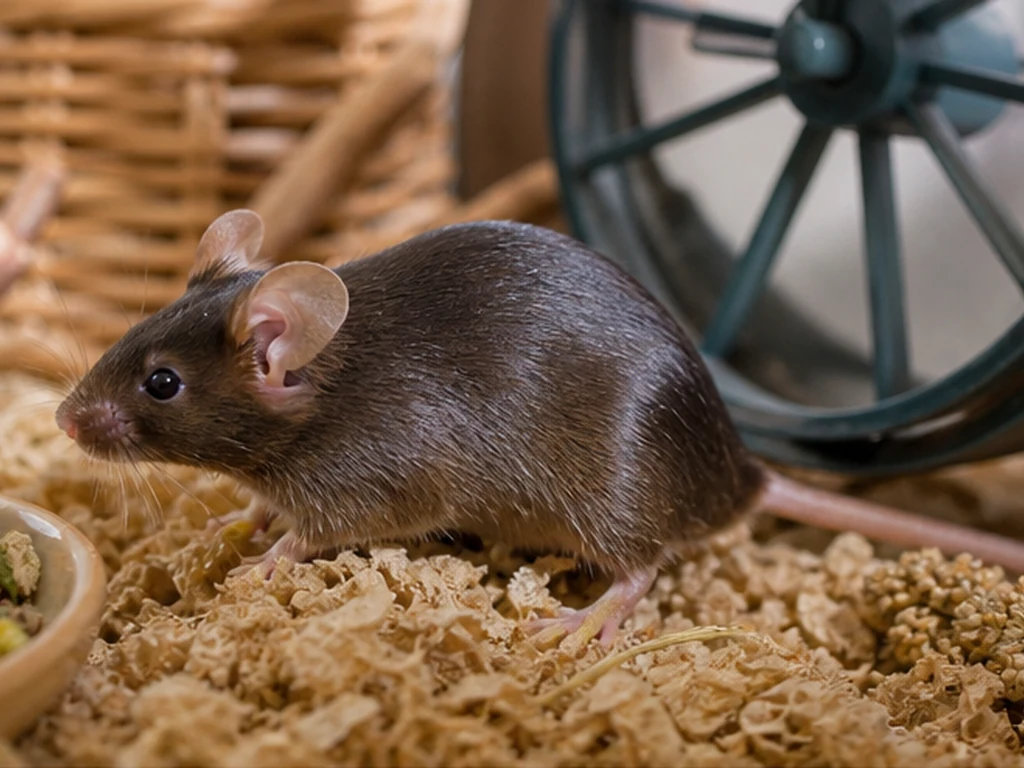
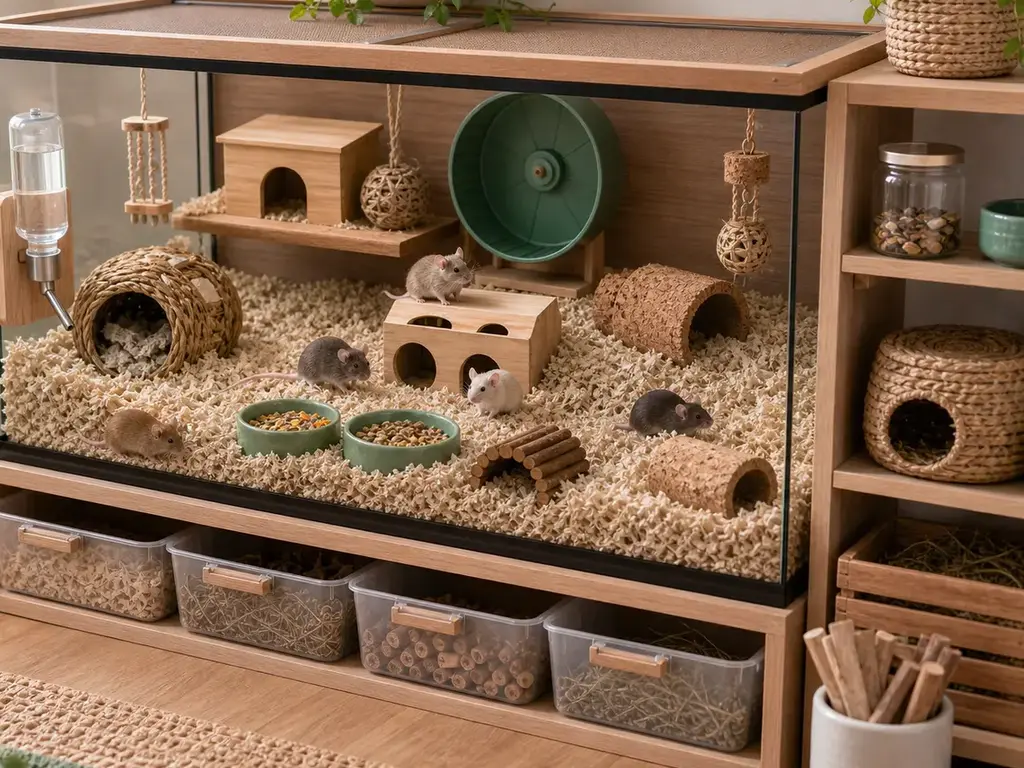
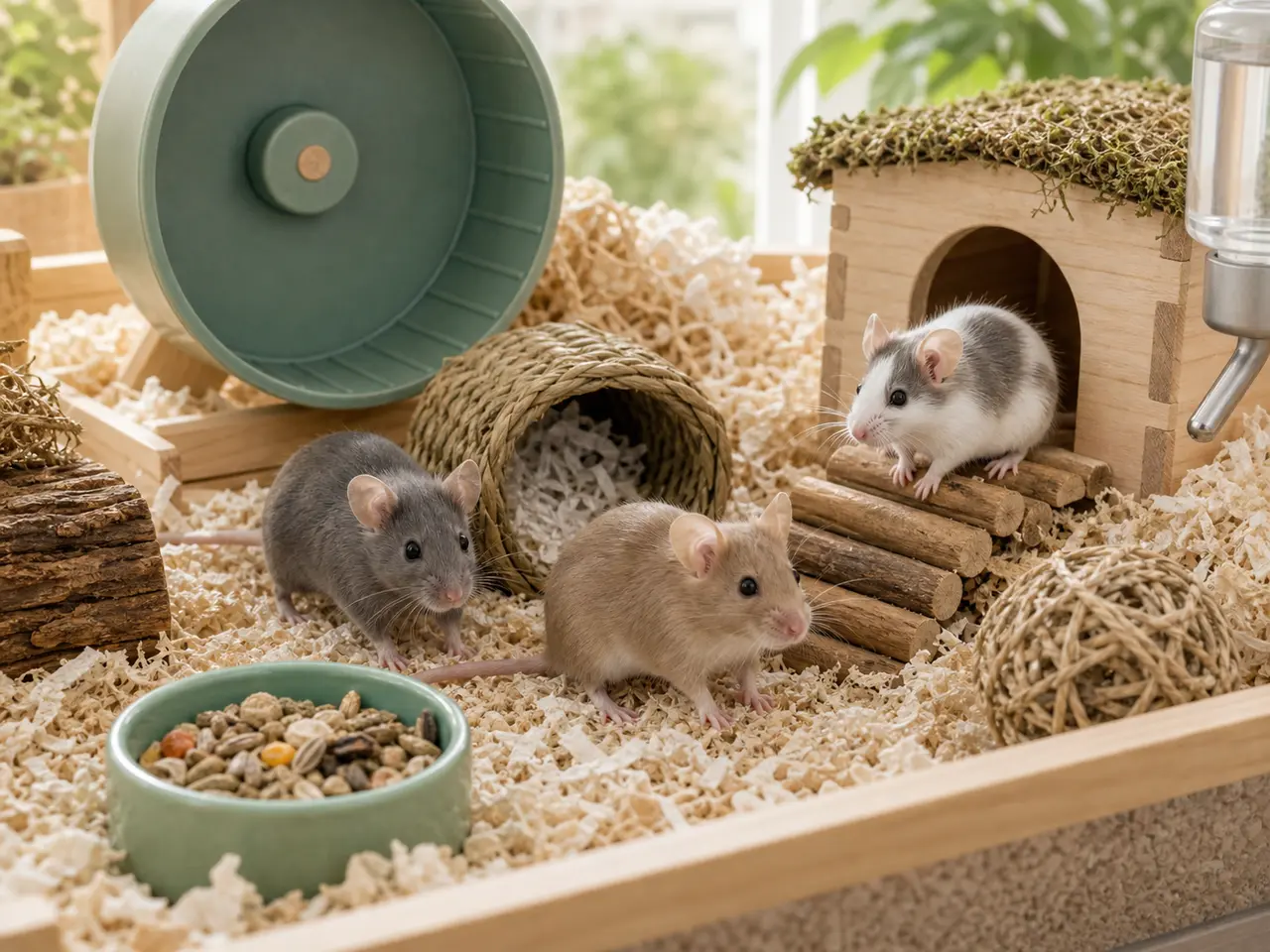
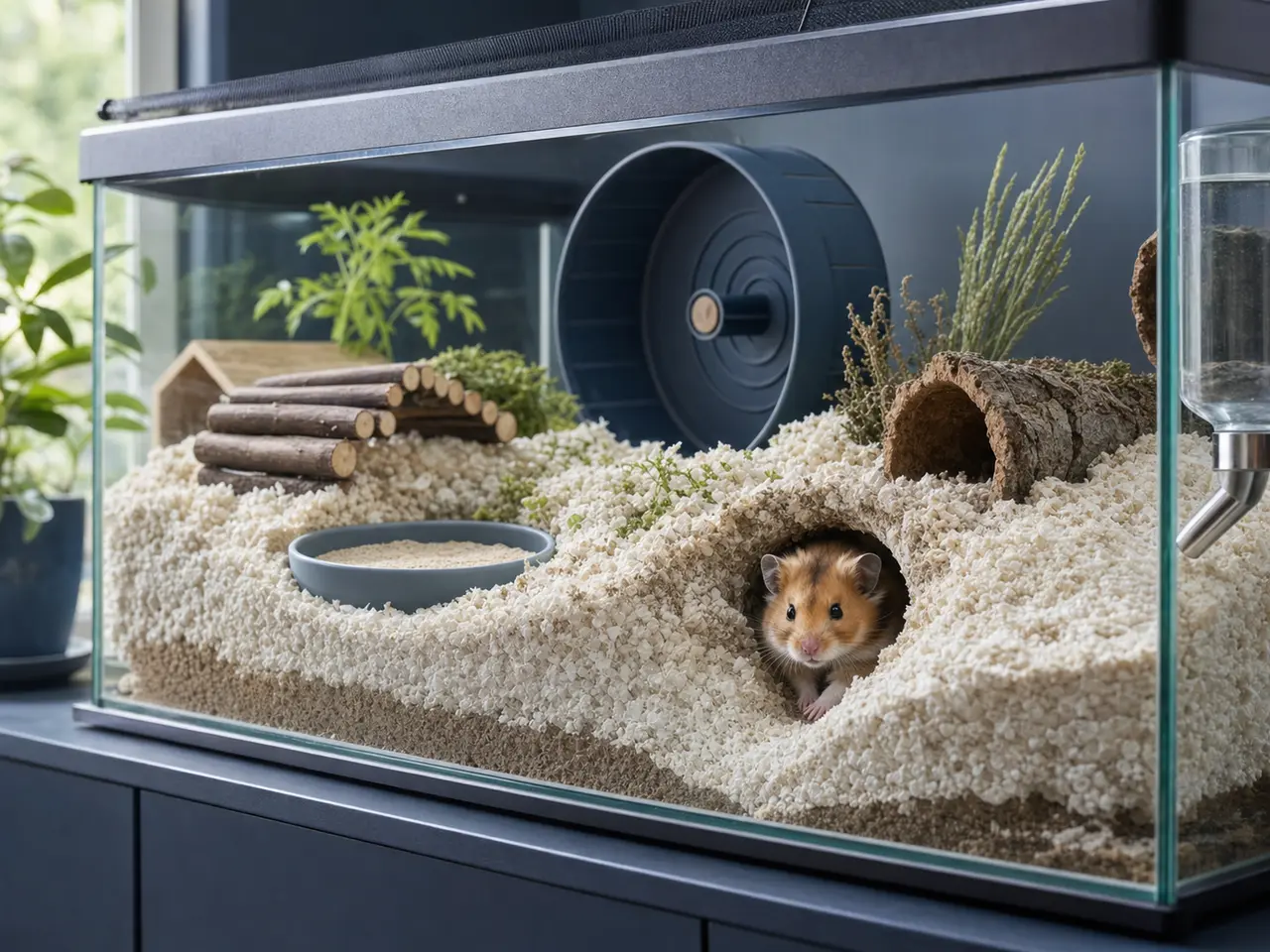
Mouse housing must be escape-resistant, deep-bedded, rich with hides and tunnels, group-aware, wheel-safe, and easy to check.
Build a secure miniature habitat, not a decorative box.
Start with escape security
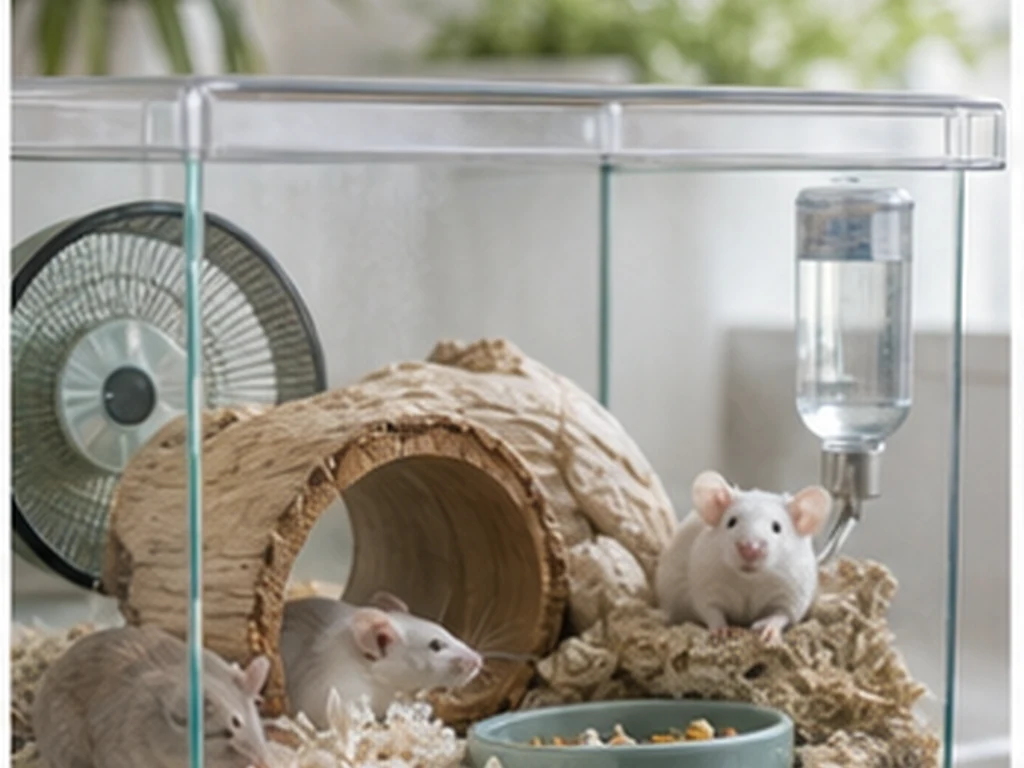
Check bar spacing, lid weight, mesh, doors, water mounts, and any cable or tube opening. A mouse can exploit spaces that look harmless from human height.
Secure housing protects the animal from vents, furniture, cords, traps, other pets, and rooms that cannot be safely searched.
Use deep bedding for normal behavior
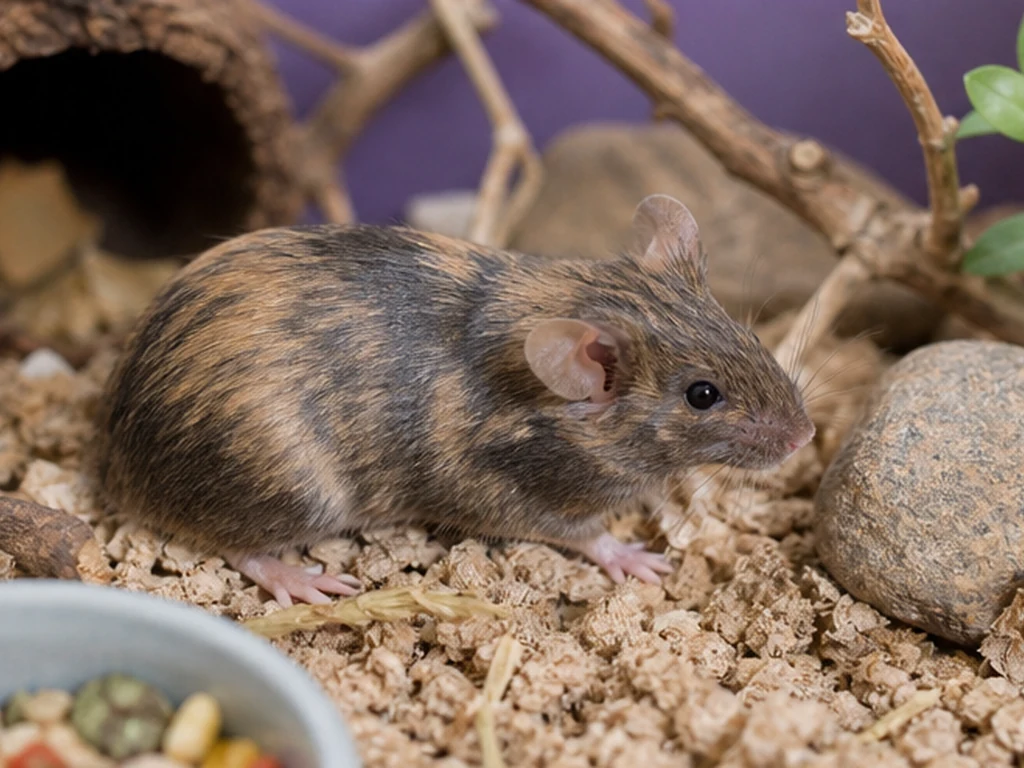
Deep bedding gives mice a way to dig, nest, cache food, and feel hidden. A shallow cage with one house creates more exposure and fewer choices.
Use low-dust bedding and avoid cotton fluff. Keep nesting material safe, dry, and easy to replace when it gets soiled.
Plan groups with resource spread
Female mice are often housed in compatible groups, while male mouse housing may need a different plan. Group rules should come from sex, history, behavior, and rescue or veterinary guidance.
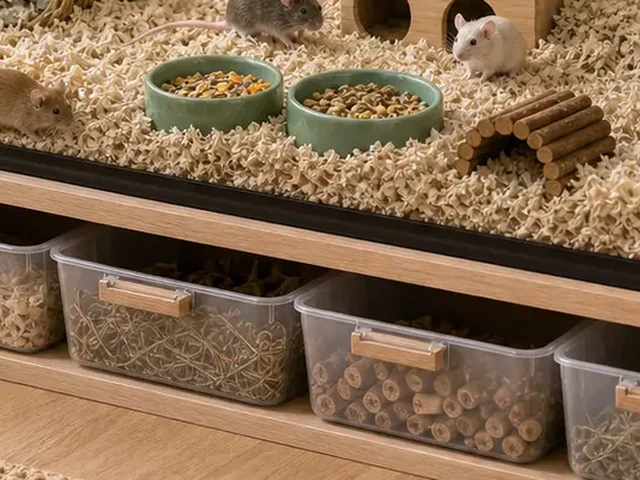
Multiple hides, food points, water access, and tunnels reduce pressure. Watch for wounds, chasing, guarding, weight loss, or one mouse living at the edge of the group.
Choose tiny-scale enrichment
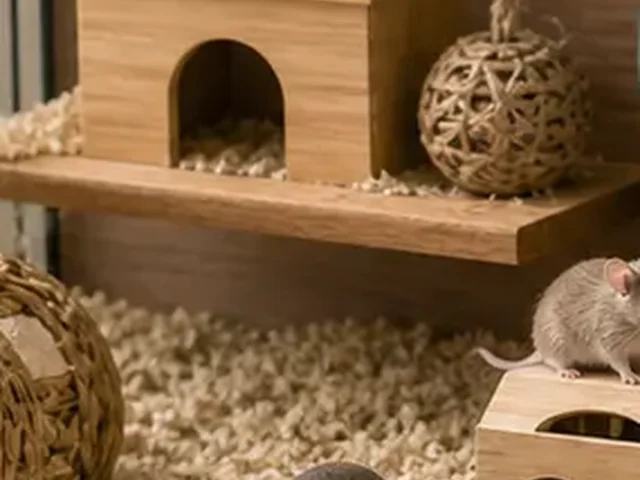
A solid wheel, cork tunnels, cardboard, small hides, chew items, climbing texture, and scatter feeding can create a busy habitat without overcrowding it.
The wheel should fit the mouse body, spin freely, and stay clear of bedding jams. A crowded enclosure can be as stressful as an empty one.
Keep water and food measurable
Water bottles can clog and bowls can soak bedding. Check access daily and use placement that every mouse can reach.
Tiny food portions make selective eating easy to miss. Watch food leftovers, hoards, weight, droppings, and whether one animal is being pushed away.
Clean without erasing the group
Remove wet bedding and stale food often, but preserve some clean familiar bedding during larger resets. Scent matters to mouse confidence and group stability.
Use cleaning time to check hidden nests, blocked tunnels, wheel movement, water function, and any sign of injury or breathing change.
Make daily checks possible without a chase
Mouse housing should let you count animals, check water, notice food leftovers, and inspect the wheel without dismantling the whole habitat. If every check turns into a chase, the layout is too hard to manage.
Use removable hides, clear sight lines, and calm transfer tools. Good housing protects tiny bodies from panic handling while still letting the adult caregiver notice problems early.
Before you decide
Could the smallest adult mouse escape through any gap?
Is bedding deep enough for digging and nesting?
Are food, water, and hides spread across the group?
Can you clean wet areas while preserving some familiar scent?
Useful setup pieces
Optional supplies that support the care routine after the species needs are clear.
Affiliate links: Furball Cove may earn from qualifying purchases at no extra cost to you.