Sugar gliders are social nocturnal marsupials who need compatible companions, a tall climbing enclosure, legal checks, slow bonding, a precise diet, and an experienced exotic-pet vet.
They are specialist pets, not pocket-sized starter pets.
Plan for social nocturnal life
Sugar gliders are social marsupials. A single lonely glider is usually a poor welfare plan, and casual mixing without experience can still cause stress or injury.
They are also nocturnal. The household has to be ready for late-evening activity, bonding work, noise, and a pet that should not be woken for daytime entertainment.
Build upward, not tiny
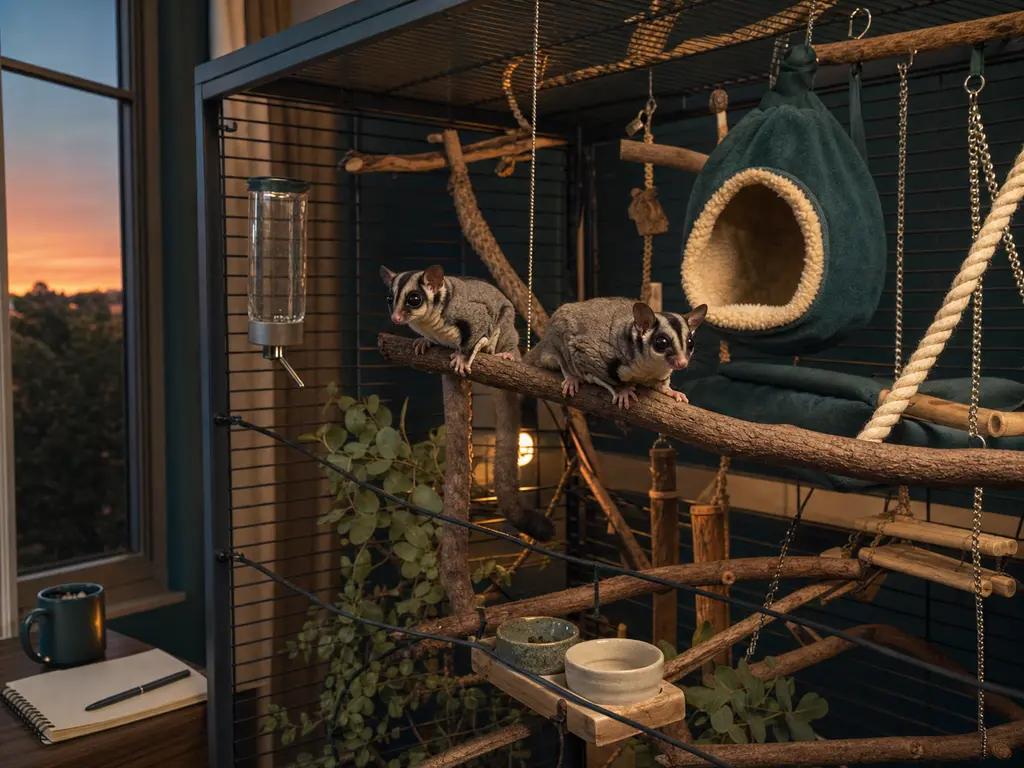
A sugar glider setup needs a tall, well-ventilated climbing enclosure with safe branches, ropes, pouches, food stations, water, and room to move. A small tabletop cage is not a realistic home.
Proof the room and the enclosure carefully. Gaps, cords, loose fabric hazards, unsafe plants, and other pets can turn playtime or escaped access into an emergency.
Take diet precision seriously
Sugar glider feeding is not a bowl of random fruit. Their diet needs specialist guidance, correct balance, careful portions, fresh water, and consistency.
Before adoption, choose a qualified diet plan with an experienced exotic-pet veterinarian or rescue. Sudden diet improvisation can create health problems that are hard for a new owner to read.
Bond slowly and handle safely
Bonding takes time, scent familiarity, calm routines, and safe spaces. A sugar glider is not a pet to grab from above or pass around to guests.
Use pouch routines, short interactions, and secure rooms. Watch for biting, crabbing, hiding, appetite changes, injuries, and any change in movement or weight.
Check law, source, and vet before supplies
Sugar glider ownership is restricted or regulated in some places. Check local law, lease rules, travel limits, rescue or breeder standards, and emergency clinic access before buying anything.
They can be wonderful for committed specialist homes. They are a poor fit for casual owners, impulse gifts, tiny cages, no companion budget, or homes without exotic-pet veterinary support.
Before you decide
Are sugar gliders legal where you live?
Can you keep compatible glider companions and a tall climbing enclosure?
Can you follow a specialist diet instead of improvising fruit bowls?
Can an exotic-pet vet near you see sugar gliders?
Next best moves
Do not choose sugar gliders as casual starter pets.
Budget for companions, a tall enclosure, diet precision, and veterinary care.
Read specialist sources before buying supplies or committing to a breeder.