

Updated

Bird guides

How do I entertain a bored bird?

Entertain a bored bird by giving it daily foraging, safe chewing, training, social time, movement, and a rotating cage setup that still leaves room to move. The best enrichment makes the bird work a little, not just stare at more toys.

Bored birds need jobs. The jobs should be safe, repeatable, and matched to the species.

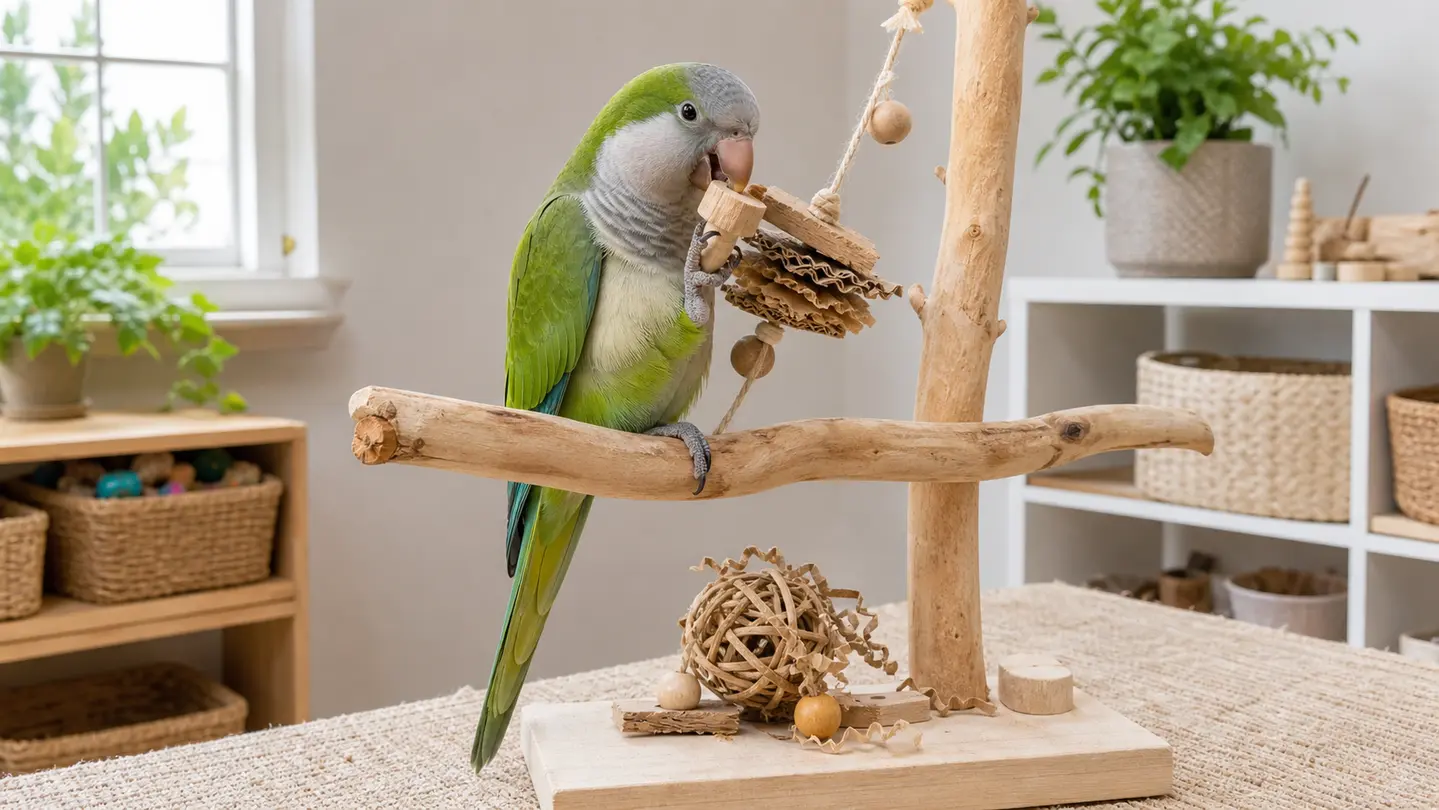
Quaker parrot chewing a bird-safe wood toy on a tabletop play stand.

Behavior and Noise

Answer first

Entertain a bored bird by giving it daily foraging, safe chewing, training, social time, movement, and a rotating cage setup that still leaves room to move. The best enrichment makes the bird work a little, not just stare at more toys.

What to check before you act

Foraging

Make food take light work.

Chewing

Safe destruction is healthy.

Movement

Do not crowd the cage.

Training

Short sessions give purpose.

Social time

Many birds need contact.

Rotation

Novelty helps when it is not scary.

01

How to act on this

Start with one or two daily foraging tasks, safe chew materials, short training, and supervised out-of-cage time where safe.

02

Use food as work

Hide part of the diet in paper cups, forage trays, simple puzzles, or wrapped greens so the bird has to search and manipulate.

03

Rotate without crowding

Change a few toys at a time and leave open movement space. A packed cage is not automatically enriching.

04

Add social structure

Many birds need predictable contact calls, training, shared room time, or same-species company. The right answer depends on the bird.

05

Good enrichment

A useful activity leaves the bird calmer, busier, and still safe when you are not staring at the cage.

Before you decide

  • Does the bird forage for part of its food?
  • Does it have safe materials to destroy?
  • Is there room to move inside the cage?
  • Does the bird get short training or social time?
  • Is boredom showing up as screaming, biting, plucking, or destruction?

Next best moves

  • Add simple foraging before buying more random toys.
  • Rotate toys and textures weekly while inspecting for damage.
  • Use short training sessions to give the bird a predictable job.

Common questions

How many toys does a bird need?

Enough variety to chew, forage, climb, and explore without crowding the cage.

What if my bird is scared of new toys?

Introduce them outside the cage first and move slowly.

Can TV entertain a bird?

It may add background interest, but it does not replace foraging, movement, training, and social time.

Are homemade toys okay?

Some are, if every material, dye, string, clip, and size is bird-safe.

Useful setup pieces

Use these after the care plan is clear. Match size and materials to the bird you actually keep.

Affiliate links: Furball Cove may earn from qualifying purchases at no extra cost to you.

Bird foraging tray with covered cups, pellets, greens, and a curious budgie beside the puzzle.

Foraging toy

Turns part of the meal into a simple job instead of a full bowl of boredom.

Bird-safe chew toys made from natural wood, paper, vine, and vegetable-dyed pieces with a lovebird nearby.

Safe chew toys

Plain bird-safe chewing work gives busy beaks something useful to do.

Tabletop bird training perch with a cockatiel standing on the perch beside small training treats.

Training perch

Gives short trust-building sessions a low, predictable place to happen.

Natural wood bird perch set with varied diameters and a cockatiel beside the perches on a bright table.

Natural perch set

Varied perch diameters support normal feet better than one smooth dowel.

References