

Updated

Bird behavior

Bird Training Basics

Good bird training is short, clear, and easy for the bird to choose.

Training is not a trick layer on top of care. It is how you make handling, transport, play, and daily routines safer.

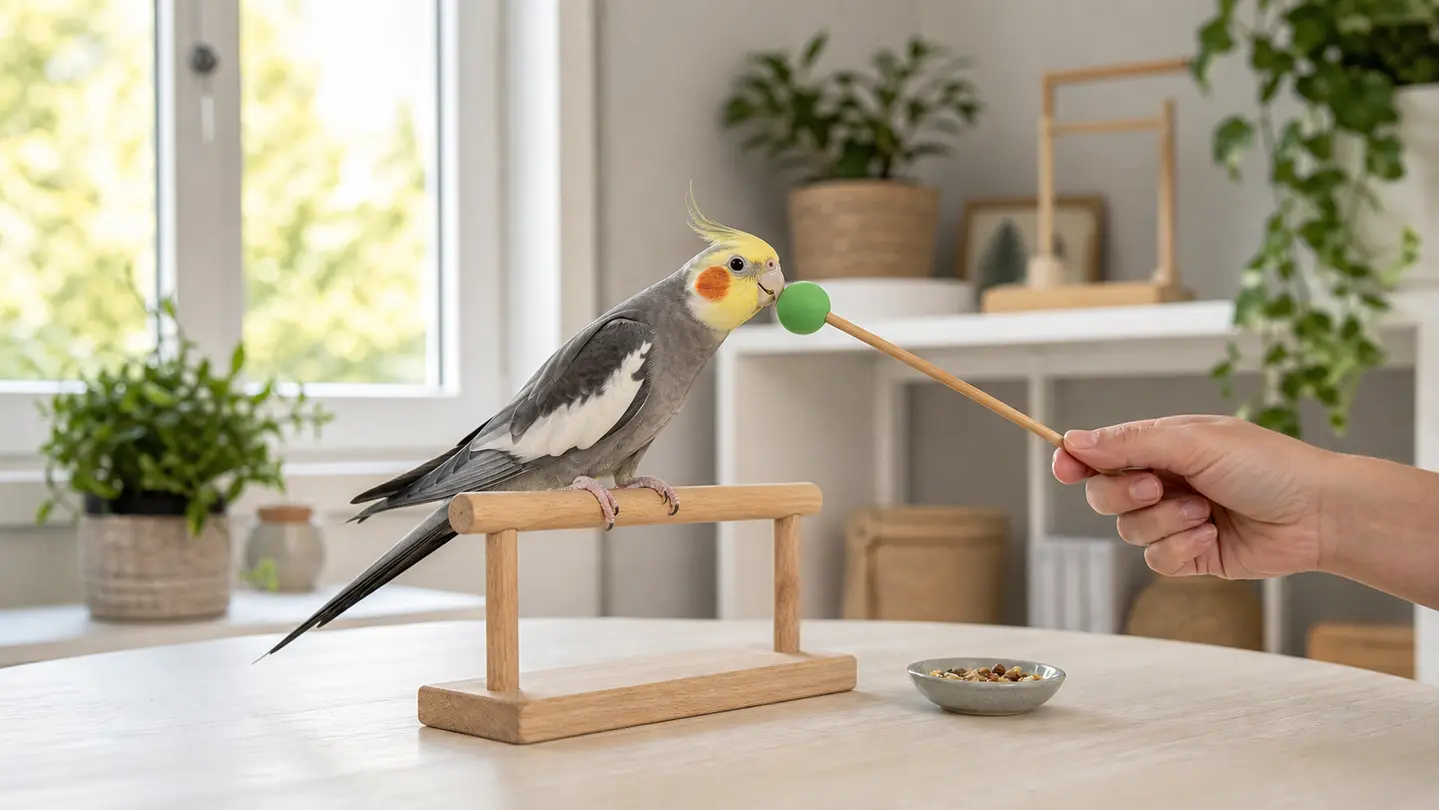
Cockatiel touching a target stick on a tabletop training perch with tiny treats nearby.
01

Pick one tiny behavior

Train one clear piece at a time: look at the target, step toward the perch, put one foot up, stay on the station, enter the carrier, or step down calmly.

02

Reward fast and keep rewards small

Use tiny treats, praise, or access to something the bird values. The reward has to happen while the bird still knows what it did.

03

Target training gives you a shared language

A simple target can move the bird without pushing hands into its space. It helps with step-up, stationing, cage exits, and carrier comfort.

04

Stationing reduces household chaos

A station perch gives the bird a predictable place to go during cleaning, feeding, visitors, or short training. Reward staying there before the bird leaves to find trouble.

05

Carrier training is daily-life training

Do not save the carrier for emergencies. Let the bird explore it, eat near it, step inside briefly, and come back out before it becomes scary.

06

End before the bird quits for you

Stop after a few good repetitions. A tired, bored, or frustrated bird is learning that training goes on too long.

Before you decide

  • Sessions are short enough that the bird wants another turn.
  • Rewards are tiny and ready before the ask.
  • The bird can leave or pause without being chased.
  • One behavior is trained at a time.

Next best moves

  • Start with target, station, and step-down basics.
  • Use the same cue and reward timing every time.
  • Train before meals only if the bird is comfortable and safe.

Simple tools that support this behavior plan

Use supplies as structure, not shortcuts. The goal is to make calm choices easier for the bird.

Affiliate links: Furball Cove may earn from qualifying purchases at no extra cost to you.

Tabletop bird training perch with a cockatiel standing on the perch beside small training treats.

Training perch

Gives short trust-building sessions a low, predictable place to happen.

Bird foraging tray with covered cups, pellets, greens, and a curious budgie beside the puzzle.

Foraging toy

Turns part of the meal into a simple job instead of a full bowl of boredom.

Bird-safe chew toys made from natural wood, paper, vine, and vegetable-dyed pieces with a lovebird nearby.

Safe chew toys

Plain bird-safe chewing work gives busy beaks something useful to do.

Hard-sided bird carrier with towel liner, stainless bowl, and a cockatiel calmly beside the open carrier.

Hard-sided bird carrier

Keeps transport secure for adoption day, avian-vet visits, and emergencies.

Common questions

What is the first thing to teach a bird?

Targeting and stationing are useful first skills because they give you a way to move and reward the bird without force.

How long should bird training sessions be?

Often just a few minutes. Stop while the bird is still interested and calm.

Do I need a clicker?

No. A clicker can help, but a consistent word or sound can also mark the right moment.

References