

Updated

Bird guides

How do I know if my bird is scared?

A scared bird may lean away, freeze, crouch, slick feathers tight, widen the eyes, breathe faster, flee, lunge, bite, scream, or refuse food. The safest response is to pause, give space, and lower the pressure.

Fear signs can be subtle before they become panic or biting.

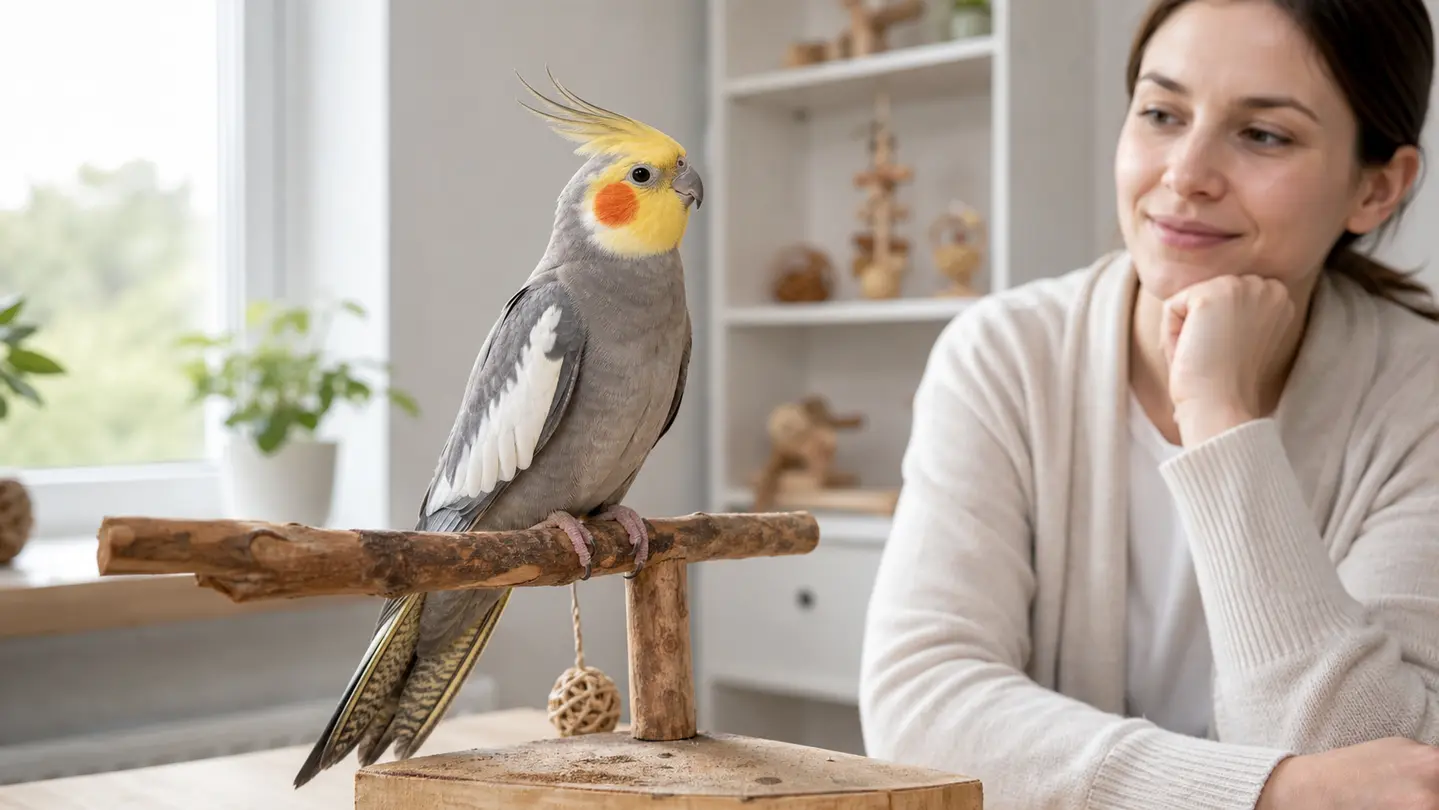
Cockatiel on a tabletop perch with clear relaxed posture while a person calmly observes from nearby.

Behavior and Noise

Answer first

A scared bird may lean away, freeze, crouch, slick feathers tight, widen the eyes, breathe faster, flee, lunge, bite, scream, or refuse food. The safest response is to pause, give space, and lower the pressure.

What to check before you act

Distance

Moving away is a clear answer.

Posture

Tight, low, frozen body language matters.

Trigger

Find what changed.

Pressure

Hands and staring can be too much.

Choice

Let approach be the bird's idea.

Pattern

Repeated fear becomes behavior trouble.

01

How to act on this

Watch the whole bird: posture, feathers, eyes, feet, breathing, voice, and whether the bird is trying to move away.

02

Look for distance signals

A bird that leans away, turns aside, steps back, raises wings, pins eyes, hisses, or freezes is asking for more space.

03

Change the environment

Reduce sudden movement, loud noise, direct staring, hands over the head, predator pets, and crowded cage access.

04

Build confidence slowly

Use routine, treats at a comfortable distance, target training, and predictable movement. Let the bird choose to approach.

05

Important distinction

Fear can look like aggression. A lunge or bite may be a scared bird trying to make space.

Before you decide

  • Is the bird trying to move away?
  • Are feathers tight, posture low, or eyes wide?
  • Did a person, pet, object, or sound trigger the reaction?
  • Does the bird relax when distance increases?
  • Are you asking for handling before trust is ready?

Next best moves

  • Stop the approach when fear signs appear.
  • Reward calm curiosity from a distance the bird can handle.
  • Remove repeated scare triggers from the cage area.

Common questions

Is hissing fear or anger?

Often it means back off. The label matters less than respecting the warning.

Why does my bird freeze?

Freezing can be a fear response. Give space and make the situation easier.

Can a scared bird still take treats?

Sometimes, but taking food does not mean the bird is relaxed. Watch posture and choice too.

How long does fear take to improve?

It depends on the bird, history, and consistency. Short calm sessions beat long stressful ones.

Useful setup pieces

Use these after the care plan is clear. Match size and materials to the bird you actually keep.

Affiliate links: Furball Cove may earn from qualifying purchases at no extra cost to you.

Tabletop bird training perch with a cockatiel standing on the perch beside small training treats.

Training perch

Gives short trust-building sessions a low, predictable place to happen.

Bird foraging tray with covered cups, pellets, greens, and a curious budgie beside the puzzle.

Foraging toy

Turns part of the meal into a simple job instead of a full bowl of boredom.

Open blank bird care notebook with pencil, small supplies, and a cockatiel on a tabletop stand.

Care notebook

Tracks food, weight, sleep, droppings, behavior, and vet questions in one place.

Hard-sided bird carrier with towel liner, stainless bowl, and a cockatiel calmly beside the open carrier.

Hard-sided bird carrier

Keeps transport secure for adoption day, avian-vet visits, and emergencies.

References