

Let the first days be boring
A new bird needs time to eat, sleep, watch the room, and learn the daily rhythm. Keep care predictable and avoid passing the bird from person to person.
Updated
Bird behavior
Trust grows fastest when the bird can say no and still stay safe.
Taming is not about winning a power struggle. It is about making calm choices easy enough that the bird wants to repeat them.

A new bird needs time to eat, sleep, watch the room, and learn the daily rhythm. Keep care predictable and avoid passing the bird from person to person.
Sit nearby, speak softly, change food and water calmly, and notice when the bird relaxes. The first win may be the bird staying loose while you are in the room.
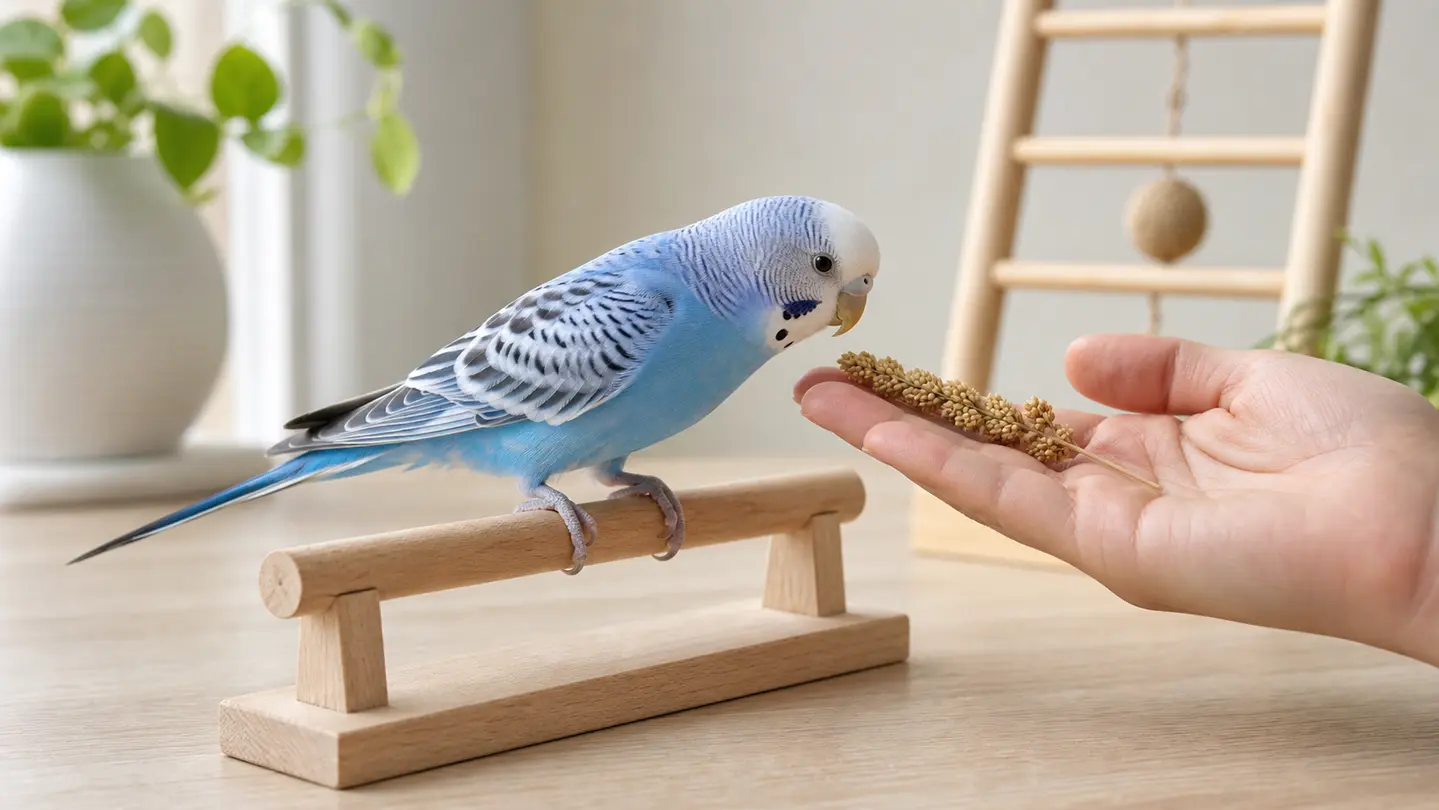
Offer millet or another favorite at a distance where the bird still looks comfortable. If the bird leans away or freezes, the hand is too close.
A bird that will take food calmly, follow a target, or move to a perch is much easier to teach. Do not make step-up the first test of trust.
A scare, loud day, grab, vet trip, or schedule change can make a bird cautious again. Go back to the last easy step and rebuild from there.
Trust falls apart when one person moves slowly and another person chases the bird. Keep the handling plan simple enough that guests and children can follow it.
Use supplies as structure, not shortcuts. The goal is to make calm choices easier for the bird.
Affiliate links: Furball Cove may earn from qualifying purchases at no extra cost to you.

Gives short trust-building sessions a low, predictable place to happen.

Turns part of the meal into a simple job instead of a full bowl of boredom.

Keeps transport secure for adoption day, avian-vet visits, and emergencies.

Tracks food, weight, sleep, droppings, behavior, and vet questions in one place.
It depends on species, age, history, confidence, and the home. Think in small signs of comfort, not a fixed deadline.
Only if the room is safe and the bird can return calmly. Many new birds need time to settle before out-of-cage time is useful.
Stop making hands the main event. Use distance, treats, a target, and a perch so the bird can choose to approach.