

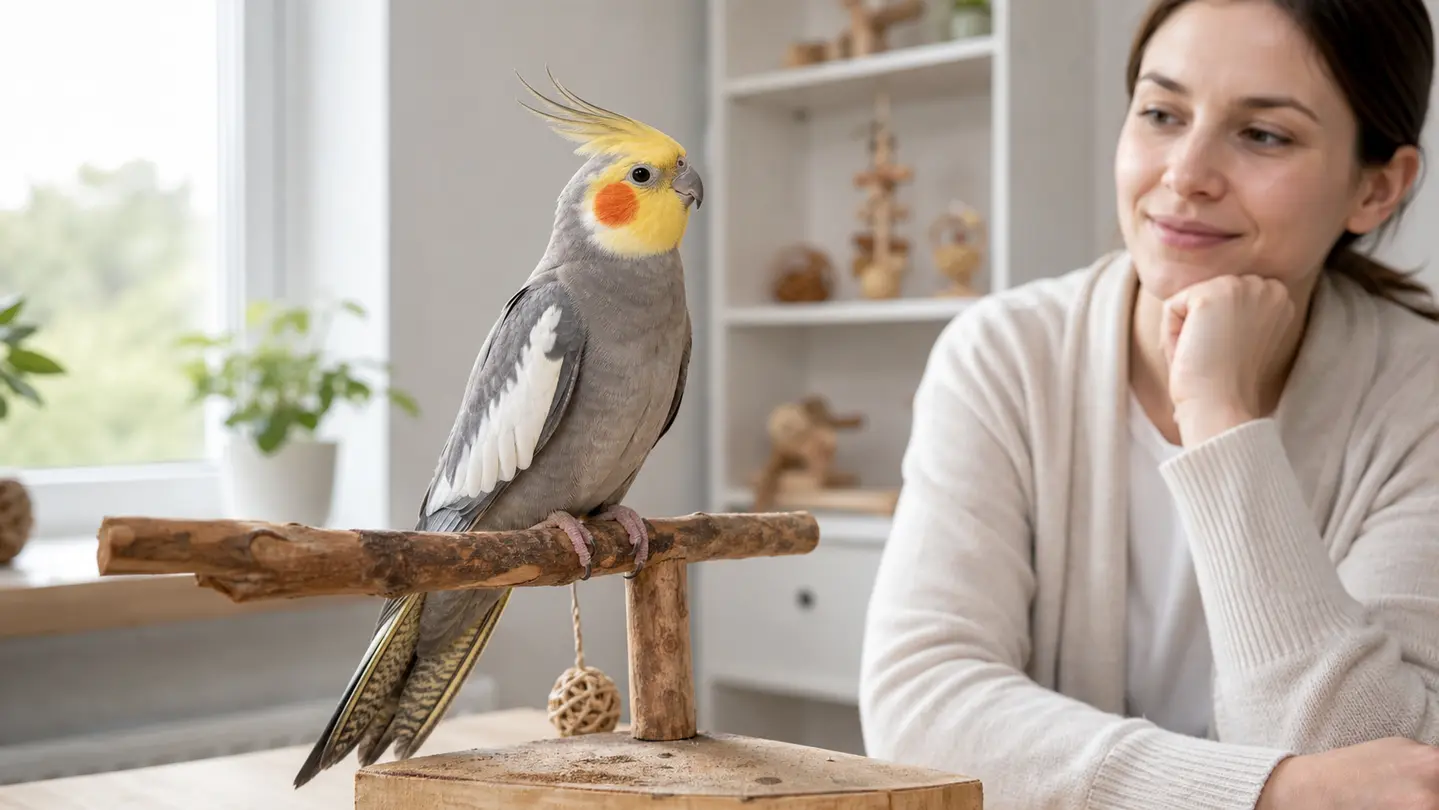
Watch the whole bird, not one sign
Pinned eyes, a raised crest, fluffed feathers, leaning away, a tight body, tail flaring, crouching, or pacing can mean different things by species and situation. Read the whole picture before deciding what to do.
Updated
Bird behavior
Body language is the owner's early-warning system.
A bird usually tells you how it feels before the big behavior happens. Watch the whole bird: feathers, posture, eyes, feet, breathing, distance, and how quickly it takes a treat.

Pinned eyes, a raised crest, fluffed feathers, leaning away, a tight body, tail flaring, crouching, or pacing can mean different things by species and situation. Read the whole picture before deciding what to do.
A comfortable bird usually moves easily, takes food gently, preens, explores, or steps closer on its own. The important part is not that the bird looks frozen and quiet; it is that the bird can move, pause, and choose.
Leaning away, stepping back, freezing, tightening the body, lunging without contact, or refusing a favorite treat are useful answers. Respecting those early signs prevents bites and makes the next try easier.
A sleepy cockatiel, excited conure, protective lovebird, singing canary, and nervous budgie may show stress differently. Body language is most useful when you compare it to that bird's normal routine.
If the bird suddenly snatches food, drops food, refuses food, or takes it with a stiff body, the session may be too hard. Increase distance, lower your hand, use a perch, or end while trust is still intact.
A bird that suddenly acts quiet, clumsy, unusually aggressive, fluffed, weak, or uninterested in normal food should not be treated as a training puzzle first. Call an avian vet.
Use supplies as structure, not shortcuts. The goal is to make calm choices easier for the bird.
Affiliate links: Furball Cove may earn from qualifying purchases at no extra cost to you.

Gives short trust-building sessions a low, predictable place to happen.

Turns part of the meal into a simple job instead of a full bowl of boredom.

Plain bird-safe chewing work gives busy beaks something useful to do.

Tracks food, weight, sleep, droppings, behavior, and vet questions in one place.
It usually means the bird wants more space or a smaller ask. Pause, move slower, and let the bird choose whether to come forward.
No. Eye pinning can come with excitement, interest, play, or tension depending on the species and moment. Read it with posture, feathers, sound, and distance.
Freezing can be fear or uncertainty. Give the bird an easy exit and stop pushing for contact.