

Updated

Bird guides

Why does my bird fluff up?

Brief fluffing can be normal when a bird is relaxed, sleepy, preening, or warming up. A bird that stays fluffed, sits low, is quiet, eats less, changes droppings, breathes harder, or seems weak may be sick and needs avian-vet advice.

Fluffed feathers are normal in some moments and worrying in others. Duration and the rest of the bird matter.

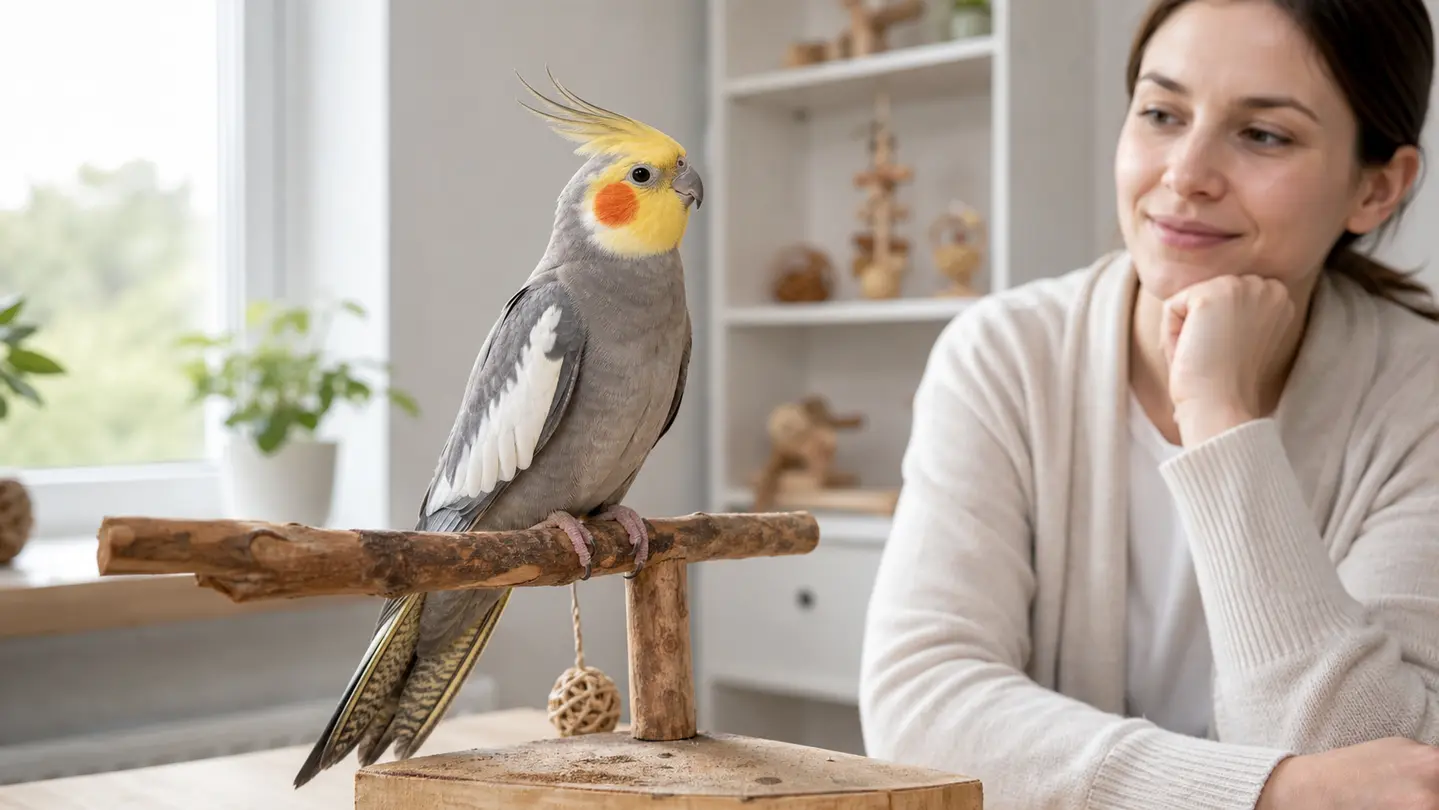
Cockatiel on a tabletop perch with clear relaxed posture while a person calmly observes from nearby.

Behavior and Noise

Answer first

Brief fluffing can be normal when a bird is relaxed, sleepy, preening, or warming up. A bird that stays fluffed, sits low, is quiet, eats less, changes droppings, breathes harder, or seems weak may be sick and needs avian-vet advice.

What to check before you act

Duration

Brief is different from persistent.

Appetite

Eating changes are serious.

Droppings

Output tells you a lot.

Breathing

Tail bobbing is a warning sign.

Temperature

Fix drafts but watch health.

Vet timing

Do not wait for dramatic symptoms.

01

How to act on this

Look at the whole picture. A quick fluff and shake is different from a bird sitting puffed up for long periods.

02

Normal fluffing

Birds may fluff briefly while relaxing, preening, getting ready to sleep, or adjusting body temperature in a safe room.

03

Worry signs

Long-lasting puffiness with low posture, closed eyes, tail bobbing, appetite change, fewer droppings, weakness, or unusual quiet should be treated as illness risk.

04

Check the room

Cold drafts, poor sleep, fear, or stress can change posture, but do not use room temperature as an excuse to ignore sickness signs.

05

Safe rule

If a fluffed bird also acts unwell, call an avian vet promptly.

Before you decide

  • Did the fluffing pass quickly?
  • Is the bird eating normally?
  • Are droppings normal for this bird?
  • Is breathing easy with no tail bobbing?
  • Is the bird active, balanced, and alert?

Next best moves

  • Use a gram scale and care notes to compare today's bird with normal.
  • Check for drafts and sleep disruption, but do not delay care for illness signs.
  • Call an avian vet if puffing is prolonged or paired with other changes.

Common questions

Is a fluffy bird always sick?

No. Brief fluffing can be normal. The concern is prolonged fluffing with other behavior or health changes.

Why does my bird fluff before sleep?

Many birds fluff lightly as they settle. The bird should still be balanced, responsive, and otherwise normal.

Can cold make a bird puff up?

Yes, but cold stress is still a problem to fix, and sick birds may also puff up.

Should I warm a sick-looking bird?

Keep the bird calm and safe, then call an avian vet. Do not overheat or force care without guidance.

Useful setup pieces

Use these after the care plan is clear. Match size and materials to the bird you actually keep.

Affiliate links: Furball Cove may earn from qualifying purchases at no extra cost to you.

Digital gram scale with a budgie standing calmly on the scale beside a care notebook.

Digital gram scale

Makes weight checks easier before small appetite changes become big problems.

Open blank bird care notebook with pencil, small supplies, and a cockatiel on a tabletop stand.

Care notebook

Tracks food, weight, sleep, droppings, behavior, and vet questions in one place.

Hard-sided bird carrier with towel liner, stainless bowl, and a cockatiel calmly beside the open carrier.

Hard-sided bird carrier

Keeps transport secure for adoption day, avian-vet visits, and emergencies.

Plain paper cage liners stacked beside a clean removable cage tray and a small finch on a nearby stand.

Paper cage liners

Plain paper makes droppings easier to monitor without scented products.

References