

Updated

Bird guides

Why does my bird grind its beak?

Soft beak grinding is usually a relaxed, sleepy, content behavior, especially before naps or bedtime. It is different from sharp beak clicking, open-mouth breathing, face rubbing, injury, or trouble eating.

Beak grinding is often good news, but it helps to know what you are hearing.

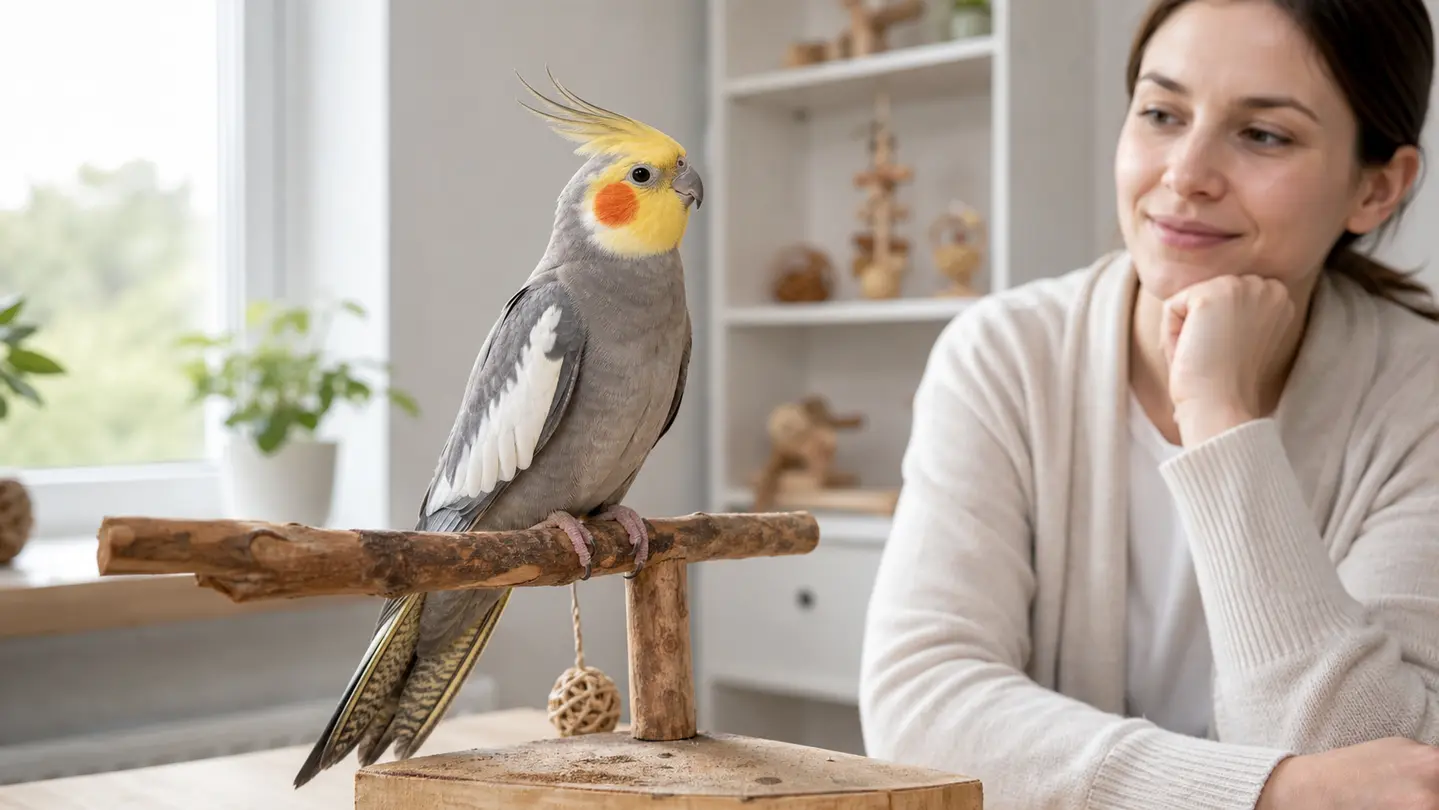
Cockatiel on a tabletop perch with clear relaxed posture while a person calmly observes from nearby.

Behavior and Noise

Answer first

Soft beak grinding is usually a relaxed, sleepy, content behavior, especially before naps or bedtime. It is different from sharp beak clicking, open-mouth breathing, face rubbing, injury, or trouble eating.

What to check before you act

Soft sound

Usually relaxed before rest.

Body language

Posture confirms the meaning.

Breathing

Open-mouth breathing is different.

Eating

Trouble eating changes the answer.

Beak condition

Injury or swelling needs care.

Chewing

Safe outlets support normal use.

01

How to act on this

If the bird is calm, perched comfortably, and grinding softly before rest, that is usually normal contentment.

02

Read the body with the sound

Relaxed grinding usually comes with settled posture, soft eyes, and normal breathing. The bird should still eat and behave normally when awake.

03

Do not confuse warning sounds

Hard clicking, lunging, hissing, open-mouth breathing, repeated face rubbing, or beak injury are different issues.

04

Support normal beak use

Safe chewing, natural perches, good diet, and vet checks help keep beak wear and comfort on track.

05

When to worry

If the sound is new and paired with appetite change, swelling, injury, breathing trouble, or trouble cracking food, call an avian vet.

Before you decide

  • Is the bird relaxed when it happens?
  • Does it happen before sleep or rest?
  • Is breathing normal?
  • Is the bird eating normally?
  • Are there signs of beak injury, swelling, or pain?

Next best moves

  • Treat soft sleepy grinding as normal unless other signs change.
  • Provide safe chew items and a species-appropriate diet.
  • Ask an avian vet about new, harsh, painful, or breathing-related beak sounds.

Common questions

Is beak grinding like purring?

That is a fair comparison for many birds when the bird is relaxed and sleepy.

Is beak clicking the same thing?

No. Clicking can be communication, warning, or another behavior depending on posture and context.

Can beak grinding mean pain?

Usually not by itself, but pain is possible if there are eating problems, injury, swelling, or major behavior changes.

Do birds need toys for beak health?

They need safe chewing and normal use, but toys do not replace diet, perches, and avian-vet care.

Useful setup pieces

Use these after the care plan is clear. Match size and materials to the bird you actually keep.

Affiliate links: Furball Cove may earn from qualifying purchases at no extra cost to you.

Bird-safe chew toys made from natural wood, paper, vine, and vegetable-dyed pieces with a lovebird nearby.

Safe chew toys

Plain bird-safe chewing work gives busy beaks something useful to do.

Natural wood bird perch set with varied diameters and a cockatiel beside the perches on a bright table.

Natural perch set

Varied perch diameters support normal feet better than one smooth dowel.

Open blank bird care notebook with pencil, small supplies, and a cockatiel on a tabletop stand.

Care notebook

Tracks food, weight, sleep, droppings, behavior, and vet questions in one place.

Hard-sided bird carrier with towel liner, stainless bowl, and a cockatiel calmly beside the open carrier.

Hard-sided bird carrier

Keeps transport secure for adoption day, avian-vet visits, and emergencies.

References