

Updated

Bird guides

Are mirrors good for pet birds?

Mirrors are usually not the best toy for pet birds. Some birds ignore them, but others become fixated, territorial, frustrated, hormonal, or less interested in real social contact. Use foraging, training, chewing, and real interaction instead.

A mirror can look harmless, but it can change behavior for some birds.

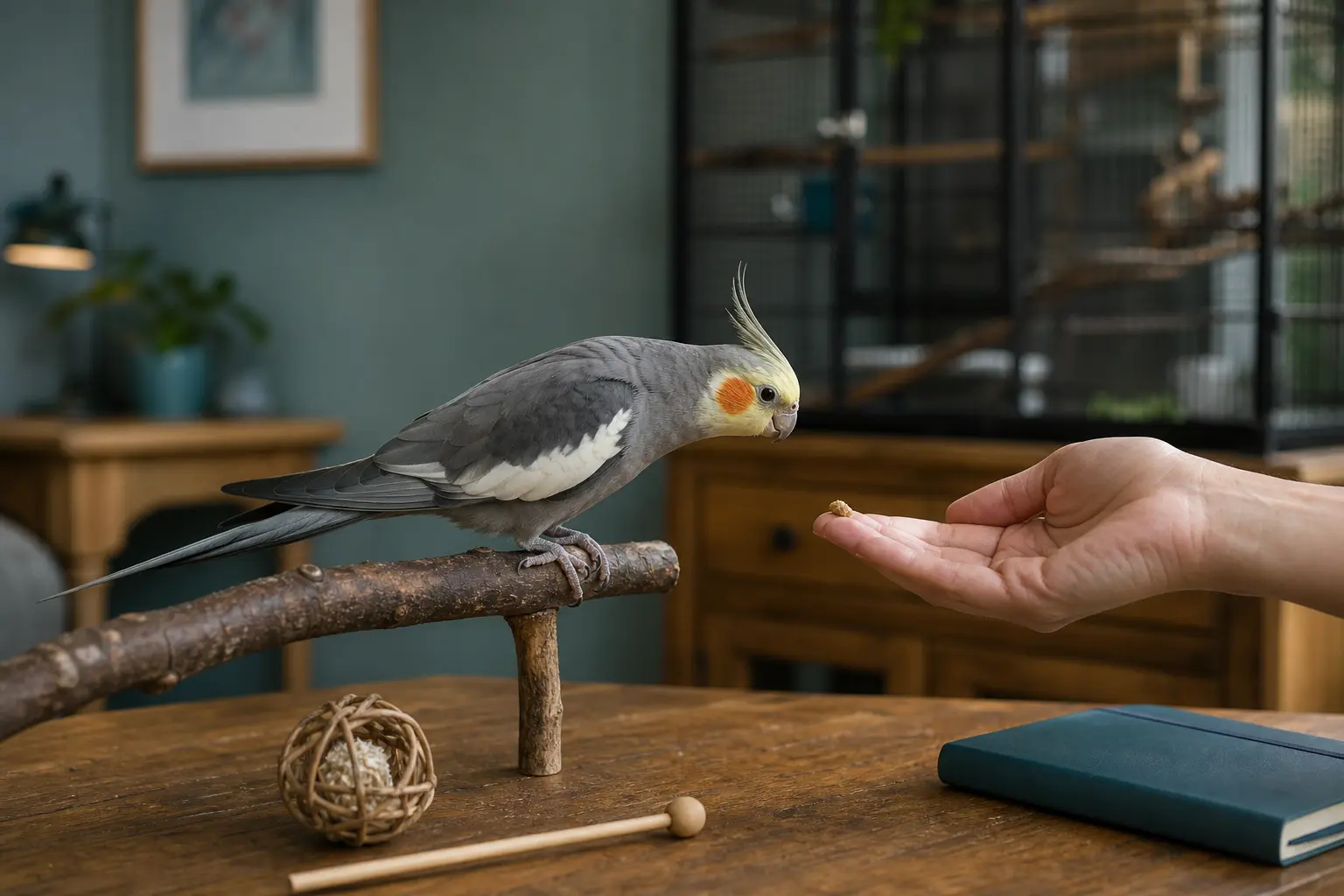
Cockatiel calmly choosing to approach a hand offering millet on a low tabletop perch.

Cages and Setup

Answer first

Mirrors are usually not the best toy for pet birds. Some birds ignore them, but others become fixated, territorial, frustrated, hormonal, or less interested in real social contact. Use foraging, training, chewing, and real interaction instead.

What to check before you act

Reflection

Not a real companion.

Fixation

Obsessing is a warning sign.

Hormones

Mirrors can intensify behavior.

Foraging

Better daily enrichment.

Social plan

Real birds require planning.

Removal

Replace with healthier routines.

01

How to act on this

Skip mirrors as the default cage toy. If a bird is lonely, bored, or hormonal, a mirror can make the problem harder to read instead of solving it.

02

A reflection is not a friend

A mirror does not respond like a real bird. Some birds court, guard, feed, or obsess over the reflection and become stressed when it never behaves normally.

03

Watch for fixation

Remove the mirror if the bird guards it, screams when away from it, attacks people near it, regurgitates constantly, or stops exploring other toys.

04

Use better enrichment

Foraging toys, safe chew work, training, and calm social time give the bird something healthier to do.

05

Companionship needs a real plan

If the bird truly needs another bird, that means quarantine, compatibility, space, and cost, not a mirror.

Before you decide

  • Does the bird guard, court, or obsess over the mirror?
  • Is the mirror replacing real interaction or enrichment?
  • Has behavior changed since the mirror was added?
  • Would foraging or chew toys meet the need better?
  • Are you using a mirror to avoid solving loneliness or boredom?

Next best moves

  • Remove mirrors when behavior becomes intense or territorial.
  • Use foraging, training, chew toys, and social routine instead.
  • Consider a real companion bird only with proper planning.

Common questions

Are mirrors bad for budgies?

They can be a problem for some budgies, especially if the bird becomes obsessed, hormonal, or less interested in people and real activities.

Can a mirror keep a bird company?

No. It may occupy the bird, but it is not real companionship and can create frustration.

What should I use instead of a mirror?

Use safe chew toys, foraging, training perches, music or routine sounds, and real interaction.

Should I remove a mirror suddenly?

If the bird is fixated, remove it and add better enrichment. Some birds may need a gradual routine change and more attention.

Useful setup pieces

Use these after the care plan is clear. Match size and materials to the bird you actually keep.

Affiliate links: Furball Cove may earn from qualifying purchases at no extra cost to you.

Bird foraging tray with covered cups, pellets, greens, and a curious budgie beside the puzzle.

Foraging toy

Turns part of the meal into a simple job instead of a full bowl of boredom.

Bird-safe chew toys made from natural wood, paper, vine, and vegetable-dyed pieces with a lovebird nearby.

Safe chew toys

Plain bird-safe chewing work gives busy beaks something useful to do.

Tabletop bird training perch with a cockatiel standing on the perch beside small training treats.

Training perch

Gives short trust-building sessions a low, predictable place to happen.

Open blank bird care notebook with pencil, small supplies, and a cockatiel on a tabletop stand.

Care notebook

Tracks food, weight, sleep, droppings, behavior, and vet questions in one place.

References