

Shape
Rectangular is the safer default.
Updated
Bird guides
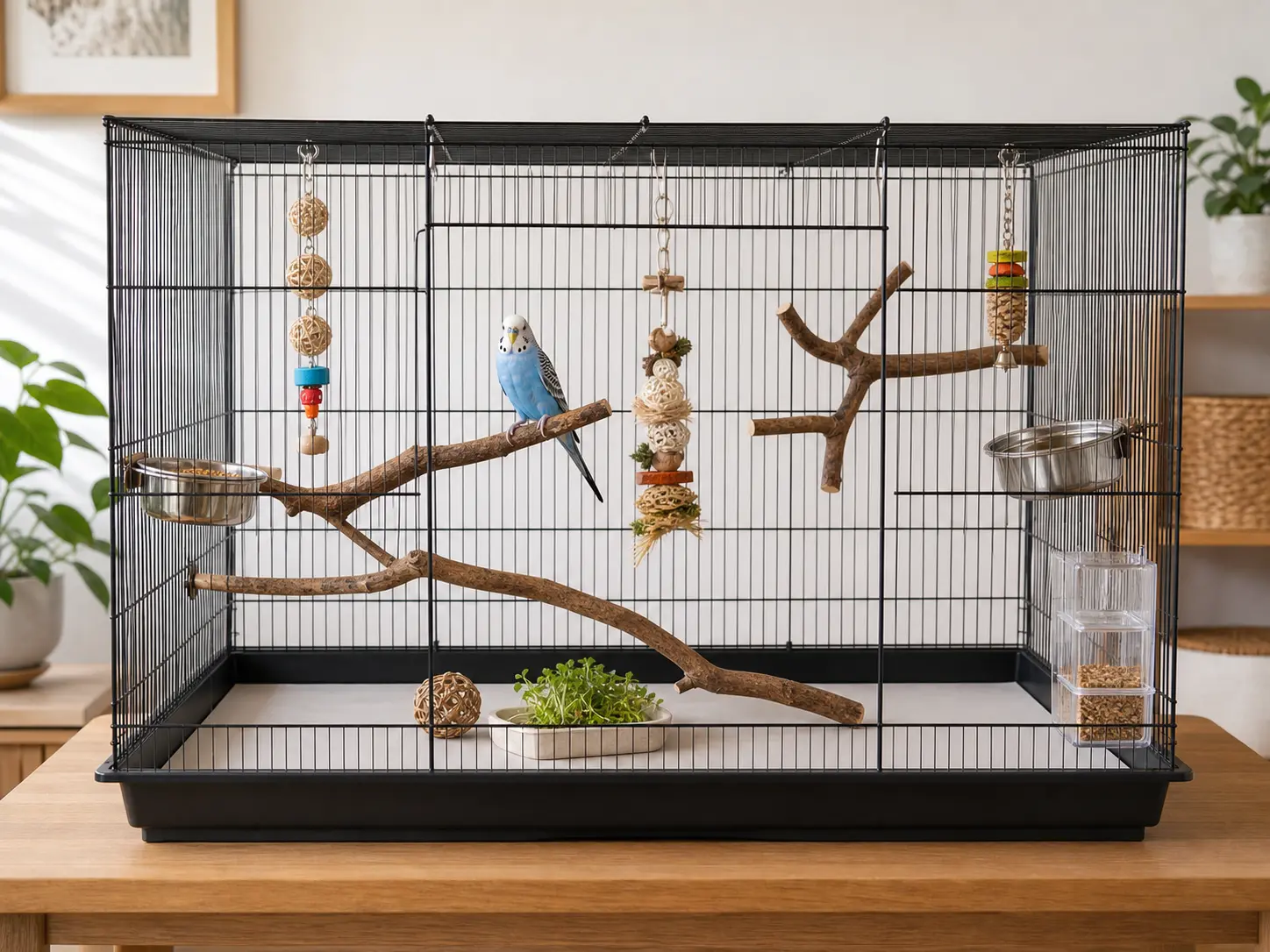
Round bird cages are usually a poor choice for pet birds. They waste usable space, make perch placement awkward, can feel less secure, and often encourage cramped vertical layouts. A roomy rectangular cage is the better default.
A cage should support movement, rest, cleaning, and predictable routines. Round cages make that harder.

Cages and Setup
Round bird cages are usually a poor choice for pet birds. They waste usable space, make perch placement awkward, can feel less secure, and often encourage cramped vertical layouts. A roomy rectangular cage is the better default.
Choose a cage around movement and daily care.
Use the hub for nearby questions after this answer.
Use supplies after the care plan is clear, not before.
Pick gear that makes the daily routine easier to repeat.
Rectangular is the safer default.
Birds need secure resting reference points.
Layout is easier on straight sides.
Simple access matters.
Usable width beats decoration.
Looks come after welfare.
Choose a rectangular cage with clear corners, safe bar spacing, and enough width for the bird to move. Round cages often look decorative but do not function as well for daily care.
Many birds use corners and cage sides as reference points. A round cage can make the space feel exposed and harder to arrange.
Good cage layout needs perches at useful heights, bowls away from droppings, and open movement paths. Curved walls make that less practical.
Bird cages should be chosen for safety, space, cleaning, and behavior support before style.
Use a roomy rectangular cage unless an avian professional has a specific reason for another setup.
A bird may survive in one, but it is usually not the best daily housing. Rectangular cages are easier to set up well.
They can reduce usable space, remove secure corners, and make perches, bowls, and toys harder to arrange safely.
Not with a live bird inside. A bird cage should be a care tool, not room decor first.
Choose a roomy rectangular cage with safe bar spacing, sturdy doors, and easy cleaning access.
Use these after the care plan is clear. Match size and materials to the bird you actually keep.
Affiliate links: Furball Cove may earn from qualifying purchases at no extra cost to you.

Start with safe space, ventilation, bar spacing, and room for natural perches.

Varied perch diameters support normal feet better than one smooth dowel.

Separate clean food and water dishes that are easy to wash every day.

Plain paper makes droppings easier to monitor without scented products.