

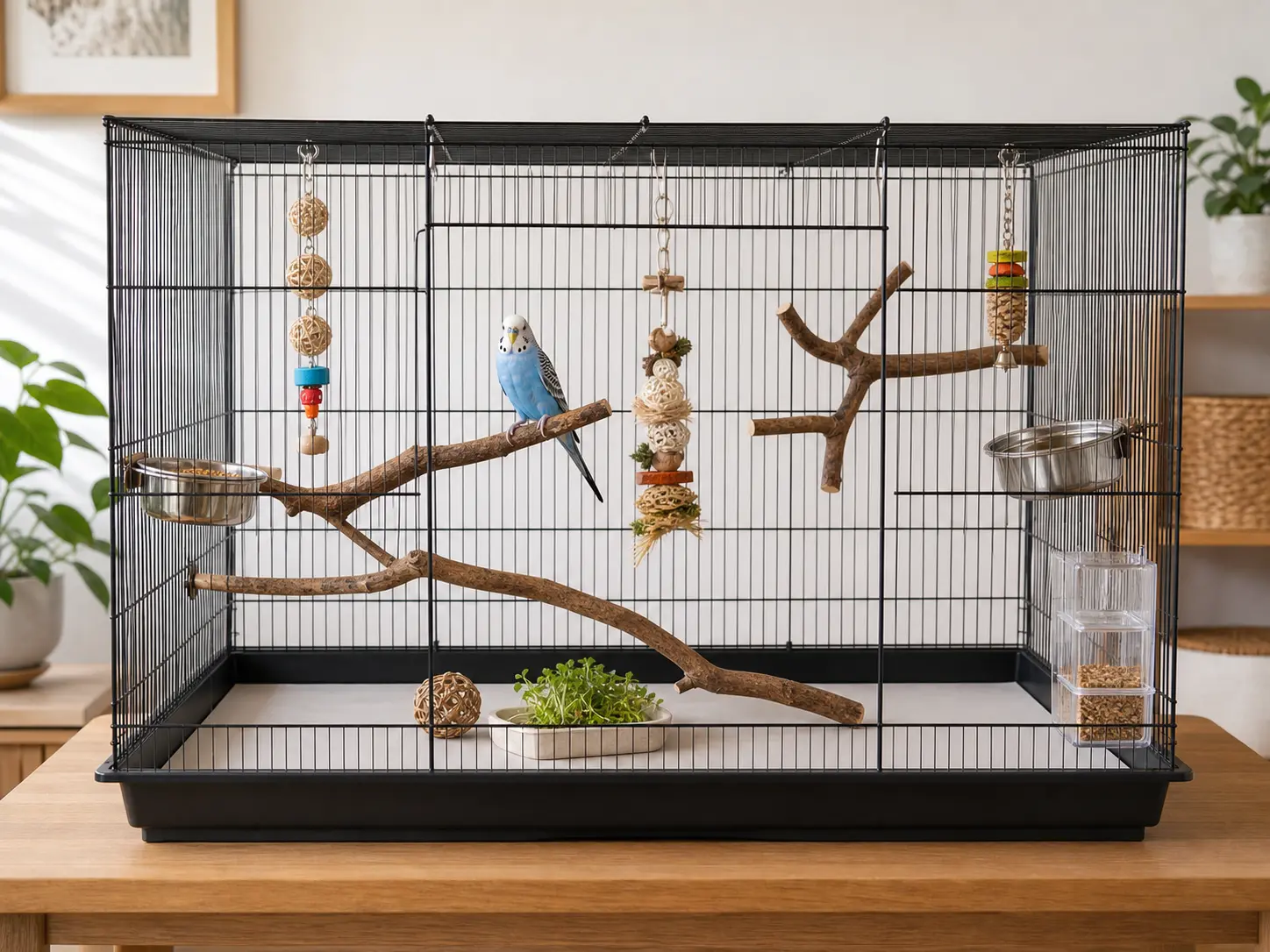
Adult size
Buy for the bird fully grown.
Updated
Bird guides
A pet bird needs the largest safe rectangular cage you can maintain, with enough width for movement, correct bar spacing, room for perches, bowls, and toys, and space to flap without hitting everything. Tiny starter cages are not a good daily home.
Cage size is about daily movement and safety, not the smallest box a bird can survive in.

Cages and Setup
A pet bird needs the largest safe rectangular cage you can maintain, with enough width for movement, correct bar spacing, room for perches, bowls, and toys, and space to flap without hitting everything. Tiny starter cages are not a good daily home.
Plan cage size, placement, perches, bowls, and sleep.
Use the hub for nearby questions after this answer.
Use supplies after the care plan is clear, not before.
Pick gear that makes the daily routine easier to repeat.
Buy for the bird fully grown.
Movement space matters.
A roomy unsafe cage is still unsafe.
Accessories should not crowd the bird.
Daily access must be easy.
Avoid flimsy or questionable finishes.
Start with adult size, wingspan, tail length, and activity level. Width usually matters more than height because most pet birds need useful side-to-side movement.
Perches, bowls, and toys shrink a cage fast. After setup, the bird should still have open space to turn, stretch, climb, and flap.
A large cage is unsafe if the bird can push its head through the bars. Match spacing to the smallest bird using the cage.
A cage that is too awkward to clean will not stay clean. Look for access doors, a simple tray, washable surfaces, and room placement that lets you work safely.
Treat cleanup as normal household hygiene, not as a scare. Wash hands after handling liners, droppings, bowls, perches, toys, or cleaning tools. Do not clean cages, bowls, perches, or bird equipment in the kitchen sink or on food-prep surfaces; use a separate cleanup area and keep bird supplies away from human food.
Buy for the adult bird's daily life, not the store label on a starter cage.
Bigger helps only when bar spacing, materials, doors, placement, and cleaning access are safe.
Width is usually more useful because many birds move side to side more than straight up and down.
No. A play stand helps supervised out time, but the bird still needs a safe daily cage.
Many are too small for long-term movement and are sold for convenience, travel, or display rather than daily care.
Use these after the care plan is clear. Match size and materials to the bird you actually keep.
Affiliate links: Furball Cove may earn from qualifying purchases at no extra cost to you.

Start with safe space, ventilation, bar spacing, and room for natural perches.

Varied perch diameters support normal feet better than one smooth dowel.

Separate clean food and water dishes that are easy to wash every day.

Plain paper makes droppings easier to monitor without scented products.