

Updated

Bird guides

Do birds need a play stand?

Birds do not strictly need a play stand, but many benefit from one. A safe stand gives supervised out-of-cage time a clear place to happen, helps training, protects furniture, and keeps food, toys, and perches organized.

A play stand is useful when it supports supervision and routine, not when it replaces cage space.

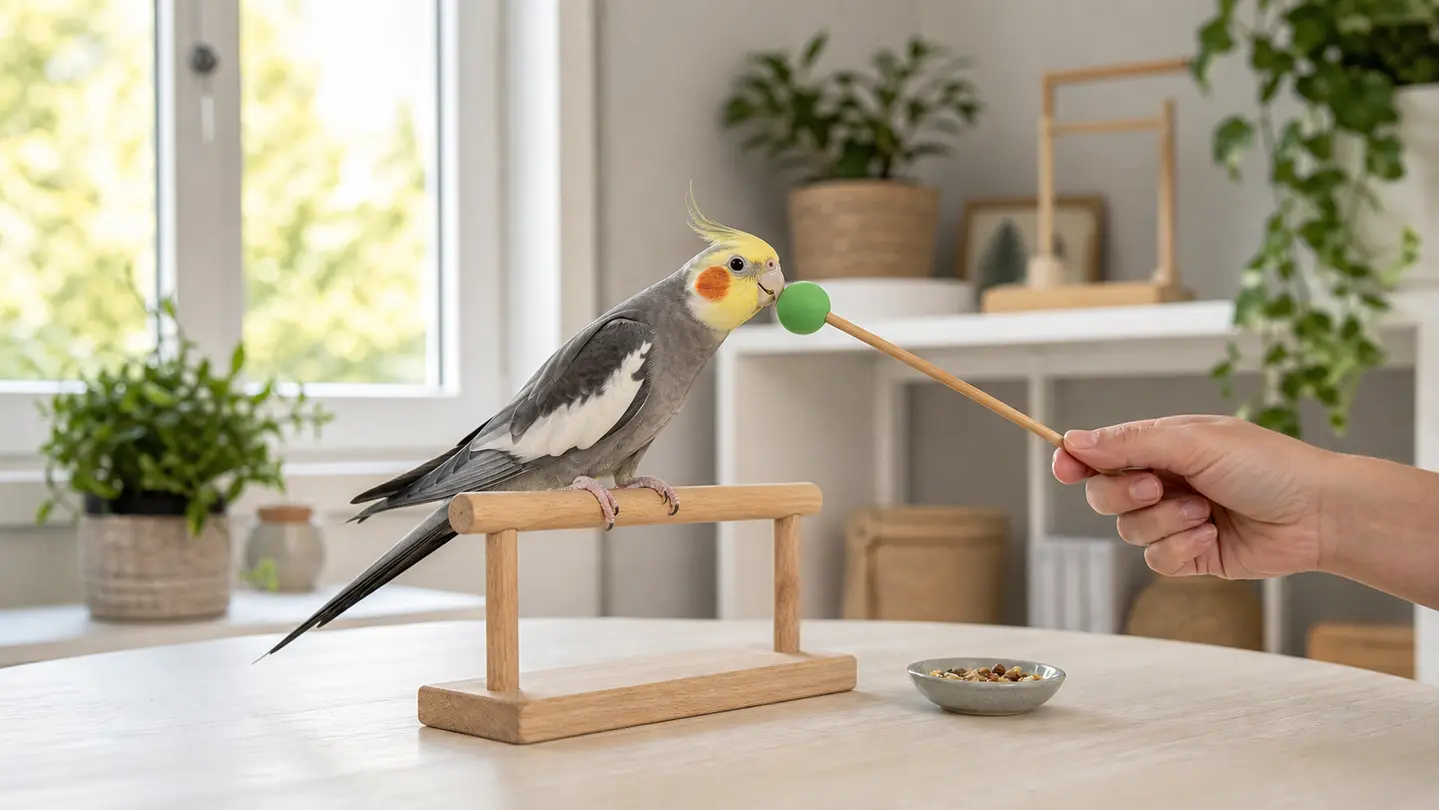
Cockatiel touching a target stick on a tabletop training perch with tiny treats nearby.

Cages and Setup

Answer first

Birds do not strictly need a play stand, but many benefit from one. A safe stand gives supervised out-of-cage time a clear place to happen, helps training, protects furniture, and keeps food, toys, and perches organized.

What to check before you act

Purpose

A station helps routine.

Not housing

The cage still matters.

Stability

No tipping or wobble.

Cleaning

Mess should be easy to manage.

Training

Stands make rewards clearer.

Supervision

Out time is still watched.

01

How to act on this

Use a play stand if your bird has supervised out time and you want a predictable station for treats, toys, step-up practice, and calm returns to the cage.

02

It does not replace a cage

The bird still needs a safe cage for sleep, meals, unsupervised time, and containment. A stand is an out-time tool only.

03

Match the stand to the bird

Size, perch diameter, stability, chew strength, and washable surfaces matter. A stand that tips, splinters, or traps toes is not useful.

04

Keep it simple at first

Start with one or two toys, a treat dish, and a comfortable perch. Crowded stands can overwhelm shy birds and encourage mess.

05

Supervision stays required

A play stand does not make open windows, ceiling fans, cats, dogs, cords, or kitchen access safe.

Before you decide

  • Is the stand stable for the bird's size and movement?
  • Are perch diameter and materials safe?
  • Can you clean the surface easily?
  • Will the bird be supervised the whole time?
  • Is the room safe before the bird leaves the cage?

Next best moves

  • Use a stand as a training station and safe landing routine.
  • Choose washable, stable, bird-sized equipment.
  • Skip the stand until the room can be made safe for supervised out time.

Common questions

Can a bird stay on a play stand all day?

No. A stand is for supervised out time, not unsupervised housing.

What should be on a play stand?

A safe perch, small treat dish, one or two toys, and easy-to-clean surfaces are enough to start.

Can a shy bird use a play stand?

Yes, but introduce it slowly and reward short calm visits. Do not force the bird onto it.

Is a tabletop perch enough?

For training, often yes. Larger stands are useful when the bird spends more supervised time out.

Useful setup pieces

Use these after the care plan is clear. Match size and materials to the bird you actually keep.

Affiliate links: Furball Cove may earn from qualifying purchases at no extra cost to you.

Tabletop bird training perch with a cockatiel standing on the perch beside small training treats.

Training perch

Gives short trust-building sessions a low, predictable place to happen.

Bird foraging tray with covered cups, pellets, greens, and a curious budgie beside the puzzle.

Foraging toy

Turns part of the meal into a simple job instead of a full bowl of boredom.

Bird-safe chew toys made from natural wood, paper, vine, and vegetable-dyed pieces with a lovebird nearby.

Safe chew toys

Plain bird-safe chewing work gives busy beaks something useful to do.

Open blank bird care notebook with pencil, small supplies, and a cockatiel on a tabletop stand.

Care notebook

Tracks food, weight, sleep, droppings, behavior, and vet questions in one place.

References