

Updated

Bird guides

Should I cover my bird cage at night?

You can cover a bird cage at night if it helps the bird sleep calmly, but it is not required for every bird. The cover must allow clean air, avoid overheating, and never be used as punishment or a way to ignore daytime stress.

Covering is a sleep tool, not a behavior fix.

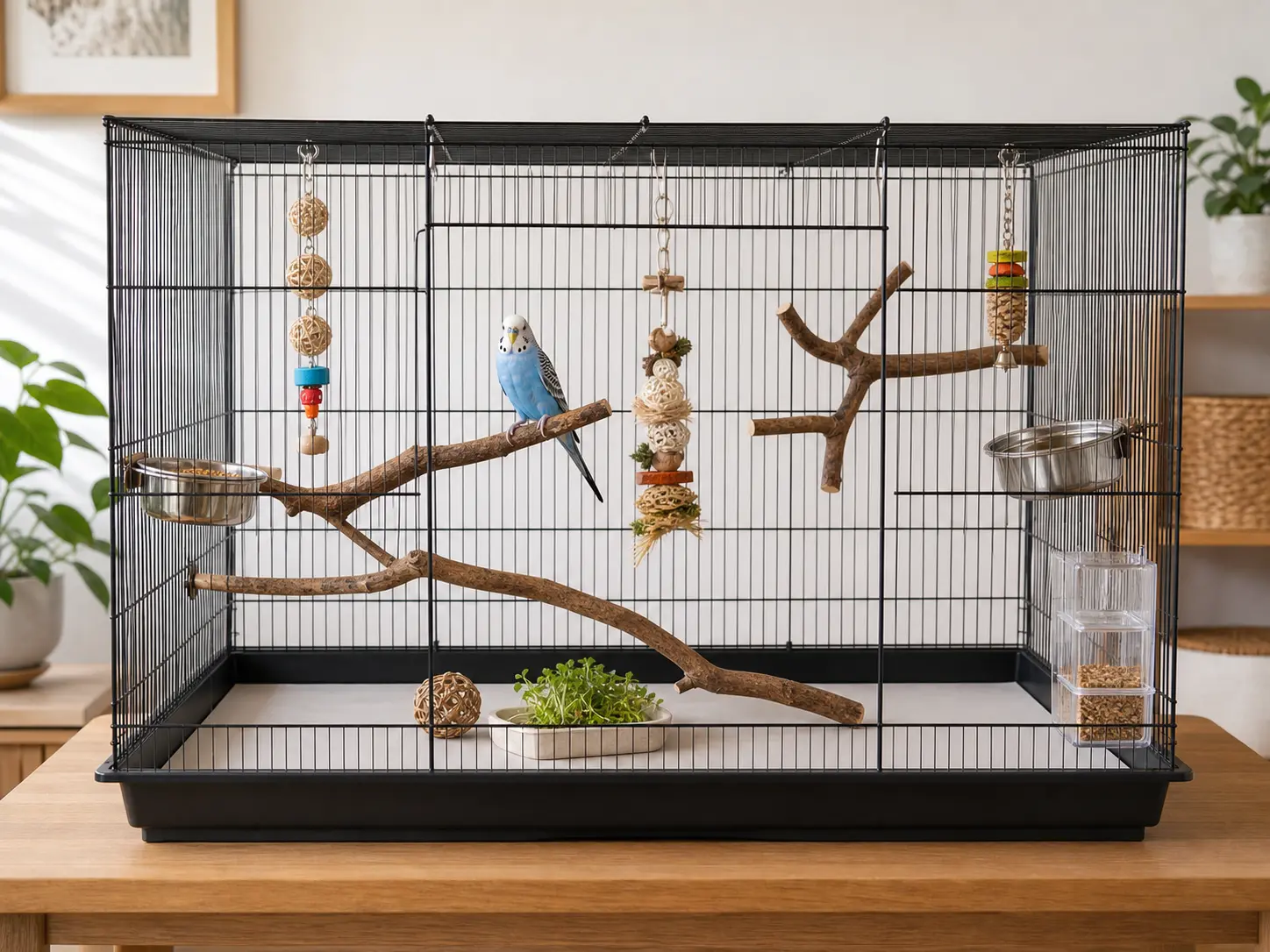
Budgie in a roomy rectangular cage with paper liner, natural branch perches, stainless bowls, chew toys, and foraging enrichment.

Cages and Setup

Answer first

You can cover a bird cage at night if it helps the bird sleep calmly, but it is not required for every bird. The cover must allow clean air, avoid overheating, and never be used as punishment or a way to ignore daytime stress.

What to check before you act

Calm

The bird should settle, not panic.

Air

Ventilation is non-negotiable.

Heat

Do not trap warmth or block airflow.

Chewing

Fabric should stay out of reach.

Routine

Use it at bedtime only.

Sleep

Quiet room habits matter more than the cover itself.

01

How to act on this

Use a cage cover only when it supports a predictable sleep routine. Some birds relax with a partial cover; others panic, chew fabric, or do better in a quiet room without one.

02

Air and temperature come first

A cover should not block ventilation, trap heat, touch candles or heaters, or hang where the bird can pull it through the bars.

03

Keep bedtime consistent

Most pet birds do better with steady lights-out timing, low noise, and a room that does not stay active late into the night.

04

Do not cover as a threat

Covering a screaming or biting bird during the day can create fear and does not solve sleep, boredom, pain, or reinforcement patterns.

05

Best test

If the cover makes the bird calmer, safer, and better rested, it may help. If it causes panic or chewing, skip it.

Before you decide

  • Does the bird stay calm when the cover goes on?
  • Can air move freely through the cage?
  • Is the room temperature stable overnight?
  • Is the cover safely away from the bird's beak?
  • Is the cover part of bedtime, not punishment?

Next best moves

  • Try a partial cover first if the bird is unsure.
  • Keep bedtime quiet and predictable with or without a cover.
  • Remove the cover if the bird chews it, panics, overheats, or seems more stressed.

Common questions

Do all birds need to be covered at night?

No. Some birds sleep well without a cover if the room is dark, quiet, and safe.

Can covering stop screaming?

Not as a punishment. Fix the cause of screaming instead: sleep, boredom, fear, attention patterns, hormones, or health.

Should I cover the whole cage?

Not necessarily. Many birds do better with a partial cover that leaves ventilation and a sense of safety.

Can a cover be dangerous?

Yes, if it blocks air, traps heat, frays, is pulled through the bars, or scares the bird.

Useful setup pieces

Use these after the care plan is clear. Match size and materials to the bird you actually keep.

Affiliate links: Furball Cove may earn from qualifying purchases at no extra cost to you.

Roomy rectangular bird cage with natural perches, stainless bowls, paper liner, and a budgie in a bright bird-care room.

Roomy rectangular cage

Start with safe space, ventilation, bar spacing, and room for natural perches.

Open blank bird care notebook with pencil, small supplies, and a cockatiel on a tabletop stand.

Care notebook

Tracks food, weight, sleep, droppings, behavior, and vet questions in one place.

Natural wood bird perch set with varied diameters and a cockatiel beside the perches on a bright table.

Natural perch set

Varied perch diameters support normal feet better than one smooth dowel.

Plain paper cage liners stacked beside a clean removable cage tray and a small finch on a nearby stand.

Paper cage liners

Plain paper makes droppings easier to monitor without scented products.

References