

Updated

Bird guides

What bar spacing is safe for birds?

Safe bar spacing depends on the bird's size, especially head size. The spacing should be small enough that the bird cannot push its head through or get stuck, while the bars and doors are strong enough for the species.

Bar spacing is a safety check, not a guess based on the cage label.

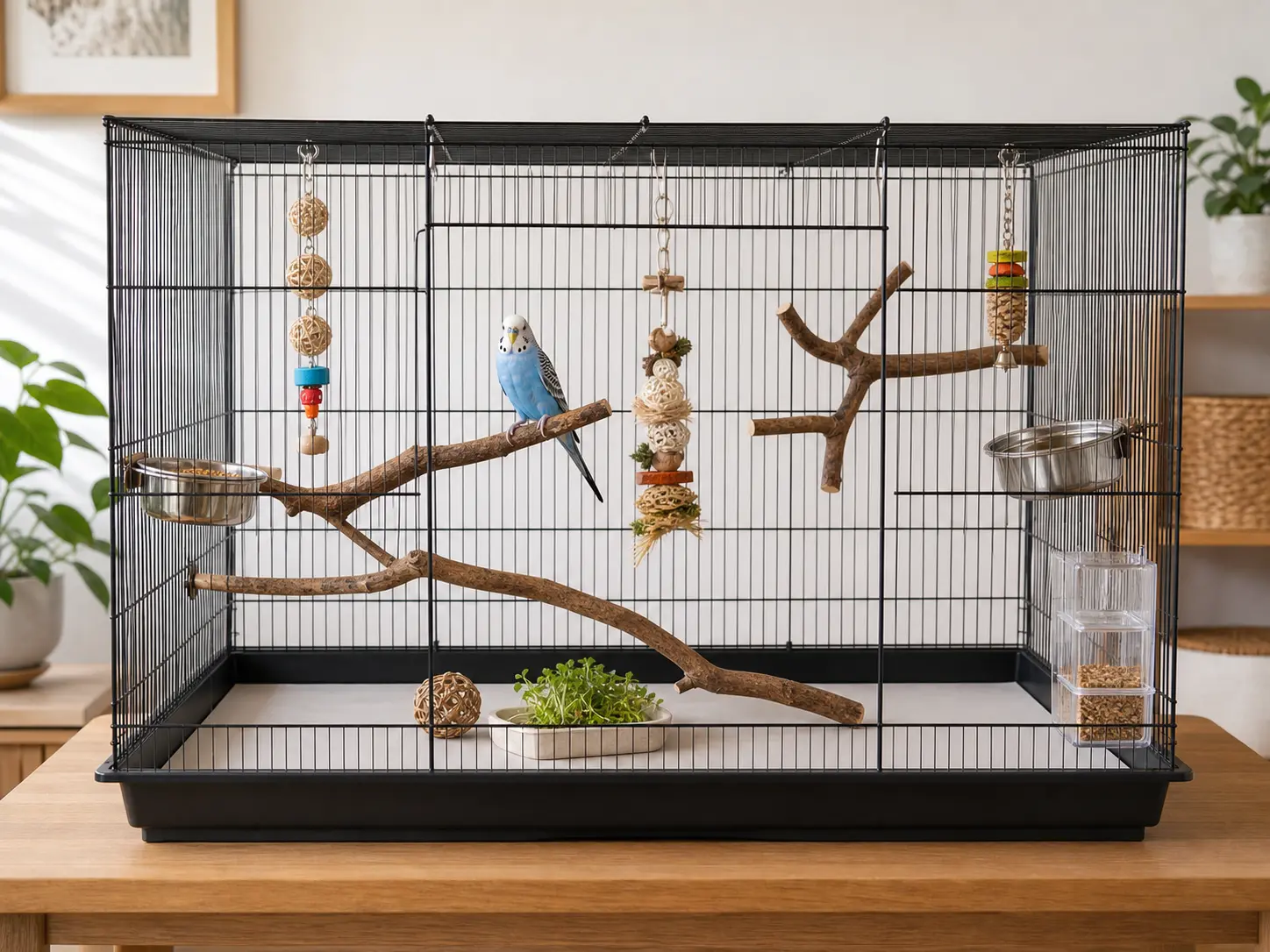
Budgie in a roomy rectangular cage with paper liner, natural branch perches, stainless bowls, chew toys, and foraging enrichment.

Cages and Setup

Answer first

Safe bar spacing depends on the bird's size, especially head size. The spacing should be small enough that the bird cannot push its head through or get stuck, while the bars and doors are strong enough for the species.

What to check before you act

Head safety

The head should not fit through.

Door gaps

Check every opening.

Species size

Small birds need narrow spacing.

Bar strength

Large beaks need sturdy bars.

Used cages

Inspect bends and damage.

Certainty

Ask before buying if unsure.

01

How to act on this

Check spacing for the smallest bird that will use the cage. If the head can fit through, the spacing is unsafe even if the cage is large and attractive.

02

Small birds need tighter spacing

Budgies, finches, canaries, and other small birds need narrow spacing. A cage made for a larger parrot can be dangerous for a small bird.

03

Large birds need strength too

For larger parrots, spacing still matters, but bar strength, welds, locks, and finish also matter because strong beaks test weak cages.

04

Check every opening

Measure side bars, door gaps, feeder doors, play-top gaps, and any bent or decorative sections. Birds find odd openings quickly.

05

When unsure

Choose smaller safe spacing for the bird's size or ask an avian vet, rescue, or experienced keeper before buying.

Before you decide

  • Can the bird push its head through any gap?
  • Are feeder doors and play-top openings safe too?
  • Are bars strong enough for this species?
  • Are there bent bars, sharp welds, or loose doors?
  • Did you check spacing before choosing cage size or style?

Next best moves

  • Measure bar spacing before buying or accepting a used cage.
  • Do not house small birds in cages built for larger parrots.
  • Inspect doors and decorative gaps as carefully as the main bars.

Common questions

What bar spacing is safe for budgies?

For most budgies, half-inch spacing or smaller is the safer target. Check every opening, not only the main bars.

Can bar spacing be too small?

It can be inconvenient or harder to clean, but too-wide spacing is the bigger safety risk for escape or head injury.

Does spacing matter for supervised use?

Yes. A bird can get stuck quickly, even during a short supervised moment.

Is a large parrot cage safe for small birds?

Usually no. The spacing and door gaps are often too wide for small birds.

Useful setup pieces

Use these after the care plan is clear. Match size and materials to the bird you actually keep.

Affiliate links: Furball Cove may earn from qualifying purchases at no extra cost to you.

Roomy rectangular bird cage with natural perches, stainless bowls, paper liner, and a budgie in a bright bird-care room.

Roomy rectangular cage

Start with safe space, ventilation, bar spacing, and room for natural perches.

Hard-sided bird carrier with towel liner, stainless bowl, and a cockatiel calmly beside the open carrier.

Hard-sided bird carrier

Keeps transport secure for adoption day, avian-vet visits, and emergencies.

Open blank bird care notebook with pencil, small supplies, and a cockatiel on a tabletop stand.

Care notebook

Tracks food, weight, sleep, droppings, behavior, and vet questions in one place.

Natural wood bird perch set with varied diameters and a cockatiel beside the perches on a bright table.

Natural perch set

Varied perch diameters support normal feet better than one smooth dowel.

References