

Air
Clean air comes first.
Updated
Bird guides
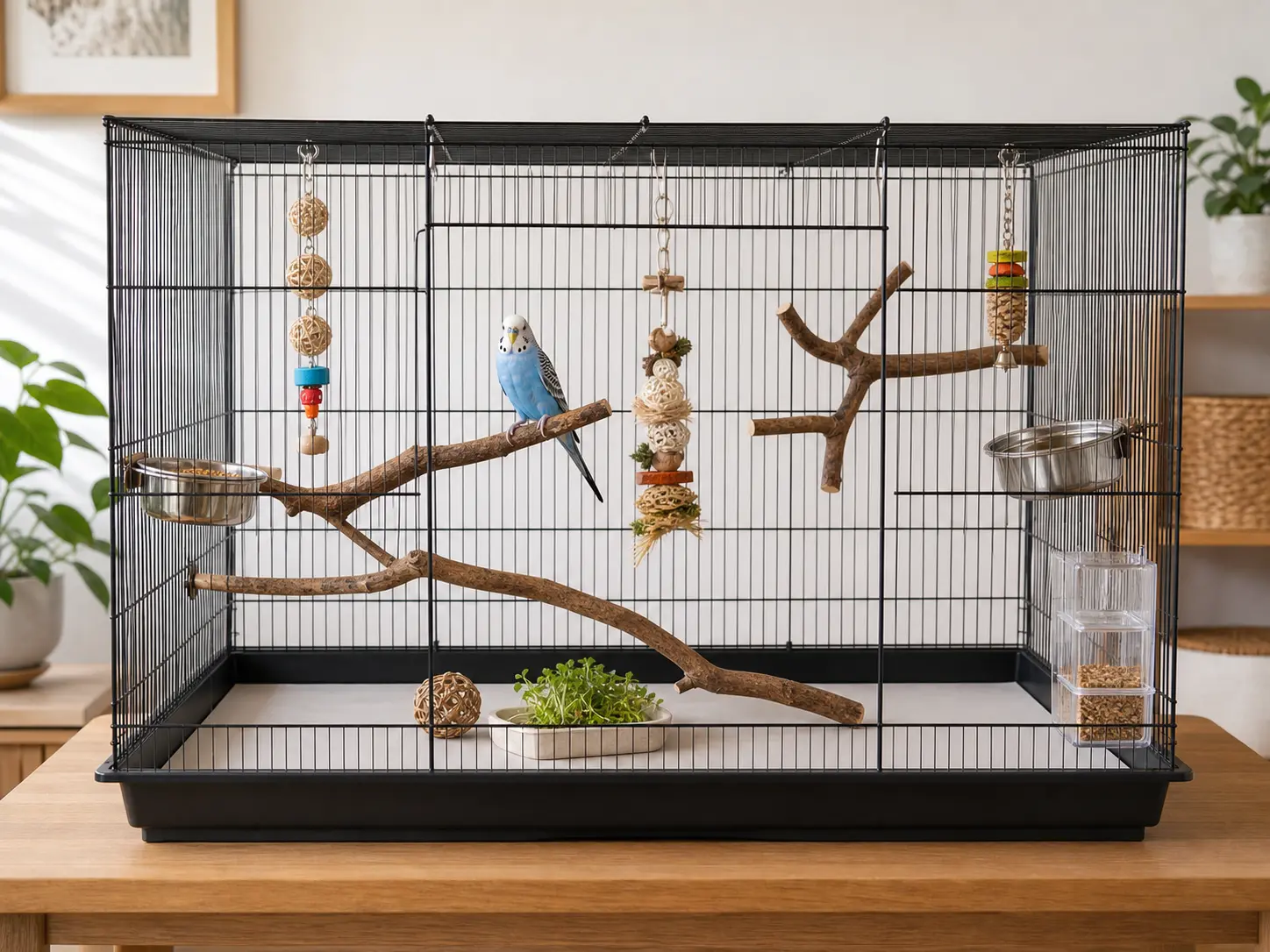
Put a bird cage in a calm, bright, social area with clean air, stable temperature, and at least one side feeling secure. Avoid kitchens, smoke, candles, aerosols, drafts, direct hot sun, predator pets, and constant household chaos.
Cage placement affects sleep, stress, breathing safety, training, and how easy daily care feels.

Cages and Setup
Put a bird cage in a calm, bright, social area with clean air, stable temperature, and at least one side feeling secure. Avoid kitchens, smoke, candles, aerosols, drafts, direct hot sun, predator pets, and constant household chaos.
Plan placement with size, perches, bowls, and sleep.
Use the hub for nearby questions after this answer.
Use supplies after the care plan is clear, not before.
Pick gear that makes the daily routine easier to repeat.
Clean air comes first.
Night quiet matters.
Near people, not in chaos.
One side should feel protected.
No predator access.
Cleaning must be easy.
Choose a place where the bird can be near normal life without being trapped in the busiest or riskiest part of the home. Calm visibility is better than isolation or chaos.
Keep cages away from kitchens, nonstick cookware fumes, smoke, candles, incense, aerosols, perfume, and cleaning sprays. Birds are extremely sensitive to air hazards.
Many birds like being near people during the day, but they also need a reliable quiet sleep period. A room that stays loud late into the night may be a poor cage spot.
Do not place the cage where cats, dogs, children, windows, or traffic can constantly startle the bird. The bird should be able to watch the room without feeling surrounded.
Pick the spot that makes safe air, calm sleep, cleaning, and gentle interaction easiest to repeat.
No. Kitchens are risky because of fumes, smoke, heat, steam, oils, cleaning products, and nonstick cookware.
Nearby natural light can be nice, but avoid direct hot sun, drafts, predators outside the glass, and panic reflections.
It can work if the room has clean air, stable temperature, and enough daytime social interaction.
Often yes, if the bird can still get quiet sleep and is protected from fumes, pets, drafts, and constant stress.
Use these after the care plan is clear. Match size and materials to the bird you actually keep.
Affiliate links: Furball Cove may earn from qualifying purchases at no extra cost to you.

Start with safe space, ventilation, bar spacing, and room for natural perches.

Plain paper makes droppings easier to monitor without scented products.

Keeps daily cage wipe-downs simple without fragrance or harsh residue.

Tracks food, weight, sleep, droppings, behavior, and vet questions in one place.