

Safety
Containment prevents night hazards.
Updated
Bird guides
Most pet birds should sleep in their cage or a safe sleep cage. The point is predictable darkness, quiet, security, and clean air, not isolation or covering a stressed bird to hide problems.
A good sleep setup makes daytime behavior easier and keeps the bird safer overnight.

Cages and Setup
Most pet birds should sleep in their cage or a safe sleep cage. The point is predictable darkness, quiet, security, and clean air, not isolation or covering a stressed bird to hide problems.
Use covers safely when they help sleep.
Use the hub for nearby questions after this answer.
Use supplies after the care plan is clear, not before.
Pick gear that makes the daily routine easier to repeat.
Containment prevents night hazards.
Sleep needs a calm room.
No fumes or blocked airflow.
Predictability helps behavior.
Optional, not punishment.
Not a safe default.
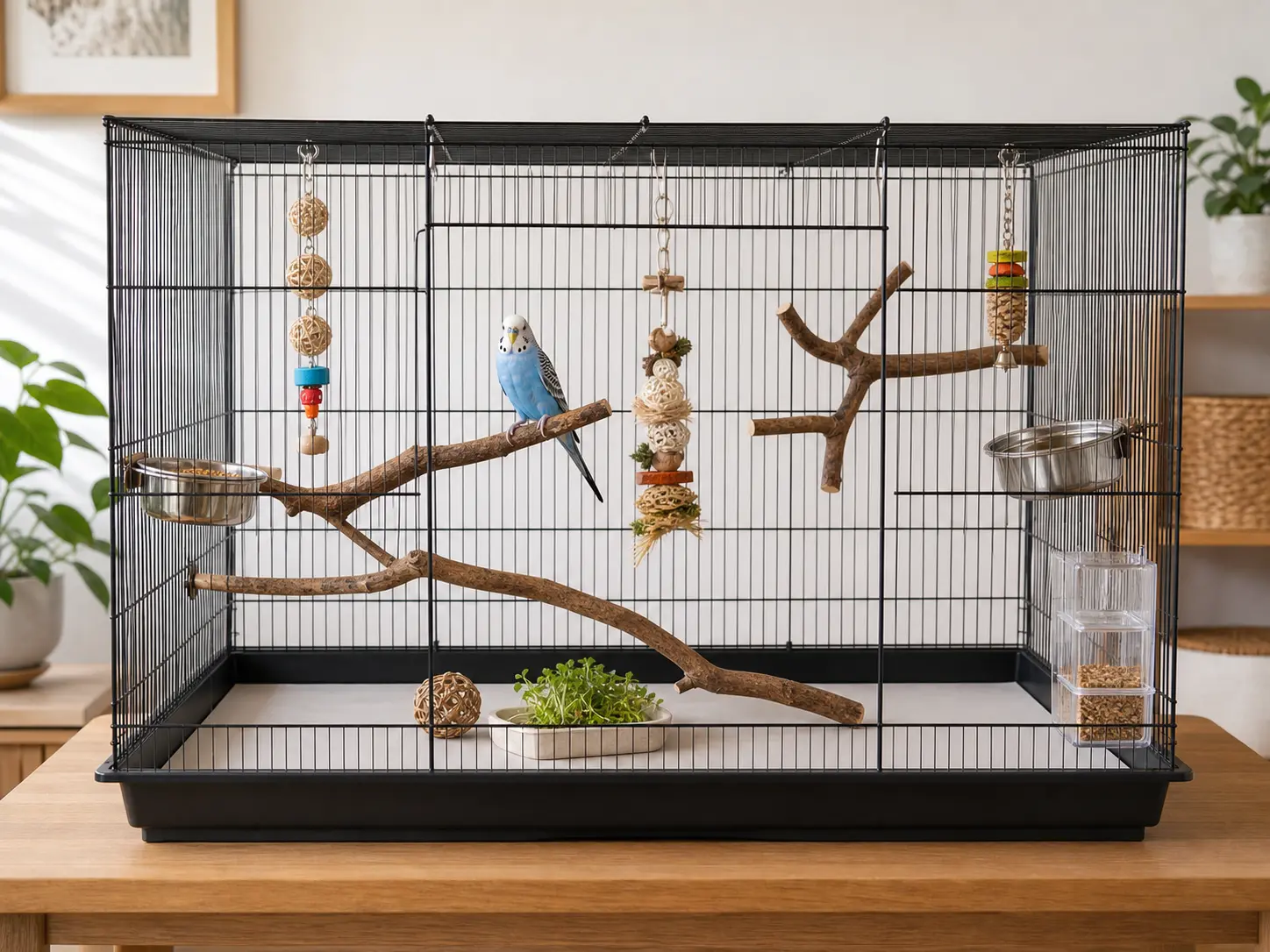
A cage is usually the safest overnight place because doors, windows, pets, cords, and household hazards can be controlled. Sleep should feel calm and routine.
A separate sleep cage can help when the main room is active late, but it still needs safe spacing, perches, clean air, and a calm transfer routine.
Many pet birds need about 10 to 12 hours of quiet sleep. Late-night television, kitchen noise, lights, and household traffic can keep them unsettled.
A breathable cover can help some birds settle, but it should not block airflow, overheat the bird, or hide a behavior problem.
Sleeping outside the cage risks crushing, escape, predators, cords, ceiling fans, and panic flight in the dark.
Not always. A sleep cage helps when the main cage is in a noisy room or the bird sleeps better in a quieter safe location.
Only if it helps the bird sleep calmly and safely. Airflow and temperature still matter.
No, not as a normal plan. A sleeping bird should be secure from pets, falls, escape, and night hazards.
Many need about 10 to 12 quiet hours, though species, hormones, age, and household routine can change the exact need.
Use these after the care plan is clear. Match size and materials to the bird you actually keep.
Affiliate links: Furball Cove may earn from qualifying purchases at no extra cost to you.

Start with safe space, ventilation, bar spacing, and room for natural perches.

Varied perch diameters support normal feet better than one smooth dowel.

Plain paper makes droppings easier to monitor without scented products.

Tracks food, weight, sleep, droppings, behavior, and vet questions in one place.