

Updated

Bird guides

Are birds good pets for kids?

Birds can be good family pets, but they are not good child-only pets. An adult needs to own the care, safety, cleaning, and vet decisions. Kids can help when the bird's body language, space, and routine are respected.

The question is not whether a child loves birds. The question is whether the adults can keep the bird safe every day.

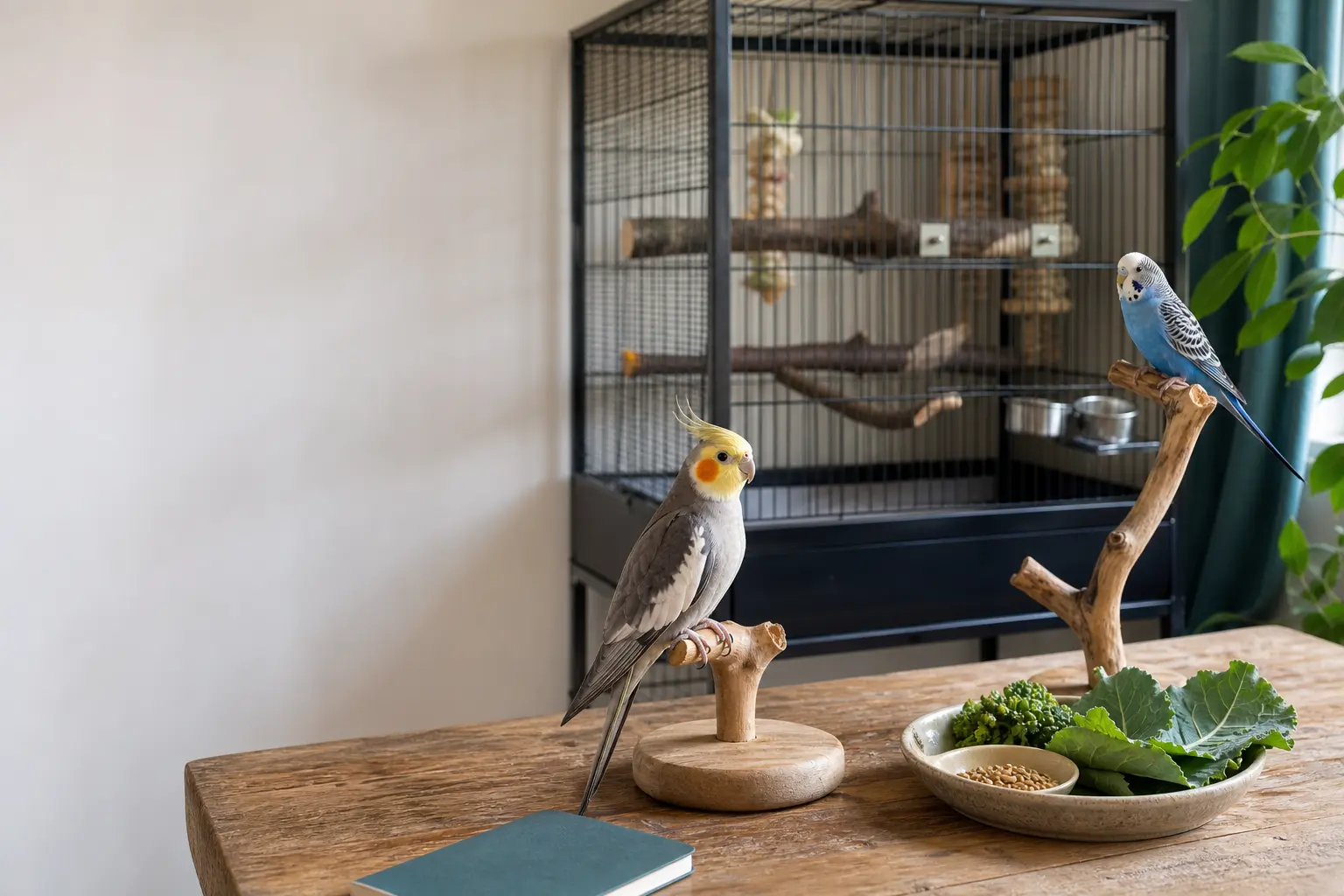
Cockatiel and budgie in separate safe bird care areas with a roomy rectangular cage, bowls, perches, toys, greens, and care notes.

Family fit

Best kid-friendly bird roles

Think in roles: supervised helper, quiet observer, or gentle training partner. Do not hand a child full responsibility for a bird.

What adults need to own

Daily care

Food, water, cage cleaning, sleep, and safety need adult follow-through even when the child loses interest.

Handling rules

No grabbing, chasing, squeezing, kissing, or forcing step-up. The bird gets to move away.

Room safety

Adults control doors, windows, fans, other pets, hot surfaces, and fumes.

Bite response

A scared child may drop or fling a bird. Handling needs calm supervision.

Vet care

Bird illness can be subtle. Adults decide when to call an avian vet.

Long lifespan

The bird may outlast the child's current school stage, hobbies, or home routine.

01

Great family birds still need boundaries

A bird can be social and still dislike fast hands, loud voices, and being picked up whenever a child wants attention.

02

Kids, cleaning, and handwashing

Adults should supervise young children after bird contact until handwashing is automatic. Wash hands after touching the bird, cage, bowls, toys, perches, liners, droppings, or cleaning tools, and before snacks or meals. Children should not pick up droppings bare-handed, kiss birds, or clean bird gear in kitchen sinks or food-prep areas.

03

Observation can be the best role

Watching a canary sing or zebra finches interact can be safer and more rewarding than trying to handle a nervous bird.

04

Match the bird to the calmest day, not the most excited day

Plan for homework, guests, sports, tired parents, and busy mornings, not just the first weekend.

05

Skip high-risk first birds

Large parrots, cockatoos, macaws, and intense small parrots can overwhelm families that are new to bird body language.

Before you decide

  • Will an adult own the full care routine?
  • Can the child follow no-grab, no-chase, no-kiss handling rules?
  • Can other pets, doors, windows, fans, and kitchens be controlled?
  • Will adults supervise handwashing after bird, cage, bowl, toy, perch, liner, or dropping contact?
  • Can the family handle bites calmly without punishing the bird?
  • Does the bird's lifespan still make sense for the adults?

Next best moves

  • Choose the species for adult care fit first.
  • Teach kids to read body language before handling.
  • Build handwashing into the routine after every bird-care task.
  • Start with supervised observation if the child is young or impulsive.

Common questions

What is the best bird for kids?

For adult-led homes, budgies and cockatiels can work. For younger kids, canaries or zebra finches may be better because watching is safer than handling.

Can kids hold pet birds?

Only with calm supervision and only if the bird is comfortable. Many birds should be watched, not held.

Are birds safe around toddlers?

Toddlers and birds need strict separation. Fast hands, dropped food, open doors, and rough touches are serious risks.

Should a child clean the cage?

A child can help with simple tasks, but adults should check hygiene, safety, food, and water every day.

First-bird setup pieces

Start with the pieces that make daily care easier and safer. Match final sizes to the species you choose.

Affiliate links: Furball Cove may earn from qualifying purchases at no extra cost to you.

Roomy rectangular bird cage with safe perches and clean bowls.

Roomy rectangular cage

Choose safe bar spacing and enough room for movement, perches, bowls, and toys.

Tabletop bird training perch for calm beginner handling sessions.

Training perch

Gives step-up practice and short trust-building sessions a predictable place.

Bird foraging toy for beginner enrichment and meal activity.

Foraging toy

Turns part of the meal into a small job instead of leaving the bird bored.

Hard-sided bird carrier for adoption day and avian-vet trips.

Hard-sided bird carrier

Keeps transport secure for adoption day, avian-vet visits, and emergencies.

References