Moves and housing
Will the bird still fit if you move, rent, downsize, or change work schedules?
Updated
Bird guides
Pet birds can live anywhere from a few years to several decades. Zebra finches and canaries are often shorter commitments, budgies are commonly 7-15 years, cockatiels often reach 15-25 years, and many large parrots can live for decades.
Lifespan is not trivia. It decides housing, cost, future moves, family plans, and who cares for the bird if life changes.

Commitment check
Use lifespan as a filter before you fall for a bird. A great species can still be wrong if the commitment does not fit.
Often a better fit when you want a smaller observation bird and a shorter average lifespan.
Small, social parrots with a lifespan that still reaches well beyond a short-term pet plan.
A common first-bird candidate, but often a 15-25 year responsibility.
Large parrots are advanced birds with long lives, high social needs, and serious future planning.
Will the bird still fit if you move, rent, downsize, or change work schedules?
Long life means repeated wellness care, emergencies, food, toys, cages, and replacements.
School, children, partners, illness, and travel can all change who has time for the bird.
Long-lived birds need a plan for emergencies and future caregivers.
A bird that bonds deeply may struggle if the daily routine changes sharply.
Lifespan ranges vary by care, genetics, accidents, diet, and access to an avian vet.
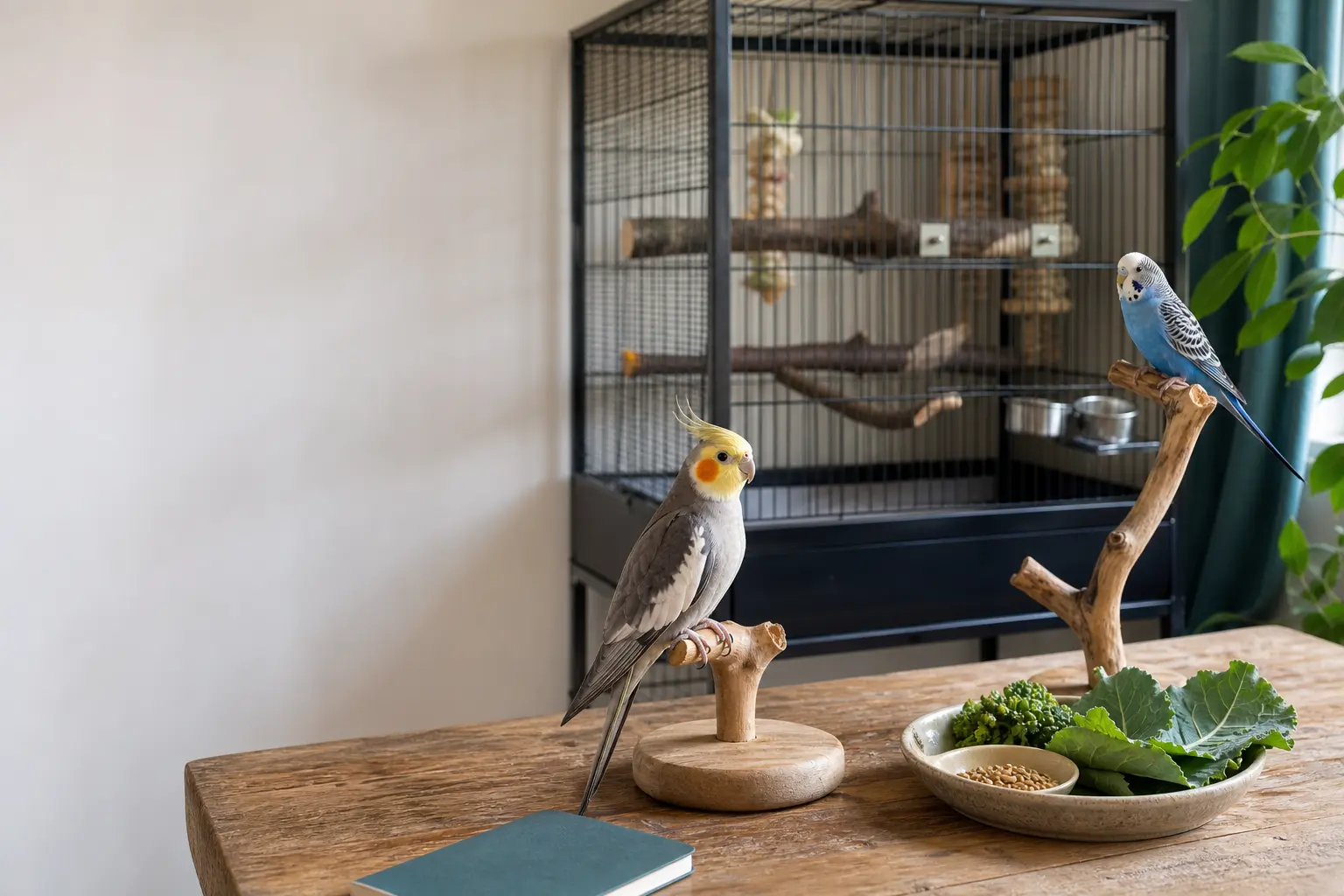
Budgies, cockatiels, lovebirds, and parrotlets are small, but they are not temporary pets.
A decades-long bird can be wonderful in the right home and unfair in a home that cannot plan that far ahead.
Diet, weight, exercise, clean air, safety, and fast avian-vet care can all affect how long a bird lives.
Pick a lifespan range that fits before comparing colors, talking ability, or baby-bird photos.

Many finches and canaries have shorter average lifespans than parrots, though good care still matters.
Many budgies live around 7-15 years with good care, though individuals vary.
Many cockatiels live around 15-25 years, so they are a long first-bird commitment.
Some can. Large parrots need serious future planning and are usually not a good first bird.
Start with the pieces that make daily care easier and safer. Match final sizes to the species you choose.
Affiliate links: Furball Cove may earn from qualifying purchases at no extra cost to you.

Choose safe bar spacing and enough room for movement, perches, bowls, and toys.

Gives step-up practice and short trust-building sessions a predictable place.

Turns part of the meal into a small job instead of leaving the bird bored.

Keeps transport secure for adoption day, avian-vet visits, and emergencies.