Updated

Bird guides

What bird is best if I work full time?

If you work full time, choose a bird whose care does not depend on all-day handling. Canaries, zebra finches, and ringneck doves can fit many working homes. Budgies and cockatiels may work if you provide steady morning, evening, and weekend attention. Avoid a single demanding parrot if weekdays are too thin.

A full-time job is not the problem by itself. The problem is choosing a bird whose social needs do not match your real weekday.

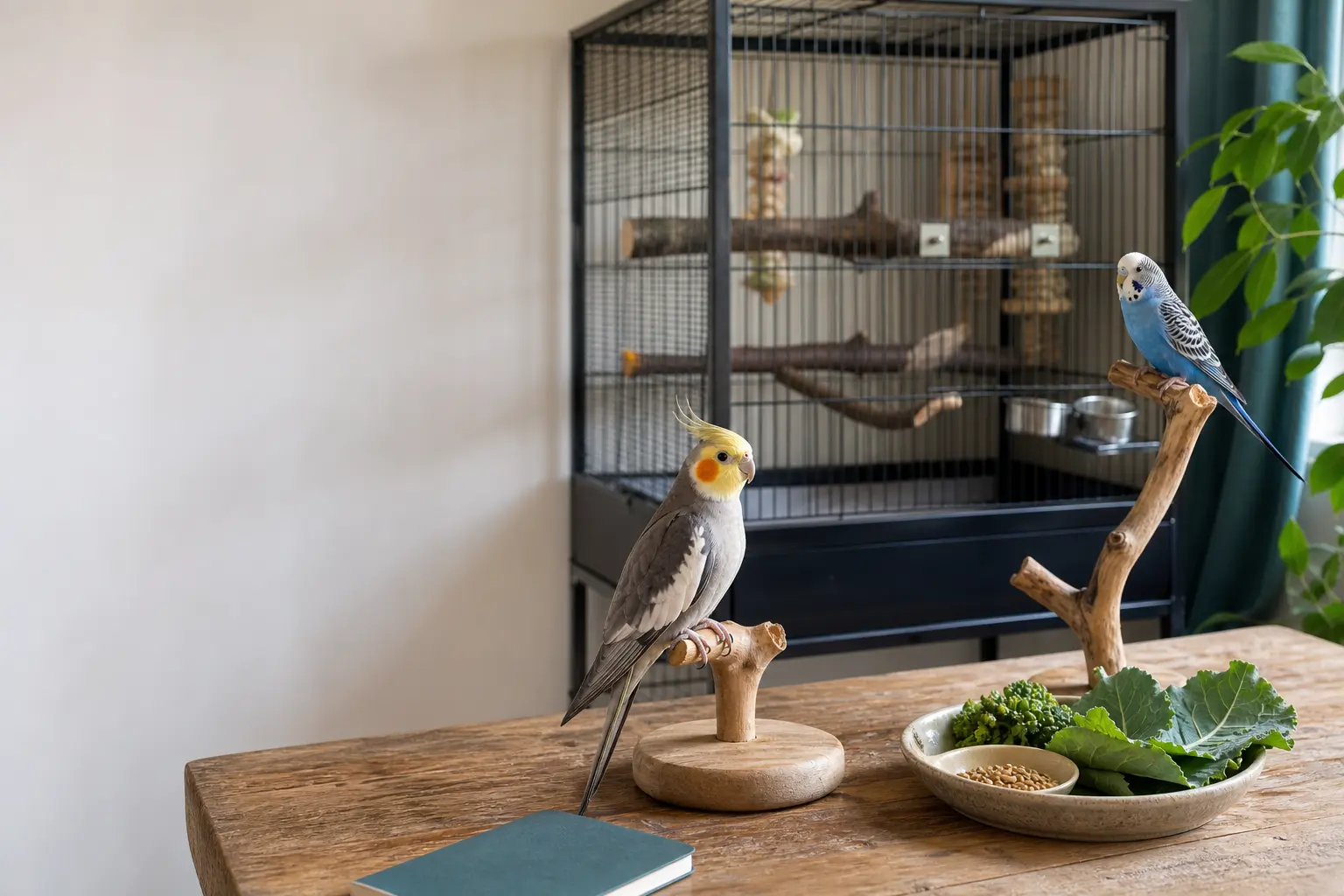
Cockatiel and budgie in separate safe bird care areas with a roomy rectangular cage, bowls, perches, toys, greens, and care notes.

Weekday fit

Better bird choices for working homes

Look for a bird whose normal day still works when you leave the house, come home tired, and need to keep the routine simple.

Check your weekday honestly

Morning care

Food, water, light, and a quick health check still need to happen before work.

Evening care

Cleaning, attention, fresh food, and safe out-of-cage time cannot be skipped all week.

Sleep schedule

A bird kept up late because you get home late may become stressed and noisy.

Social species

A single parrot alone all day may struggle without a strong plan.

Enrichment

Foraging and safe activity matter while you are gone.

Backup care

Overtime, travel, and illness need a care plan before adoption.

01

Observation birds can be a better fit

A bird you enjoy watching may be happier than a bird waiting all day for handling you cannot provide.

02

Parrots need more than weekends

Saving all interaction for Saturday does not meet the daily social needs of many parrots.

03

Work-from-home is not automatically easier

Calls, meetings, kitchens, doors, and attention-seeking can make the setup harder if the species is a poor fit.

04

Build the routine before pickup

Practice the morning and evening care routine before the bird comes home. If it already feels too hard, wait.


Before you decide

  • Can you refresh food and water before work every day?
  • Can you clean, observe, and offer enrichment after work?
  • Can the bird get enough quiet sleep with your schedule?
  • Would a single social parrot be alone too much?
  • Who covers care during overtime, travel, or illness?

Next best moves

  • Choose observation-first species if weekday time is limited.
  • Use foraging and safe cage enrichment, not just a bigger food bowl.
  • Avoid birds whose daily social needs already feel hard to meet.

Common questions

Can I have a bird if I work full time?

Yes, if the species and routine fit. Observation birds often fit better than highly social parrots.

Can a budgie be alone while I work?

Sometimes, with strong daily attention and enrichment. Some budgies may benefit from compatible budgie company.

Are cockatiels okay for full-time workers?

Sometimes, if evenings are consistent and the bird gets daily attention, sleep, and enrichment.

What bird should busy people avoid?

Avoid a single demanding parrot if you cannot provide daily social time and a stable routine.

First-bird setup pieces

Start with the pieces that make daily care easier and safer. Match final sizes to the species you choose.

Affiliate links: Furball Cove may earn from qualifying purchases at no extra cost to you.

Roomy rectangular bird cage with safe perches and clean bowls.

Roomy rectangular cage

Choose safe bar spacing and enough room for movement, perches, bowls, and toys.

Tabletop bird training perch for calm beginner handling sessions.

Training perch

Gives step-up practice and short trust-building sessions a predictable place.

Bird foraging toy for beginner enrichment and meal activity.

Foraging toy

Turns part of the meal into a small job instead of leaving the bird bored.

Hard-sided bird carrier for adoption day and avian-vet trips.

Hard-sided bird carrier

Keeps transport secure for adoption day, avian-vet visits, and emergencies.

References