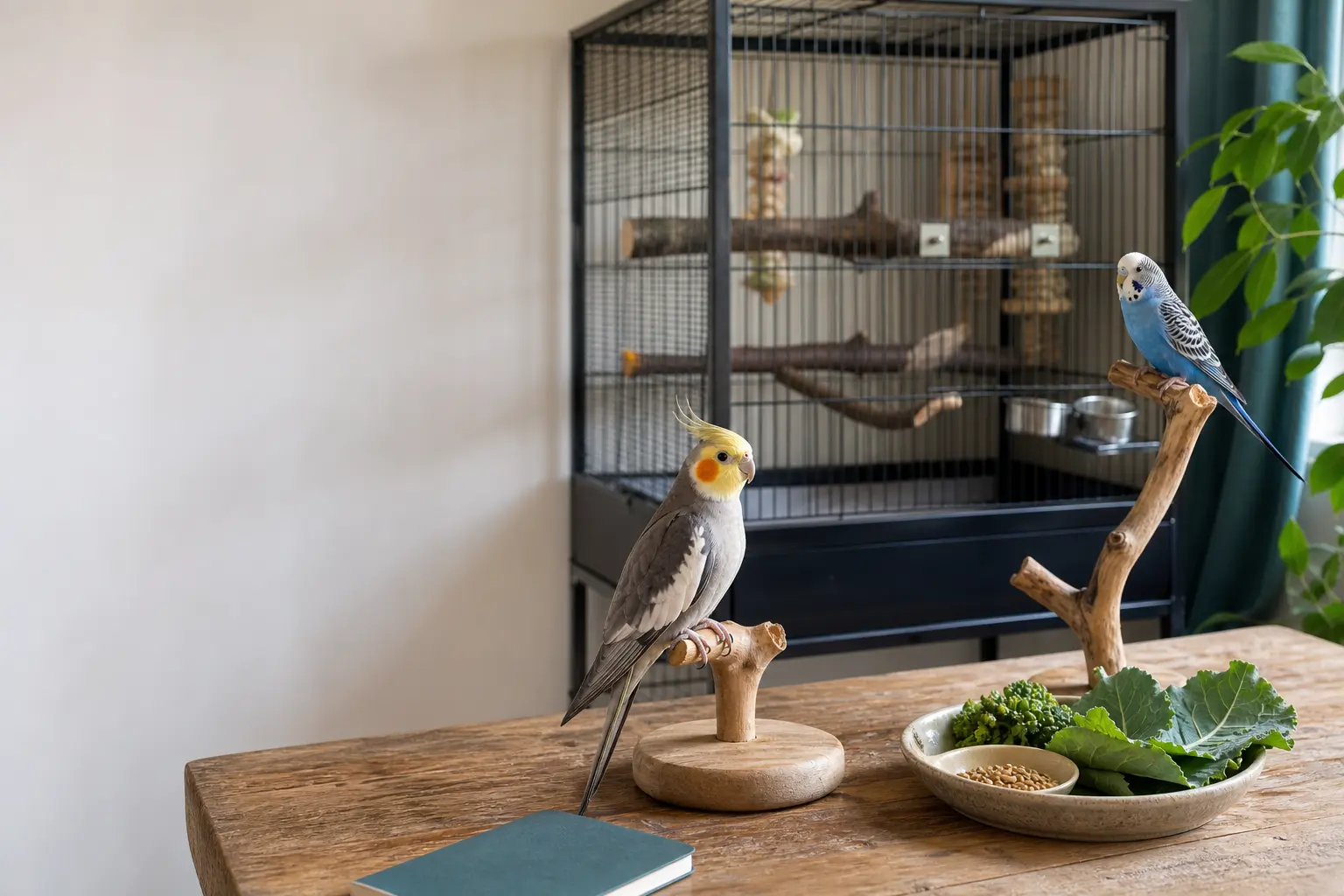
Let the bird choose
The bird should be able to approach, pause, and leave.
Updated
Bird guides
For many prepared beginners, cockatiels and budgies are the best birds to research for gentle handling. Green-cheeked conures can be very hands-on, but they are louder and more demanding. Canaries, zebra finches, and many doves are better for watching than holding.
A bird that likes handling is still not a toy. The best handling comes from trust, choice, and short sessions.

Handling fit
Choose by the kind of handling you want: calm step-up practice, busy training, playful contact, or mostly observation.
Often steady and expressive when handled kindly, with clear body language and strong routines.
Can be interactive and fun to train, but they are quick and need patient, daily practice.
Often hands-on and funny, but also nippy, louder, and more intense than many first owners expect.
Wonderful to watch, but not a good choice if your main goal is holding or step-up training.
The bird should be able to approach, pause, and leave.
Use a low perch or tabletop stand before shoulders, rooms, and busy spaces.
End while the bird is still calm and interested.
Leaning away, freezing, fleeing, or open-beak warnings mean back up.
Chasing teaches fear and makes biting more likely.
Some birds show trust by staying near you, not by being held.
Even a species known for handling needs trust-building, gentle routines, and a person who stops before the bird is overwhelmed.
A conure may be more hands-on than a cockatiel, but also louder, nippier, and more demanding.
A bird should step up and step down reliably before shoulder time is allowed.
If you want cuddling more than bird behavior, a bird may not be the right pet.

Many cockatiels and budgies can enjoy gentle handling, but individual personality and training matter.
Some are, but they can also be loud, nippy, and demanding. They are not the easiest default first bird.
Most canaries are better for song and observation than handling.
Finches are usually best enjoyed by watching. Handling should be rare and practical.
Start with the pieces that make daily care easier and safer. Match final sizes to the species you choose.
Affiliate links: Furball Cove may earn from qualifying purchases at no extra cost to you.

Choose safe bar spacing and enough room for movement, perches, bowls, and toys.

Gives step-up practice and short trust-building sessions a predictable place.

Turns part of the meal into a small job instead of leaving the bird bored.

Keeps transport secure for adoption day, avian-vet visits, and emergencies.