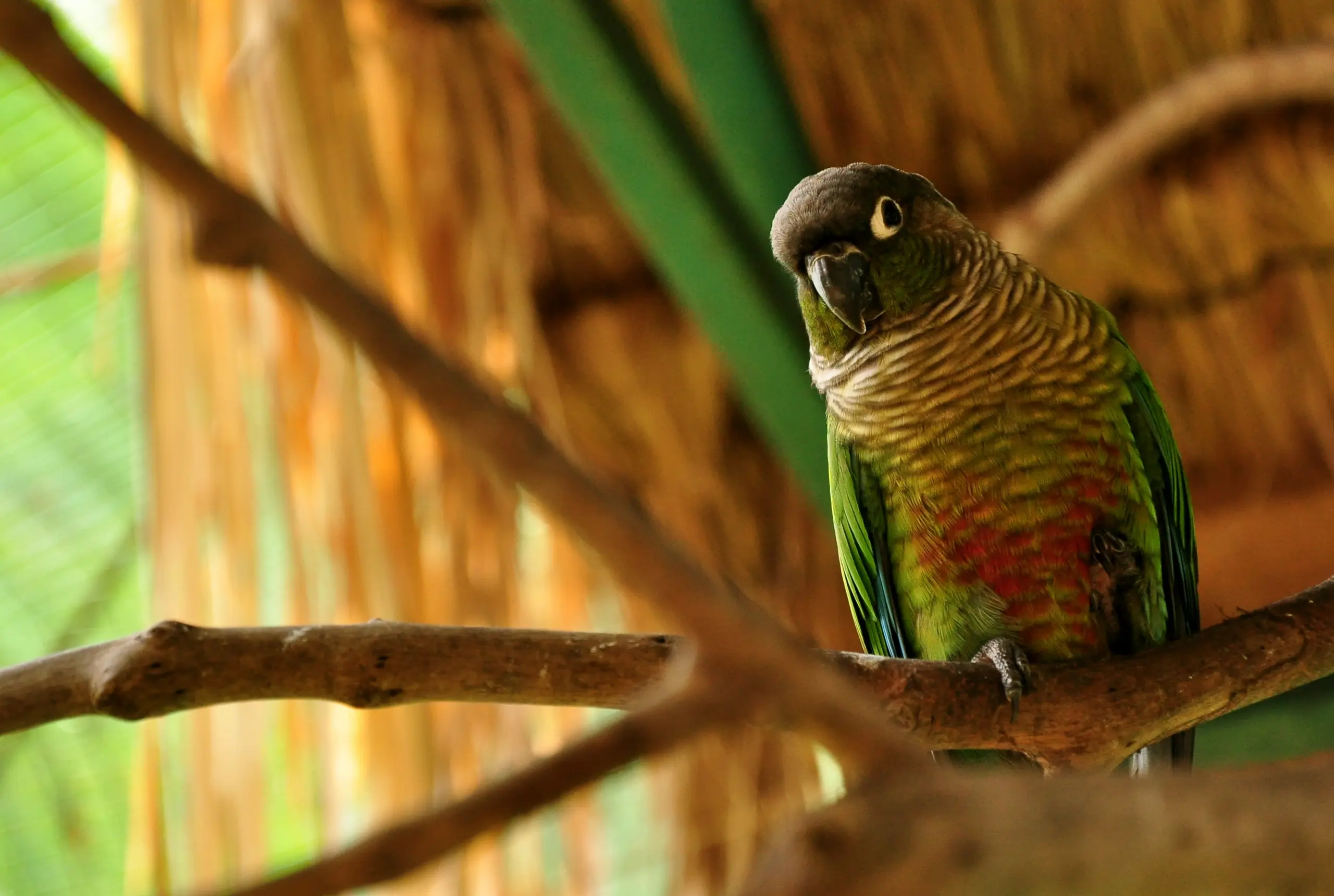
Green-cheeked Conures are agile, social parrots that climb and explore with the beak as readily as the feet. Their quieter reputation is relative, and playful mouthiness can become painful when excitement runs too high. They suit people who enjoy short training and calm redirection; they frustrate homes expecting silence or effortless cuddling.
Give climbing, chewing, flight, and foraging their own place in the day, with quiet breaks before the bird becomes nippy.
Lifespan
20-35 years
Noise
Often louder than the size suggests, especially during contact calls
Daily social time
Playful, physical, social, and usually happiest with predictable daily interaction
Space
Needs a larger cage, chew toys, foraging, and daily supervised time
Handling style
Reward gentle contact and pause when the bird gets overstimulated
Experience
Better for prepared homes that can support flight space, independent behavior, and species-specific care
The honest fit
Could this bird fit your life?
The match may work if…
Green-cheeks fit homes that want an affectionate, active parrot and can handle daily training, chewing, mess, and some sharp calls. They are often a better apartment conversation than louder conures, but they still need real parrot care.
You are comfortable with the bird's normal sound, movement, and daily social rhythm.
You have room for the recommended enclosure, safe movement, and a practical cleaning area.
Think twice if…
The room cannot fit a larger parrot cage, safe placement, and a cleaning routine you can actually repeat.
The food routine would likely become seed-only, treat-led, or inconsistent instead of pellets and fresh foods.
The household expects instant cuddles instead of patient, choice-based trust.
The daily rhythm
A normal day with Green-cheeked Conures
Green-cheeked Conures climb, hang, chew, and explore with the beak, so mouthiness needs patient redirection rather than punishment. Short training and foraging sessions work best when they are separated by calm breaks before the bird becomes overstimulated.
The surprise with green-cheeked conures is mouthiness. A green-cheek may wrestle, nibble, hang upside down, and test boundaries long before a new owner understands the bird's signals.
Green-cheeked Conures are Pyrrhura conures, a smaller-bodied branch of the conure family with a long maroon tail.
A Green-cheeked Conure usually shows a dark cap, pale eye ring, scalloped chest, green cheeks, and maroon underparts.
Home and movement
Use a secure small-parrot cage with room to climb, flap, and destroy safe toys. Plan a bird-safe play area so out time does not turn into chewing furniture, cords, or clothing.
Food and daily care
Keep pellets, vegetables, greens, and measured treats steady. Use favorite foods for training, especially step-up, stationing, and calm returns to the cage.
Green-cheeks carry and drop fresh food while climbing, then create a second layer of mess from shredded toys. Use washable surfaces rather than fragranced cleaners, and exclude smoke, aerosols, candles, perfume, and overheated nonstick cookware.
Social life, sound and handling
Green-cheeks are quieter only in comparison with louder conures; contact calls and sudden sharp notes still travel. A regular sleep schedule and calm pauses help prevent an already excited bird from becoming louder and mouthier.
Reward gentle contact and pause when the bird gets overstimulated. Rough play can be fun for a minute and then turn into nipping.
Careful, not fearful
Health and safety considerations
Compare Green-cheeked Conures as a conure, with the final choice based on noise, space, diet, social routine, legal sourcing, and avian-vet access.
Sudden changes in appetite, breathing, posture, droppings, weight or usual voice deserve a call to an avian veterinarian.
Before adoption
Before you bring one home
Ask to hear the bird's normal flock call and watch how it handles hands away from the cage. A sweet baby still needs adult boundaries.
Confirm what species the bird is and ask for any available health and history records.
Ask what the bird currently eats, how it uses its enclosure, and how it responds to handling.
Measure the enclosure location, doorway route, and safe out-of-cage area before committing.
Confirm an avian veterinarian is accessible before the bird comes home.