

Updated

Bird guides

What cage liner is safest?

Plain paper is the safest cage liner for most pet birds. It is low-fume, easy to change, and lets you see droppings clearly. Avoid scented liners, dusty bedding, cat litter, corn cob, walnut shell, and loose materials that hide mess or mold.

A good liner helps you clean and monitor health. It should not add fragrance, dust, or guesswork.

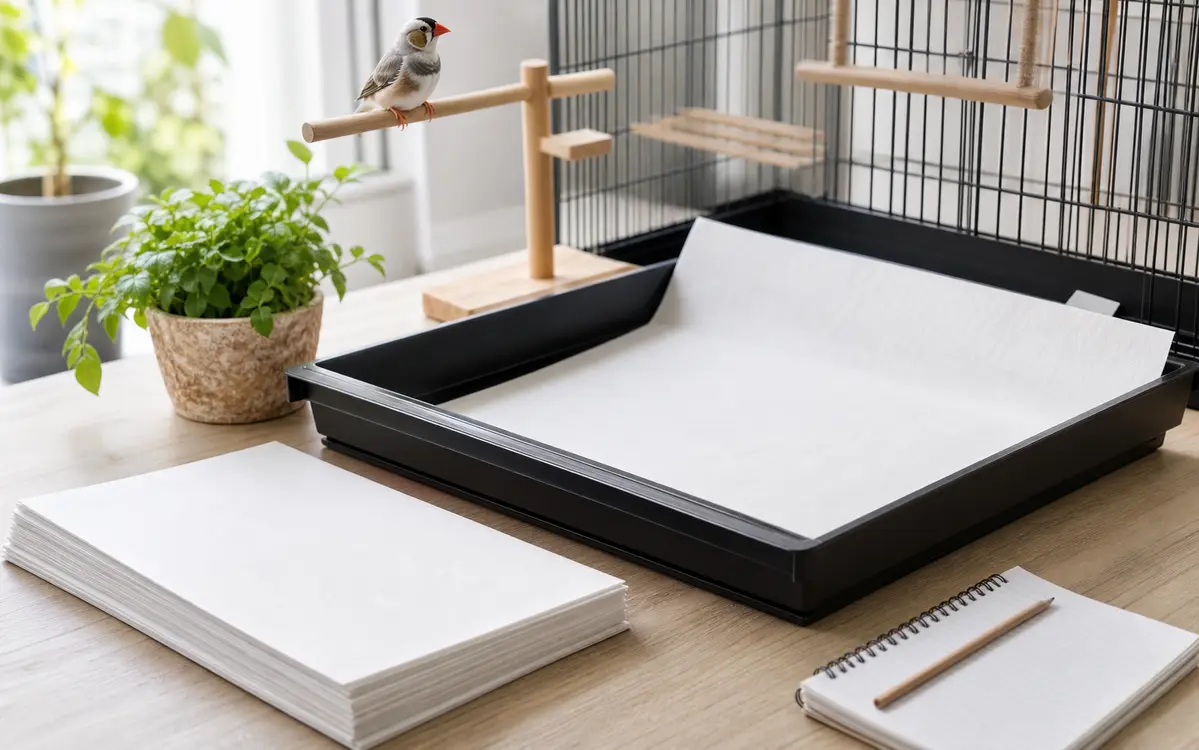
Plain paper cage liners stacked beside a clean removable cage tray and a small finch on a nearby stand.

Cleaning and Air Safety

Answer first

Plain paper is the safest cage liner for most pet birds. It is low-fume, easy to change, and lets you see droppings clearly. Avoid scented liners, dusty bedding, cat litter, corn cob, walnut shell, and loose materials that hide mess or mold.

What to check before you act

Plain

No fragrance or gimmicks.

Visible

Droppings must be easy to inspect.

Low dust

Bird lungs are sensitive.

Dry

Wet liner should not sit.

Flat

Loose bedding hides problems.

Easy

Daily changes should be simple.

01

How to act on this

Use plain paper, paper towels, or other unscented flat paper that lets droppings stay visible.

02

Visibility matters

Droppings are health information. Loose bedding can hide changes in color, amount, wetness, blood, or undigested food.

03

Avoid dust and scent

Scented products, shavings, dusty substrates, and litter-style materials can irritate airways or make cleaning harder.

04

Change it often

Even the safest liner becomes a problem if it stays wet, moldy, or covered in old food and droppings.

05

Best default

Choose the boring liner that makes daily checks obvious.

Before you decide

  • Is the liner unscented?
  • Can you see droppings clearly?
  • Is it low dust?
  • Does it stay flat and out of food and water?
  • Can it be changed quickly every day?

Next best moves

  • Use plain paper or paper towels for easy monitoring.
  • Avoid loose bedding that hides droppings or holds moisture.
  • Change liners before wet food, water, or droppings build up.

Common questions

Can I use newspaper?

Plain newspaper is often used, but avoid glossy, heavily inked, scented, or wet paper.

Is corn cob bedding safe?

It is a poor default because it can hide droppings, hold moisture, and mold.

Can I use cat litter?

No. Cat litter is dusty, scented or clumping in many cases, and not appropriate for bird cages.

Should liners go above or below the grate?

Use the cage design safely. The key is that the bird cannot shred or eat soiled liner and you can inspect droppings.

Useful setup pieces

Use these after the care plan is clear. Match size and materials to the bird you actually keep.

Affiliate links: Furball Cove may earn from qualifying purchases at no extra cost to you.

Plain paper cage liners stacked beside a clean removable cage tray and a small finch on a nearby stand.

Paper cage liners

Plain paper makes droppings easier to monitor without scented products.

Bird-safe cleaning cloths, water spray bottle, stainless bowl, clean tray, and a budgie in the background.

Bird-safe cleaning cloths

Keeps daily cage wipe-downs simple without fragrance or harsh residue.

Stainless bird bowls with clean water, pellets, greens, and a budgie perched beside the feeding station.

Stainless bowls

Separate clean food and water dishes that are easy to wash every day.

Open blank bird care notebook with pencil, small supplies, and a cockatiel on a tabletop stand.

Care notebook

Tracks food, weight, sleep, droppings, behavior, and vet questions in one place.

References