

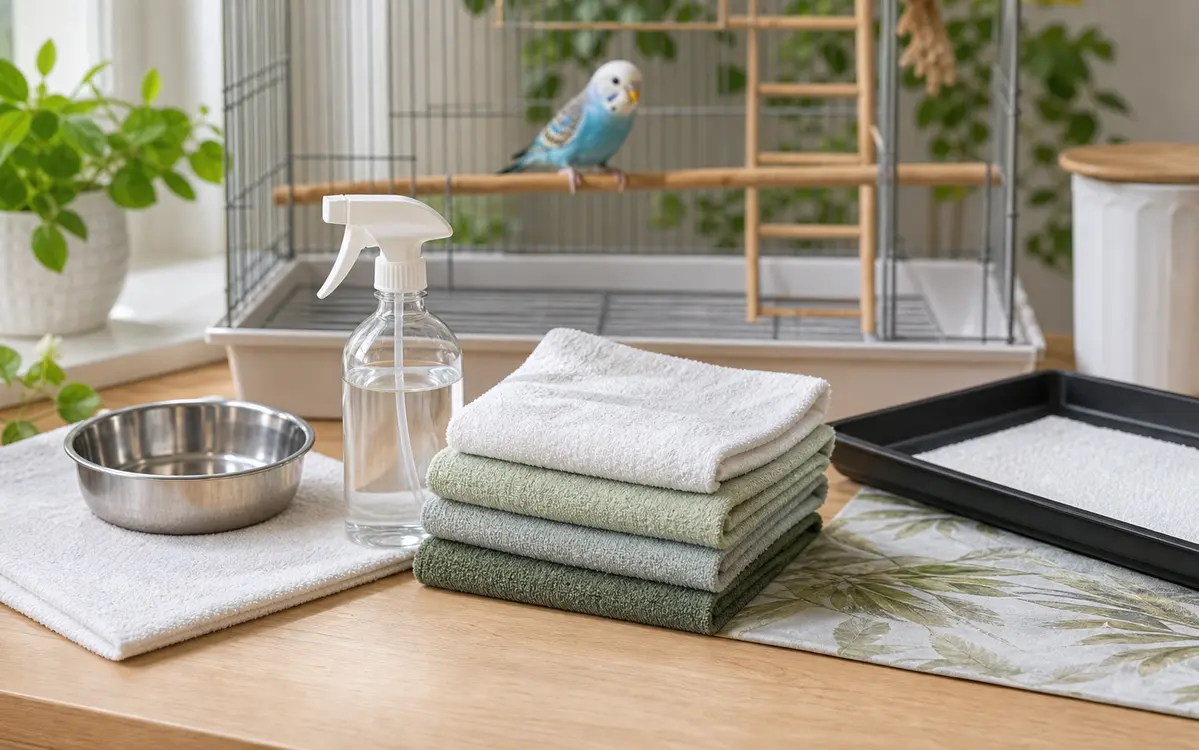
Daily reset
Food, water, and wet mess should not wait.
Updated
Bird guides
Clean an aviary cage in layers: remove wet food and obvious waste daily, change or rake flooring on a schedule, wash bowls often, wipe perches and high-traffic surfaces, and deep clean sections without stressing the birds or filling the air with fumes.
Aviary cleaning should be calm and repeatable. The goal is clean air, clean food stations, visible droppings, and birds that are not chased around the cage.

Finch, Canary, Dove Questions
Clean an aviary cage in layers: remove wet food and obvious waste daily, change or rake flooring on a schedule, wash bowls often, wipe perches and high-traffic surfaces, and deep clean sections without stressing the birds or filling the air with fumes.
Check bird-safe cleaning and air rules.
Use the hub for nearby questions after this answer.
Use supplies after the care plan is clear, not before.
Pick gear that makes the daily routine easier to repeat.
Food, water, and wet mess should not wait.
No fumes or scented shortcuts.
Doors and dividers should prevent escapes.
Cleaning is health monitoring.
Avoid chasing birds around the cage.
Spare bowls and a carrier make cleaning easier.
Start with daily food, water, and droppings management. Aviaries get dirty in layers, so small routine cleaning prevents dramatic, stressful deep cleans.
Work slowly, keep doors secure, and avoid chasing. Use a divider, routine perch, or carrier plan if a section needs more serious cleaning.
Avoid scented cleaners, aerosols, bleach fumes around birds, pressure that scares them, and dusty bedding. Rinse surfaces well and let them dry safely.
Do one section at a time when possible: flooring, perches, bowls, walls, and toys. This keeps the aviary familiar and reduces panic.
Cleaning is also inspection time: check droppings, feathers, feet, food waste, pests, mold, rust, loose wire, and damaged perches.
Remove food waste and obvious mess daily, wash bowls often, and deep clean surfaces on a schedule that matches the number of birds and mess level.
Avoid sprays around birds. Move birds away when needed, use plain bird-safe methods, rinse well, and protect the air.
Sometimes. If fumes, heavy scrubbing, loose doors, or panic are involved, use a safe holding cage or divider plan.
Look for mold, pests, rust, broken wire, loose hardware, frayed toys, damaged perches, and changed droppings.
Use these after the care plan is clear. Match size and materials to the bird you actually keep.
Affiliate links: Furball Cove may earn from qualifying purchases at no extra cost to you.

Keeps daily cage wipe-downs simple without fragrance or harsh residue.

Plain paper makes droppings easier to monitor without scented products.

Separate clean food and water dishes that are easy to wash every day.

Keeps transport secure for adoption day, avian-vet visits, and emergencies.