

Safe
Check the food first.
Updated
Bird guides
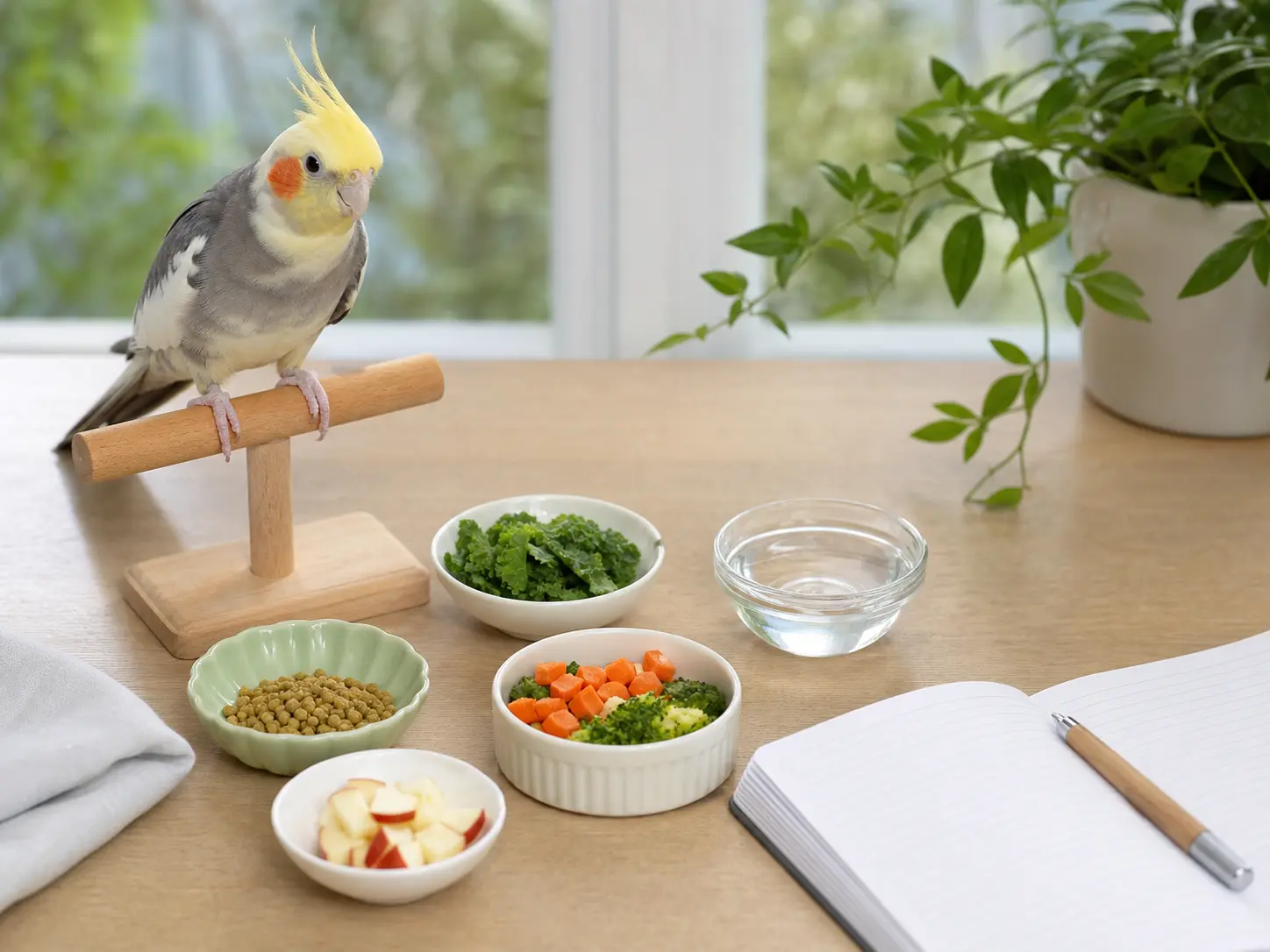
Many pet birds can eat washed plain vegetables such as leafy greens, broccoli, carrot, squash, bell pepper, peas, and herbs in bird-sized portions. The right choices and amounts still depend on species, health, and the rest of the diet.
Vegetables are useful when they are safe, plain, and removed before they spoil.

Food and Water
Many pet birds can eat washed plain vegetables such as leafy greens, broccoli, carrot, squash, bell pepper, peas, and herbs in bird-sized portions. The right choices and amounts still depend on species, health, and the rest of the diet.
Check each vegetable before offering it.
Use the hub for nearby questions after this answer.
Use supplies after the care plan is clear, not before.
Pick gear that makes the daily routine easier to repeat.
Check the food first.
No seasoning or sauce.
Clean prep matters.
Portion by species.
Remove leftovers.
Add new foods one at a time.
Start with washed plain vegetables and introduce one at a time. Leafy greens and orange vegetables are common useful options for many parrots.
Serve vegetables without salt, oil, butter, seasoning, sauce, onion, garlic, avocado, or spoiled pieces.
Tiny birds need tiny portions. A fresh-food dish should support the main diet, not replace it.
Fresh vegetables can spoil, especially chopped or cooked pieces. Offer them when someone can remove leftovers.
Use variety slowly so appetite and droppings stay easy to read.
Many can, when washed and served plain. Species and portion size still matter.
Some plain cooked vegetables may be okay, but avoid salt, oil, seasoning, onion, garlic, and hot food.
Avoid unsafe foods such as avocado and anything seasoned, spoiled, salty, oily, or mixed with risky ingredients.
Keep offering small calm exposures. Chopping style, placement, and seeing familiar foods nearby can help.
Use these after the care plan is clear. Match size and materials to the bird you actually keep.
Affiliate links: Furball Cove may earn from qualifying purchases at no extra cost to you.

Separate clean food and water dishes that are easy to wash every day.

Keeps pellets and seed portions sealed, labeled, dry, and separate from treats.

Keeps daily cage wipe-downs simple without fragrance or harsh residue.

Tracks food, weight, sleep, droppings, behavior, and vet questions in one place.