

Updated

Bird guides

Can kids hold pet birds?

Kids can interact with pet birds only with close adult supervision, calm rules, and a bird that is comfortable. Holding is not the starting point. Perch time, feeding tiny treats, and quiet observation are usually safer first steps.

A good child-bird interaction protects both the bird and the child.

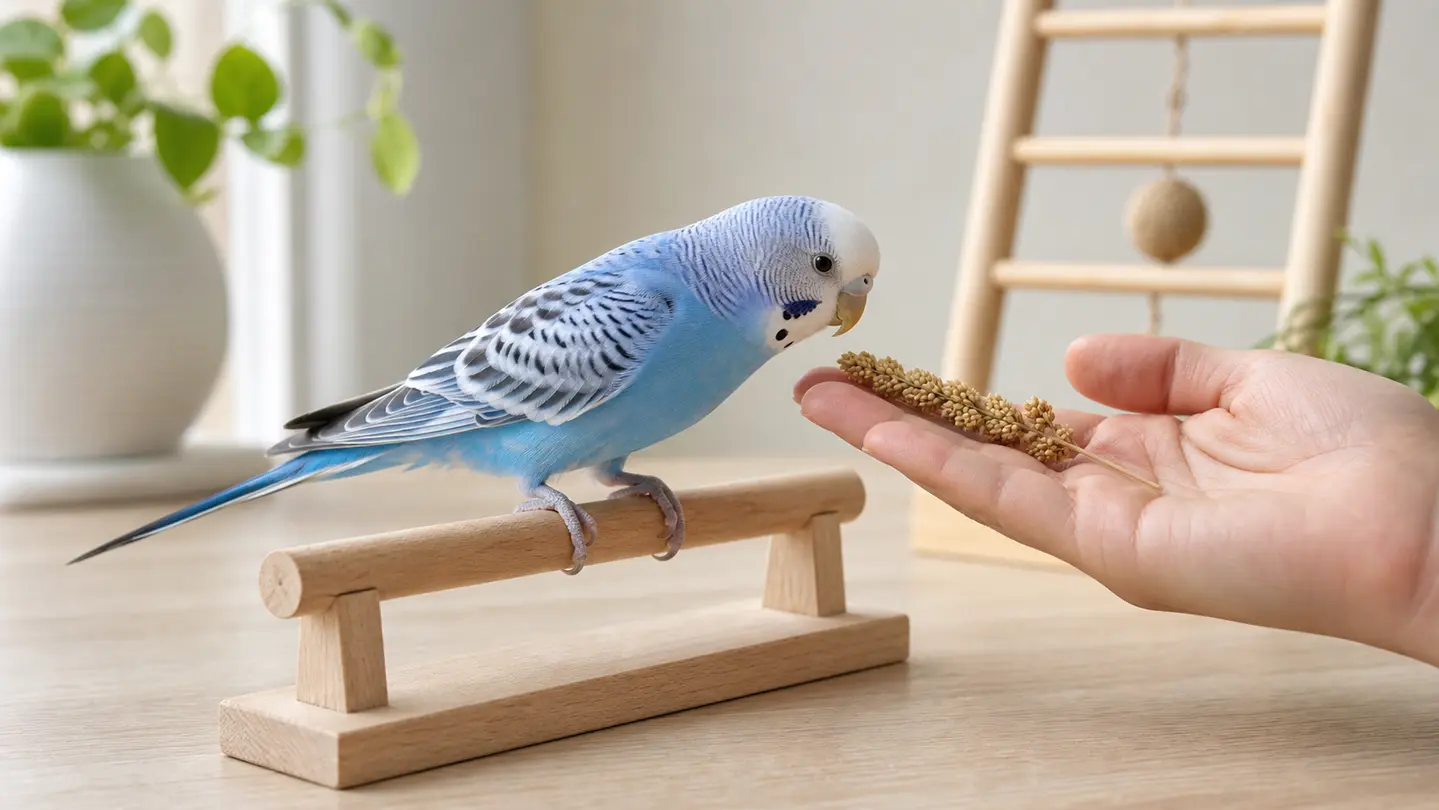
Blue budgie choosing to lean toward millet held beside a low tabletop perch.

Handling and Training

Answer first

Kids can interact with pet birds only with close adult supervision, calm rules, and a bird that is comfortable. Holding is not the starting point. Perch time, feeding tiny treats, and quiet observation are usually safer first steps.

What to check before you act

Supervision

An adult stays present.

Calm rules

No grabbing or chasing.

Bird choice

The bird can leave.

Perch first

Hands are not required.

Species

Size and bite risk matter.

Hazards

Doors and pets stay controlled.

01

How to act on this

Teach children to move slowly, use quiet voices, keep hands away from the cage unless invited, and never grab, chase, squeeze, or kiss a bird.

02

Clean hands after contact

Adults should supervise handwashing after a child touches the bird, cage, bowls, toys, perches, liners, droppings, or cleaning tools, and before snacks or meals. Wash bites or scratches promptly and seek medical care for deep bites, infected wounds, serious scratches, or higher-risk people.

03

Use stations before hands

A tabletop perch, training stand, or adult-held perch gives the bird space and keeps fingers away from nervous bites.

04

Match the bird and the child

A tiny bird can be injured easily, and a large parrot can injure a child. Age, impulse control, species, and bird comfort all matter.

05

Watch the bird's body language

If the bird leans away, freezes, opens the beak, lunges, or tries to leave, the interaction is over.

06

Best rule

Children do not get unsupervised bird access, even with a familiar family bird.

Before you decide

  • Is an adult actively supervising?
  • Can the child follow calm handling rules?
  • Is the bird choosing to participate?
  • Have hands been washed after bird or cage contact?
  • Is the interaction away from doors, dogs, cats, and hazards?
  • Is a perch safer than hands today?

Next best moves

  • Start with treat delivery and perch-based interaction.
  • Build handwashing into the end of every child-bird interaction.
  • Keep sessions short and stop before either side gets excited.
  • Teach children that a bird saying no is the end of the session.

Common questions

Can a child hold a budgie?

Sometimes, with supervision and a tame bird, but perch-based interaction is safer at first.

Can kids handle large parrots?

Usually not casually. Large parrots can bite hard and need experienced adult control.

Should children kiss birds?

No. Kissing risks injury, germs, and frightening the bird.

What if the bird bites my child?

End the interaction calmly, check the injury, and rebuild with safer distance and adult-led training.

Useful setup pieces

Use these after the care plan is clear. Match size and materials to the bird you actually keep.

Affiliate links: Furball Cove may earn from qualifying purchases at no extra cost to you.

Tabletop bird training perch with a cockatiel standing on the perch beside small training treats.

Training perch

Gives short trust-building sessions a low, predictable place to happen.

Hard-sided bird carrier with towel liner, stainless bowl, and a cockatiel calmly beside the open carrier.

Hard-sided bird carrier

Keeps transport secure for adoption day, avian-vet visits, and emergencies.

Open blank bird care notebook with pencil, small supplies, and a cockatiel on a tabletop stand.

Care notebook

Tracks food, weight, sleep, droppings, behavior, and vet questions in one place.

Bird foraging tray with covered cups, pellets, greens, and a curious budgie beside the puzzle.

Foraging toy

Turns part of the meal into a simple job instead of a full bowl of boredom.

References