

Choice
The bird should decide to move.
Updated
Bird guides
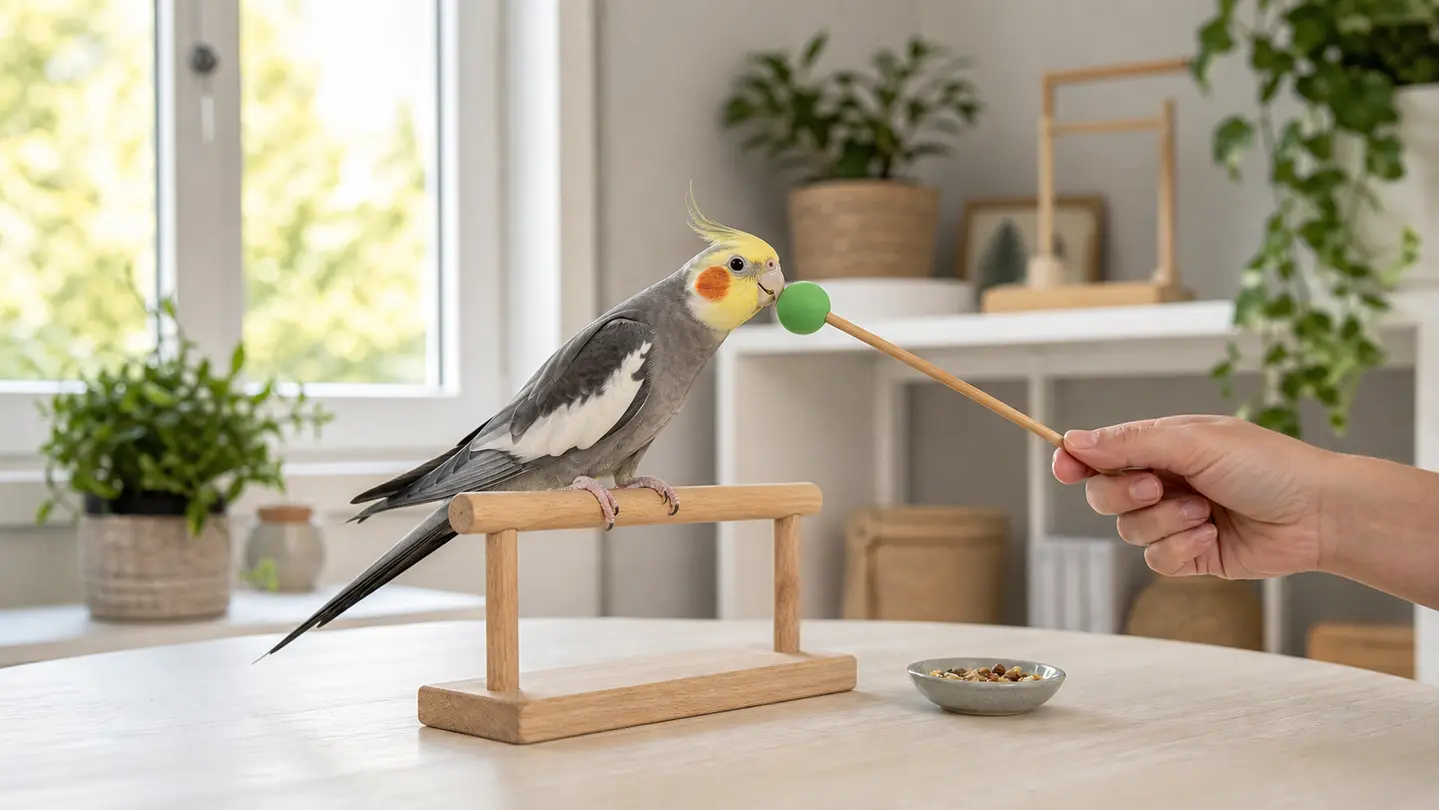
Teach step up by making the bird want to move onto a hand or perch for a reward. Start low, use tiny steps, reward choice, and stop before the bird leans away, bites, or feels trapped.
Step up should be a trained behavior, not a forced pickup.

Handling and Training
Teach step up by making the bird want to move onto a hand or perch for a reward. Start low, use tiny steps, reward choice, and stop before the bird leans away, bites, or feels trapped.
Use rewards, targets, stations, and short sessions.
Use the hub for nearby questions after this answer.
Use supplies after the care plan is clear, not before.
Pick gear that makes the daily routine easier to repeat.
The bird should decide to move.
Keep early practice safe.
Pay small progress.
Teach release too.
Back off when asked.
End while it is still easy.
Begin with a stable perch or hand near the bird's feet, a visible treat, and no chasing. Reward even tiny weight shifts toward the perch.
Train in a calm spot, low enough to be safe, with the bird able to step away. Avoid reaching into a cage to force the lesson.
Reward looking at the perch, leaning forward, one foot on, two feet on, and stepping off calmly. Each piece should feel easy.
If the bird leans away, opens its beak, lunges, or freezes, the request is too much. Step back to an easier version.
A good step-up session ends with the bird still willing to train again.
Avoid forcing. Invite movement with positioning and rewards instead.
Stop and rebuild easier pieces. Biting means the setup is too much or the bird expects pressure.
Yes. A handheld perch is useful for shy, biting, or hand-wary birds.
Very short. A few calm repetitions are better than pushing until the bird quits.
Use these after the care plan is clear. Match size and materials to the bird you actually keep.
Affiliate links: Furball Cove may earn from qualifying purchases at no extra cost to you.

Gives short trust-building sessions a low, predictable place to happen.

Turns part of the meal into a simple job instead of a full bowl of boredom.

Tracks food, weight, sleep, droppings, behavior, and vet questions in one place.

Keeps transport secure for adoption day, avian-vet visits, and emergencies.