

Updated

Bird guides

How do I get a bird into a carrier?

Get a bird into a carrier by making the carrier familiar before you need it. Leave it visible, reward calm investigation, practice short entries, and build up to closing the door for brief, calm moments.

Carrier training should happen on normal days, not only on vet days.

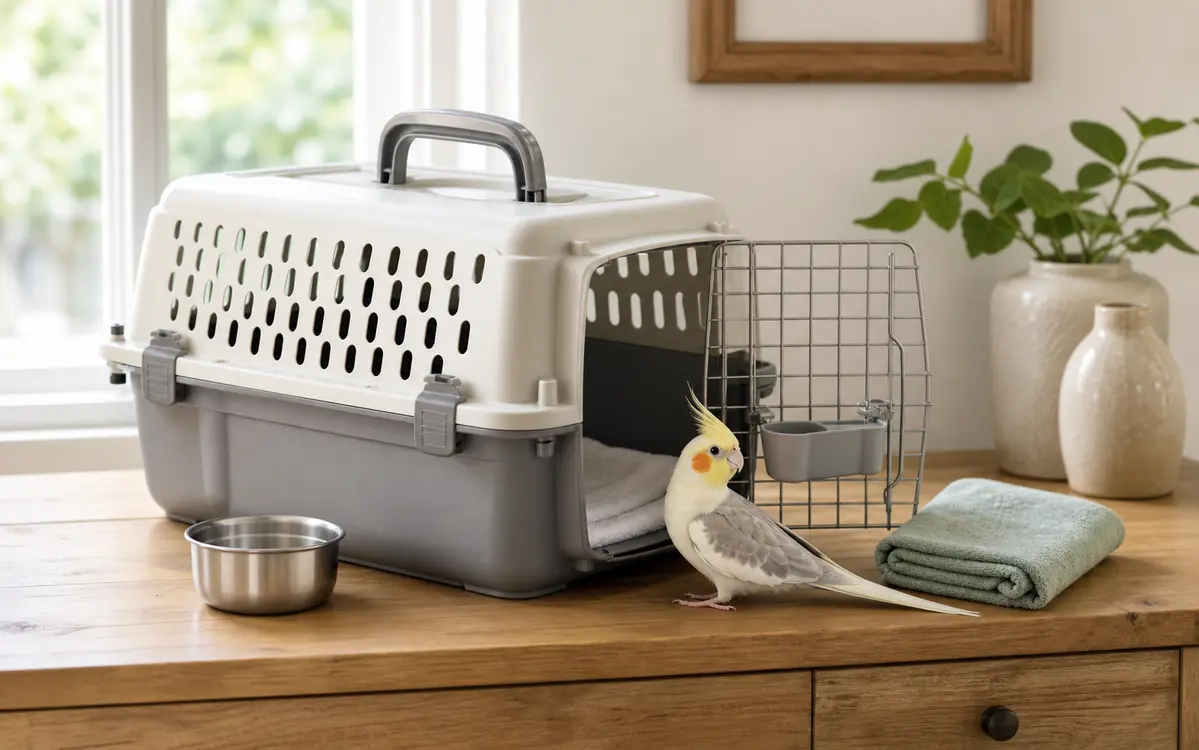
Hard-sided bird carrier with towel liner, stainless bowl, and a cockatiel calmly beside the open carrier.

Handling and Training

Answer first

Get a bird into a carrier by making the carrier familiar before you need it. Leave it visible, reward calm investigation, practice short entries, and build up to closing the door for brief, calm moments.

What to check before you act

Familiarity

Practice before the vet day.

Footing

The bird needs secure traction.

Tiny steps

Entry is trained in pieces.

Door

Closing should be practiced briefly.

Transport

Lift and movement need practice.

Urgency

Sick birds may need faster action.

01

How to act on this

Set the carrier near the bird's routine area, add a stable perch or towel liner, and reward any calm interest before asking the bird to go inside.

02

Make it boring and safe

A carrier that appears only during emergencies becomes scary. Let the bird see it, explore it, and eat treats near it often.

03

Build entry in steps

Reward looking at the carrier, stepping onto the doorway, reaching in for a treat, going fully inside, then staying while the door moves.

04

Prepare for real transport

Practice short lifts and calm room-to-room trips before the day you need a vet visit.

05

Emergency note

If the bird is injured or very sick, safe transport matters more than perfect training. Call the vet and keep the trip calm.

Before you decide

  • Does the carrier have safe footing?
  • Has the bird seen it outside emergencies?
  • Can the bird enter for a treat without the door closing?
  • Can the door close briefly without panic?
  • Is the carrier ready for vet visits now?

Next best moves

  • Keep the carrier where it is not a surprise object.
  • Practice tiny entries several times a week.
  • Store vet contact, towel liner, and care notes near the carrier.

Common questions

What if my bird is scared of the carrier?

Move it farther away, reward calm looking, and build gradually.

Should I force the bird in?

Only urgent medical transport may require faster handling. For normal training, build cooperation.

Can I use a cardboard box?

A proper hard-sided carrier is safer and easier to secure for most transport.

What should go in the carrier?

Use safe footing, secure ventilation, and simple supplies. Avoid loose clutter that can shift during travel.

Useful setup pieces

Use these after the care plan is clear. Match size and materials to the bird you actually keep.

Affiliate links: Furball Cove may earn from qualifying purchases at no extra cost to you.

Hard-sided bird carrier with towel liner, stainless bowl, and a cockatiel calmly beside the open carrier.

Hard-sided bird carrier

Keeps transport secure for adoption day, avian-vet visits, and emergencies.

Tabletop bird training perch with a cockatiel standing on the perch beside small training treats.

Training perch

Gives short trust-building sessions a low, predictable place to happen.

Open blank bird care notebook with pencil, small supplies, and a cockatiel on a tabletop stand.

Care notebook

Tracks food, weight, sleep, droppings, behavior, and vet questions in one place.

Plain paper cage liners stacked beside a clean removable cage tray and a small finch on a nearby stand.

Paper cage liners

Plain paper makes droppings easier to monitor without scented products.

References