

Updated

Bird guides

How do I handle a bird that bites?

Handle a bird that bites by lowering pressure, using perches and stations, reading warnings earlier, and training choices. Do not punish the bite or keep pushing until the bird has to bite harder.

The safest handling plan starts before the beak touches skin.

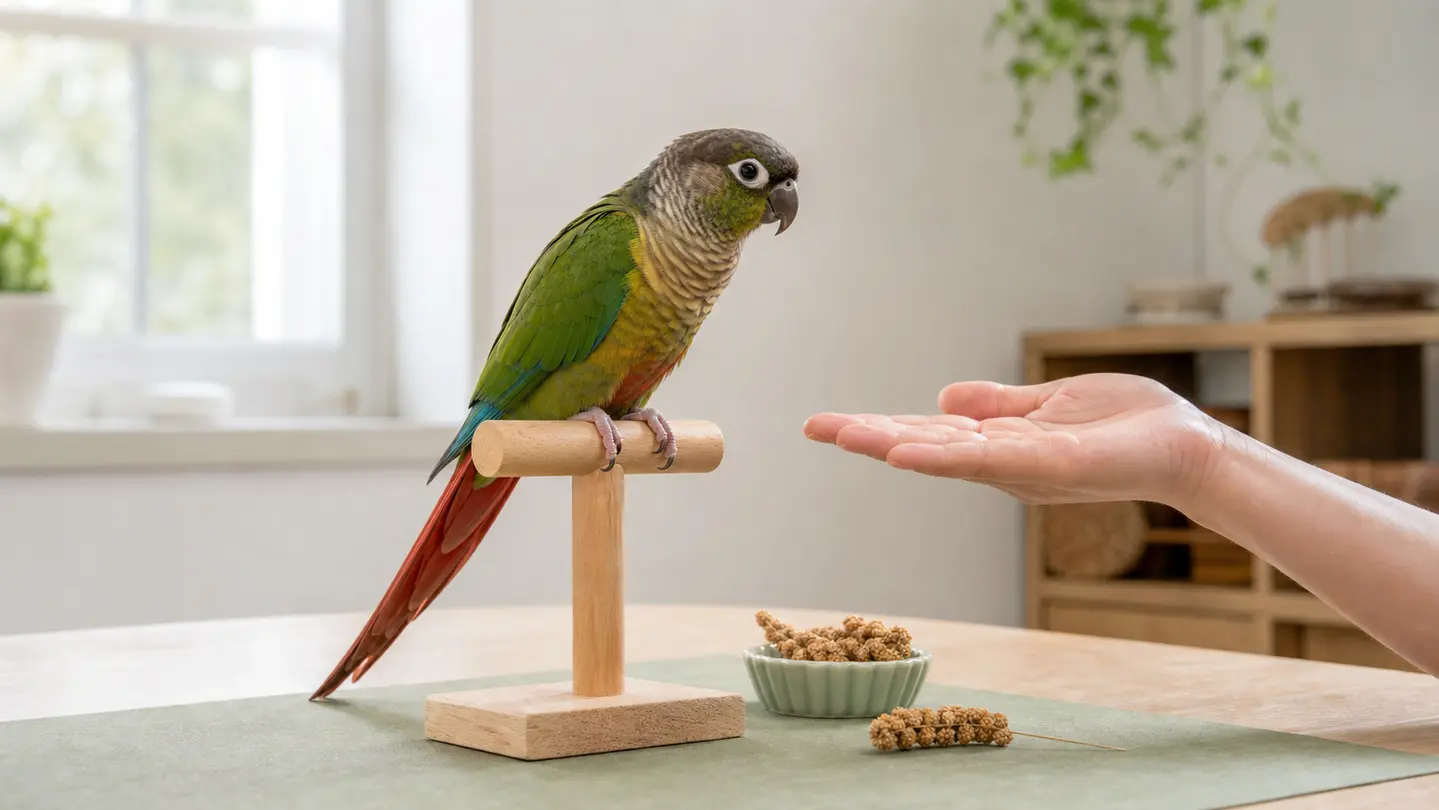
Green-cheeked conure on a low training perch with an open hand paused nearby to give the bird choice.

Handling and Training

Answer first

Handle a bird that bites by lowering pressure, using perches and stations, reading warnings earlier, and training choices. Do not punish the bite or keep pushing until the bird has to bite harder.

What to check before you act

Trigger

Find the moment before the bite.

Distance

Make the ask easier.

Perch

Use tools when hands are risky.

Warnings

Stop earlier.

Health

Sudden changes need care.

Trust

No punishment.

01

How to act on this

Stop forced hand contact and identify the bite trigger: cage entry, step-up, petting, fear, hormones, pain, overstimulation, or guarding.

02

Use safer tools

A handheld perch, target stick, carrier training, and station perch can keep care moving while trust rebuilds.

03

Change the request

Ask from farther away, reward smaller steps, avoid reaching over the head, and stop when the bird gives early warnings.

04

Protect people without blaming the bird

Plan where hands go, who interacts, and when sessions end. Bites are feedback, not moral failure.

05

Health check

Sudden biting, touch sensitivity, weakness, or appetite change deserves avian-vet attention.

Before you decide

  • What exactly happens before the bite?
  • Is the bird being asked to do too much too fast?
  • Can a perch replace the hand for now?
  • Are cage, hormones, fear, or pain involved?
  • Are people reacting in a way that escalates the bird?

Next best moves

  • Use a handheld perch and station training while rebuilding trust.
  • Stop sessions at the first warning sign, not after the bite.
  • Ask an avian vet about sudden biting or handling pain.

Common questions

Should I let the bird bite so it learns?

No. Repeated bites rehearse the behavior and damage trust.

Should I wobble my hand when bitten?

No. That can scare the bird and does not teach a better choice.

Can a biting bird be trained?

Often yes, when the trigger is identified and pressure drops.

Do gloves help?

Usually they scare birds or make handling rougher. Use distance, perches, and training first.

Useful setup pieces

Use these after the care plan is clear. Match size and materials to the bird you actually keep.

Affiliate links: Furball Cove may earn from qualifying purchases at no extra cost to you.

Tabletop bird training perch with a cockatiel standing on the perch beside small training treats.

Training perch

Gives short trust-building sessions a low, predictable place to happen.

Hard-sided bird carrier with towel liner, stainless bowl, and a cockatiel calmly beside the open carrier.

Hard-sided bird carrier

Keeps transport secure for adoption day, avian-vet visits, and emergencies.

Open blank bird care notebook with pencil, small supplies, and a cockatiel on a tabletop stand.

Care notebook

Tracks food, weight, sleep, droppings, behavior, and vet questions in one place.

Bird foraging tray with covered cups, pellets, greens, and a curious budgie beside the puzzle.

Foraging toy

Turns part of the meal into a simple job instead of a full bowl of boredom.

References