

Updated

Bird guides

How do I train a bird without forcing it?

Train a bird without forcing it by setting up choices, rewarding tiny progress, and stopping before the bird feels trapped. The bird should be able to say no, move away, and try again later.

Good bird training feels like a conversation, not a contest.

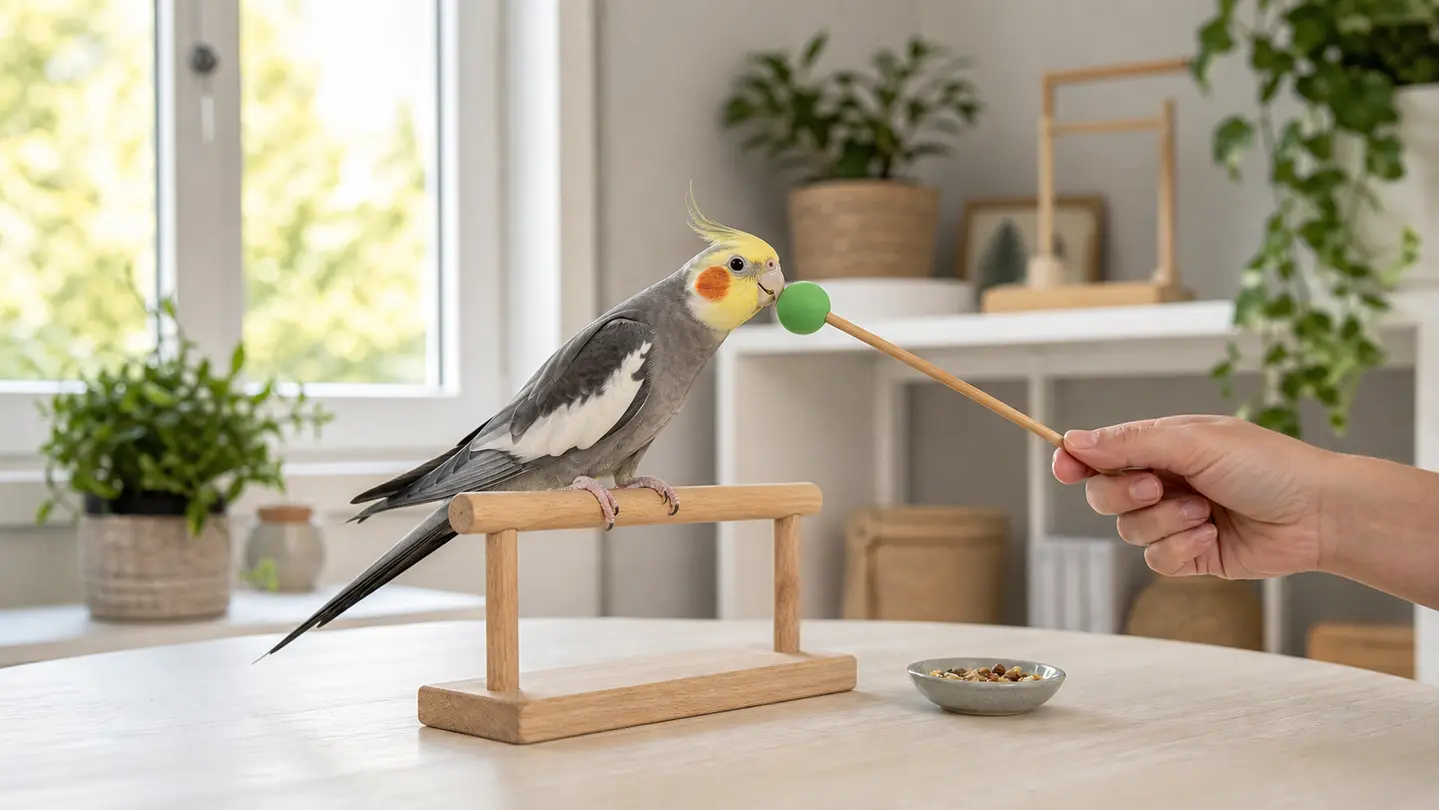
Cockatiel touching a target stick on a tabletop training perch with tiny treats nearby.

Handling and Training

Answer first

Train a bird without forcing it by setting up choices, rewarding tiny progress, and stopping before the bird feels trapped. The bird should be able to say no, move away, and try again later.

What to check before you act

Choice

The bird can opt in.

Reward

Use something worth working for.

Small steps

Pay progress early.

Setup

Make success easy.

Timing

Mark the exact good moment.

Trust

Stop before pressure builds.

01

How to act on this

Pick one small behavior, make the easy choice obvious, and reward the bird the moment it offers progress.

02

Control the setup, not the bird

Use distance, perch placement, doors, treats, and timing so the right behavior is easy. Avoid chasing, grabbing, or blocking escape.

03

Pay small steps

Reward looking, leaning, stepping closer, touching a target, staying calm, or returning to a station. Big behaviors are built from small pieces.

04

Stop while it is still good

Short calm sessions protect trust. A bird that quits, bites, flees, or freezes has already been pushed too far.

05

Best test

The bird should choose to participate again next time.

Before you decide

  • Can the bird move away if it wants?
  • Is the reward something the bird actually values?
  • Are you asking for one small behavior at a time?
  • Are you ending before stress signs appear?
  • Is the setup making the right choice easy?

Next best moves

  • Start with target training or stationing before harder handling.
  • Use tiny rewards and clear timing.
  • End after a few good repetitions instead of testing the bird's patience.

Common questions

Is forcing faster?

It may look faster once, but it often damages trust and creates biting or avoidance.

What if my bird refuses?

Make the step easier, increase distance, improve the reward, or try later.

Do I need a clicker?

No. A clicker or marker word can help timing, but calm setup and rewards matter more.

Can older birds learn this way?

Yes. Older birds often learn well when pressure drops and rewards become clear.

Useful setup pieces

Use these after the care plan is clear. Match size and materials to the bird you actually keep.

Affiliate links: Furball Cove may earn from qualifying purchases at no extra cost to you.

Tabletop bird training perch with a cockatiel standing on the perch beside small training treats.

Training perch

Gives short trust-building sessions a low, predictable place to happen.

Bird foraging tray with covered cups, pellets, greens, and a curious budgie beside the puzzle.

Foraging toy

Turns part of the meal into a simple job instead of a full bowl of boredom.

Open blank bird care notebook with pencil, small supplies, and a cockatiel on a tabletop stand.

Care notebook

Tracks food, weight, sleep, droppings, behavior, and vet questions in one place.

Hard-sided bird carrier with towel liner, stainless bowl, and a cockatiel calmly beside the open carrier.

Hard-sided bird carrier

Keeps transport secure for adoption day, avian-vet visits, and emergencies.

References